Jane's blog banner

Author: jane

  • Counting meteors from Amboy Crater – Lyrids 2012

    Amboy Crater at dawn
    Amboy Crater at dawn
    2012 Lyrid Meteor Shower Meteor Profile showing peak near 04h-06h UTC
    2012 Lyrid Meteor Shower Meteor Profile showing peak near 04h-06h UTC
    My visual meteor observing report with 30 minute (or less) intervals, and magnitude distribution
    My visual meteor observing report with 30 minute (or less) intervals, and magnitude distribution

    Saturday night, April 21, Mojo and I headed to our new favorite dark sky spot, Amboy Crater, one of the darkest observing locations in the US. This spot has great horizons and its remoteness keeps all but the serious observers away, though we’ve met delightful observing buddies at this spot. Our one way drive from Monrovia, CA is 170 miles, fyi.

    After a night of observing, you can’t beat the morning hike to Amboy Crater, a 6,000 year old volcanic cinder cone, either. Even in the summer it’s cool at dawn. Look carefully at the oxidized lava beds as you follow the hiking trail to the crater and you might find some Chuckwalla lizards! Chuckwallas can reach 16 inches in length, weigh up to 2 pounds and are specially adapted for desert living. Chuckwallas are my very favorite herps, well, next to the desert tortoise, that is.

    The peak of the Lyrids occured at 1:30 a.m. Eastern (10:30 Pacific). The constellation Lyra was barely above my horizon at that hour. This meant the highest rates were probably recorded several time zones east of my California location. I set up my observing area, shut my eyes until about 11:00 p.m., and then I managed to observe straight through the night — from 11:40 p.m. until just before dawn at 5:16 (6:40h – 12:16h UT).

    Here are a few tips I use to prepare myself for a night of meteor counting. First, I read Bob Lunsford’s weekly meteor shower recap on the Yahoo meteorobs group email list which discusses amateur meteor astronomy. It’s a good place to “lurk” and learn.

    Bob wrote “The Lyrid (LYR) shower is expected to reach maximum activity on the night of April 21/22 with rates up to 15 shower members per hour. The radiant is located at 18:08 (272) +33. This area of the sky is actually located in extreme eastern Hercules, eight degrees southwest of the brilliant blue-white star Vega (Alpha Lyrae). The radiant is best placed just before the break of dawn when the radiant lies highest in the sky. While Lyrid meteors can be seen in both hemispheres, the north is favored as the radiant lies much higher in the sky. Rates will fall rapidly after maximum and little activity will be seen the remainder of the week. At 48km/sec. the Lyrids would produce meteors of medium-swift velocity. It should be noted that the Lyrids can occasionally produce bright meteors of fireball class magnitude.

    Next I familiarized myself with the spring sky and printed out some all-sky charts, marking the radiant between Lyra’s bright star Vega, and the Keystone section of Hercules. I then decided where to look — 50-70 degrees above the horizon, 20-40 degrees away from the radiant. I selected the area around the bright star Arcturus in the constellation Bootes. When counting meteors you don’t want to look directly at the radiant as the meteors will look like short streaks, or points of light.

    For this shower the rates were not expected to be too high, so I decided to record (for my first time) the magnitude of each meteor. I made a note of the magnitude of Saturn, Mars and Venus and re-familiarized myself with the magnitudes of many bright stars nearby during my prep time. Then, I selected two small constellations (Corona Borealis, and the head of Draco) which contain magnitude 2-5 stars and memorized their magnitude.

    Armed with all these stellar magnitudes, I settled down and waited for it to get dark. Once it did, I began the first important observation — estimating the limiting magnitude. The limiting magnitude is the magnitude of the faintest star near the zenith that the observer can detect using the slightly averted naked eye. It defines both the condition of the sky’s clarity and the quality of the observer’s eyes. I keep a set of these charts on a clipboard and take them with me on all observing trips, even if I am not observing meteors. Every 30-45 minutes, between my half-hour counting sessions, I re-counted the stars in the selected areas, to note any changes in the sky clarity or the condition of my own eyes.

    In a nutshell my skies were Magnitude 6.5, which is very dark. Weather conditions: clear, 98 degrees at sunset, 62 degrees at dawn. It was a shirtsleeve weather night almost all night long, tho’ I put on a fleece jacket at about 4 a.m.

    Between 11:40 p.m.and 5:16 a.m. (06:40h – 12:16h UT) I counted 36 Lyrids, 6 Sporadics and 2 Anthelion meteors. A quarter of the Lyrids I saw were very bright -1 or brighter meteors. I took short breaks between counting sessions to re-estimate the limiting magnitude, have a snack, check on what Mojo was imaging through his telescope, stargaze through my own scope, etc.

    06:40h-07:10h UT – 7 Lyrids
    07:30h-08:00h UT – 3 Lyrids
    08:15h-08:45h UT – 5 Lyrids, 1 sporadic
    08:50h-09:20h UT – 5 Lyrids, 1 sporadic
    09:30h-10:00h UT – 6 Lyrids, 2 sporadics
    10:05h-10:25h UT – 1 Lyrids, 1 sporadics, 1 Anthelion
    Break to look at Saturn, have a snack, scan Milky Way
    10:59h-11:29h UT – 2 Lyrids, 1 Anthelion
    11:30h-12:00h UT – 7 Lyrids (2 fireballs!)
    12:01h-12:16h UT – 1 sporadic

    You can see that I saw the most meteors just as I was getting started (which was near the peak) and again near dawn (when Lyra was at its highest in the sky). Just before 5 a.m. 12h UT both Mojo and I saw a very bright bollide, greenish in color in the western sky. I estimated its magnitude at -5, brighter than Venus. It probably was much brighter. Coincidentally, 3 hours later an even more impressive bollide streaked across the California Sierra foothills, and broke up in the atmosphere, sprinkling meteorites over a wide populated area. Both of these bollides were Lyrid fireballs!

    My other Meteor blogs and adventures

    Flying through the Leonid Storm of 1999 – aboard USAF’s ARIA from Edwards AFB

    Leonids 2002 – aboard NASA’s DC-8 from Dryden Flight Research Center

    Observing meteors from the city – yes you can!

    My meteor observing gear

    January Quadrantids and a demoted constellation

    August Perseids and meteor recording tips

    Lyrid 4/22/12 fireball movie with radiant map

    Mojo’s astrophotography from Lyrid shower night

  • Viewing meteor showers from light polluted LA – not impossible!

    The white area is greater Los Angeles. I observed from my driveway in Monrovia, indicated at the "red/white" border zone marked with cross-hairs
    The white area is greater Los Angeles. I observed from my driveway in Monrovia, indicated at the "red/white" border zone marked with cross-hairs
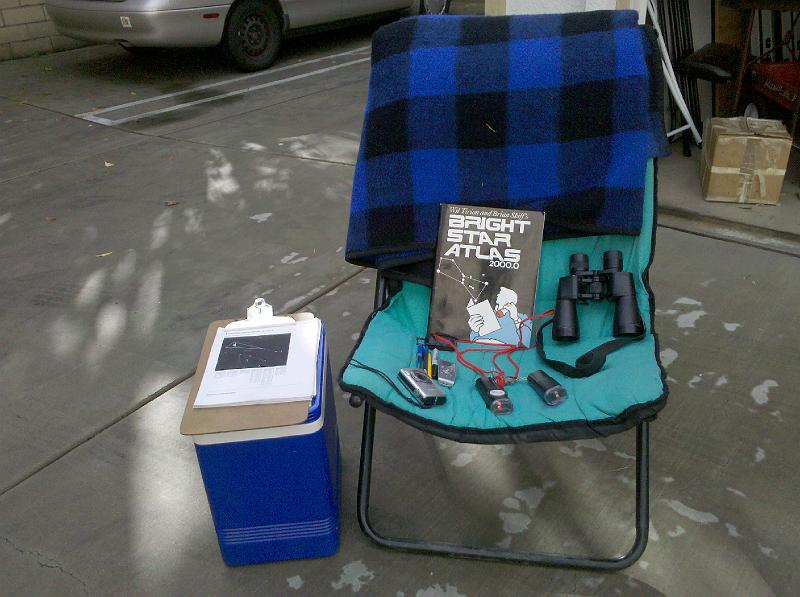
    My meteor watching setup - comfortable chair, blanket, clipboard, red flashlights, clock, binoculars, snacks
    My meteor watching setup – comfortable chair, blanket, clipboard, red flashlights, clock, binoculars, snacks
    The graph shows the ZHR (Zenithal Hourly Rate), which is the number of meteors an observer would see under a very dark sky with the radiant of the shower overhead. ZHRmax = 82 based on 1550 Quadrantids reported by 53 observers in 22 countries.
    The graph shows the ZHR (Zenithal Hourly Rate), which is the number of meteors an observer would see under a very dark sky with the radiant of the shower overhead. (this chart is being updated as more reports are submitted)

    I prefer to drive far from LA to view meteor showers from a dark sky, but those darn showers don’t always happen on weekends or days I can take off work. So this week, I observed the Quadrantid Meteor Shower from my bright moonlit Los Angeles County driveway until after midnight, snoozed until moonset at 3:00 a.m., then had a fairly decent sky from 3:00 a.m. to 5:15 a.m. when the sky started to brighten from the dawn light. Although I didn’t see many meteors, and only one before the moon set at 3:00 a.m. PST January 4th, I was thrilled with my observations.

    Take a look at this colorful map. See that white blob? That’s Los Angeles on a light pollution map. That white ribbon? That’s the California coastline. White on these maps designates the most light polluted areas in the world. There is no worse place for light pollution. LA is the model of a major metropolitan meteor-observing maelstrom of star-obscuring light pollution. This white color on the map is described in bleak terms on the Clear Sky Chart website’s light pollution map page: “The entire sky is grayish or brighter. Familiar constellations are missing stars. Fainter constellations are absent. Less than 20 stars visible over 30 degrees elevation in brighter areas. Limiting magnitude ranges from 3 to 4. Most people don’t look up.” Monrovia is on the north edge of the white blob that is Los Angeles, indicated by the cross-hair. (all those little crosses on the map are other astronomy locations). Red is the next to worst light pollution zone, and the ribbon of red color next to Los Angeles is the San Gabriel Mountain foothills. Monrovia is nestled between the Los Angeles basin and the mountains. It’s fine for moon and planets at our monthly Old Town Sidewalk Astronomy nights, not so good for meteors and anything else astronomical.

    The three oval white blobs on the left lower quadrant are Santa Catalina, San Clemente and San Nicholas Islands! The yellow, green and blue zones are in the ocean. It’s even light polluted well off the coast of Southern California!

    I usually drive 150-300 miles to one of the black teardrop shaped pin spots on this light pollution map of California. Those are the best and darkest locations for the stargazing and astrophotography we enjoy. Mojo and I prefer Amboy Crater, Hole-In-the-Wall Campground in Mojave National Preserve, and a spot near Desert Center 60 miles past Indio on I-10. We also love the dark skies at Glacier Point at Yosemite.

    But this week was the peak of the Quadrantids, and I didn’t want to drive a 6-hour round trip for 3 hours of meteor watching, especially on a work night. So I found a good spot in my driveway and it blocked a lot of the local light sources. I nestled my comfy observing chair up next to a cinder block wall. This wall, plus strategically placed tall trees blocked the moonlight and oncoming car lights from my view. To my south was not the Milky Way, but the milky gray — the color of skies over Los Angeles. I could see the big dipper stars, and part of the little dipper. Below these two constellations was the radiant of the Quadrantids. This area wouldn’t even rise until after midnight, but I wanted to say I observed the Quadrantids during the actual peak, and check for earthgrazing meteors on the horizon.

    I estimated my limiting magnitude at a dismal 3.9 using star counting charts. I settled into my meteor-watching chair, sipped some hot green tea and waited. And waited. And waited some more. From 11:00 p.m. until 12:30 p.m (PST) I saw exactly one meteor, and it wasn’t even a Quadrantid. The moon was high overhead now, and so I snoozed until moonset at 3:00 a.m. Wednesday morning.

    When my alarm went off, I headed back out to the driveway. I adjusted my chair, adjusted the dark blankets I placed over the fence between my driveway and the neighbor’s all-night security lights. By careful placement of my head, and with blankets on the fences and shrubs I had no lights shining directly at me.

    It was a little after 3 a.m. and I started observing an area above the radiant, centered on the bowl of the big dipper. My back was facing the well-lit LA basin, my view to the north was overlooking the San Gabriel mountains and Mt. Wilson Observatory. By 3:18 I had seen my first Quadrantid. At 3:30 I counted stars again. Without the moonlight, my limiting magnitude rose to a respectable 5.1 using this star counting chart. I repeated this exercise several times, until I could barely see stars after 5:00 a.m. My last limiting magnitude calculation before I packed it in was 2.9.

    This chart shows the data from 48 observers in twenty countries. Data (still coming in, I’ll update the chart a couple of times) is averaged based on the observers seeing conditions, visual acuity, cloud cover percentage, etc. You can see that the highest rates — at the peak of the Quadrantids were in excess of 80 per hour. This is the number of meteors which would be seen overhead at the zenith (in a dark sky) if the highest rate was kept steady for one hour. In reality, the highest rates last usually for only a few minutes for showers like the Quadrantids with a very narrow peak. How many did I see from my Monrovia driveway? I saw three from 3:00-3:30 a.m. and another three from 3:30-4:00 a.m. I saw five from 4:00 to 4:30 a.m. and between 4:30 and 5:00 a.m. I saw three, plus heard nearby roosters crowing! I finished the observing with 2 more Quadrantids between 5:00 and 5:15 a.m. and was heralded by a veritable rooster symphony as the sky brightened. My total count over a little more than 2 hours was 16 lovely Quadrantids, two sporadics, and one Anthelion! Here’s my report which I submitted to the International Meteor Organization. Amazingly, this number is almost exactly the prediction from NASA’s Meteor Fluxtimator when I entered Quadrantids from downtown Los Angeles on the 3rd and 4th of January 2012. How about that! You can observe a meteor shower from Los Angeles!

    Here’s the meteor shower calendar for 2012

    Interested in counting meteors? Here’s the IMO Visual meteor observing form plus instructions and FAQs

    More about the Quadrantids and their namesake constellation, Quadrans Muralis

    Post-Perseid depression (or how to observe meteor showers)

    Perseids from Amboy Crater (a dark sky site)

  • Black-eyed Peas – A New Year’s traditional meal 2,000 years old

    Happy New Year from Jane and Mojo
    Happy New Year from Jane and Mojo
    Warming my 2011 Black-eyed peas in the crock pot, with paprika dusted cornbread on the side
    Warming my 2011 New Year’s Day black-eyed peas in a crock pot, with paprika dusted cornbread on the side

    Mojo’s dad, John Paul (JP) Jones, served black-eyed peas on New Year’s Day several years ago when we were visiting him in Florida. I loved them, asked him for his recipe, and make it at least once a year.

    I wanted to know the history of this dish and found out it has a pedigree spanning the globe and dating back almost two thousand years! How did this ancient tradition become known in the American south? The first Sephardi Jews arrived in Georgia in the 1730s and by the American Civil War the dish was well-known in the south.

    The “good luck” traditions of eating black-eyed peas at Rosh Hashana, the Jewish New Year, are recorded in the Babylonian Talmud. The peas symbolize prosperity. In the American south, the peas are often accompanied by collard or turnip greens, symbolizing money, and cornbread, symbolizing gold. There are many good luck traditions such as placing a new penny or dime in the pot. The recipient is granted extra good luck, and hopefully no broken teeth. Black-eyed peas are a good luck dish around the world.

    In Portugal, black-eyed peas are served with boiled cod and potatoes, with tuna, and in salads.

    In Vietnam, the peas are used in a sweet dessert of black-eyed peas and sticky rice with coconut milk).

    In Greece, Turkey and Cyprus, black-eyed peas are eaten with vegetables, oil, salt, and lemon.

    In the northern part of Colombia, they are used to prepare a fritter called buñuelo. The peas and egg batter is fried in hot oil, and drizzled with honey or something sweet.

    In Pakistan and northern India, black-eyed peas are cooked as daal.

    In West Africa and the Caribbean, a traditional dish called akkra is made of mashed black-eyed peas, salt, onions and peppers, then fried.

    In Brazil’s northeastern state of Bahia, black-eyed peas are used in a traditional street food of Nigerian origin called acarajé. The beans are peeled and mashed, and the mash is made into balls and deep fried. Acarajé is typically served split in half and stuffed with diced green and red tomatoes, fried sun-dried shrimp and homemade hot sauce.

    In Indonesia, black-eyed peas are commonly used in curry dishes.

    Here’s JP’s recipe, the one I use, but he won’t mind if you make it your own.

    1 lb. fresh or frozen black-eyed peas
    2 quarts water
    1 medium onion, chopped
    1/2 cup each red and green bell pepper, chopped
    1 Jalapeno pepper, chopped
    1 tsp Thyme
    1 celery stalk, chopped
    1 ham bone (optional, JP doesn’t use this)
    1 chunk of salt pork (JP doesn’t use this either)
    salt and pepper to taste.

    1. Rinse peas, soak overnight if dried. I use frozen peas usually. (I don’t like the taste of fresh peas.)
    2. Drain and put dried soaked peas in a dutch oven with 2 quarts fresh water. (frozen/canned peas don’t need all the water, and I use a crockpot with my frozen beans).
    3. Add remaining ingredients. I saute the veggies in a skillet first.
    4. Simmer until peas soften. (2 hours dried, 30 minutes frozen/canned) Add a little water if they start getting too dry, remove lid if they are too watery.

    I serve this on top of brown or white rice usually, but this year will serve it with Trader Joe’s Brown Rice Medley of long grain brown rice, black barley and daikon radish seeds. It reminds me of another southern favorite from my childhood in Louisiana and Texas, Red Beans and Rice. And I’ll serve my vegetarian black-eyed peas with cornbread again this year, made with half a can of corn, onion and peppers mixed in, and dusted with paprika for a pretty appearance. Happy New Year, everyone!

    Lubiya (Sephardic Black-Eyed Peas)

    3 Tbs. extra-virgin olive oil
    1 medium onion, diced
    2 large cloves of garlic, minced
    1 1?2 cups of water
    3 Tbs. tomato paste
    1 lb. fresh or frozen black-eyed peas
    1/2 tsp. cumin
    salt and freshly ground pepper to taste

    Heat a 3-quart pot over high heat for 20 seconds. Add the olive oil and heat for another 10 seconds. Add the onion and garlic and sauté over medium heat, until onions are lightly golden.

    Add the water and tomato paste, and bring to a boil. Reduce the heat to low. Add the peas and cumin and cook covered for 1 to 2 hours, or until the peas are tender. It might be necessary to add a small amount of additional water to the pot if the mixture looks too dry. Conversely, if the mixture is too soupy, continue to cook uncovered, until some of the liquid has evaporated.

    Remove from the heat and add salt and pepper to taste. Serve hot or at room temperature. Serve alone or over rice.

    Happy New Year everyone! Do you have a tradition or recipe to share? I’d love to hear about it.

    Recipes

    Black-eyed Peas for Rosh Hashanah

    Worldly recipes served with a slice of Jewish history

    Brazilian Black-Eyed Pea and Shrimp Fritters – Acarajé

    Buñuelos: A Curious Christmas and Hanukkah Connection

    Buñuelos — a lucky holiday tradition

  • Autumn observing – around the South Galactic Pole

    Herald-Bobroff Astroatlas
    Herald-Bobroff Astroatlas
    Grus and Telescopium
    Astroatlas B Chart page for Grus and Telescopium, well below Capricornus and Sagittarius
    NGC131 and 134 and a 5-spot of mag 10 stars
    NGC131 and 134 and a 5-spot of mag 10 stars
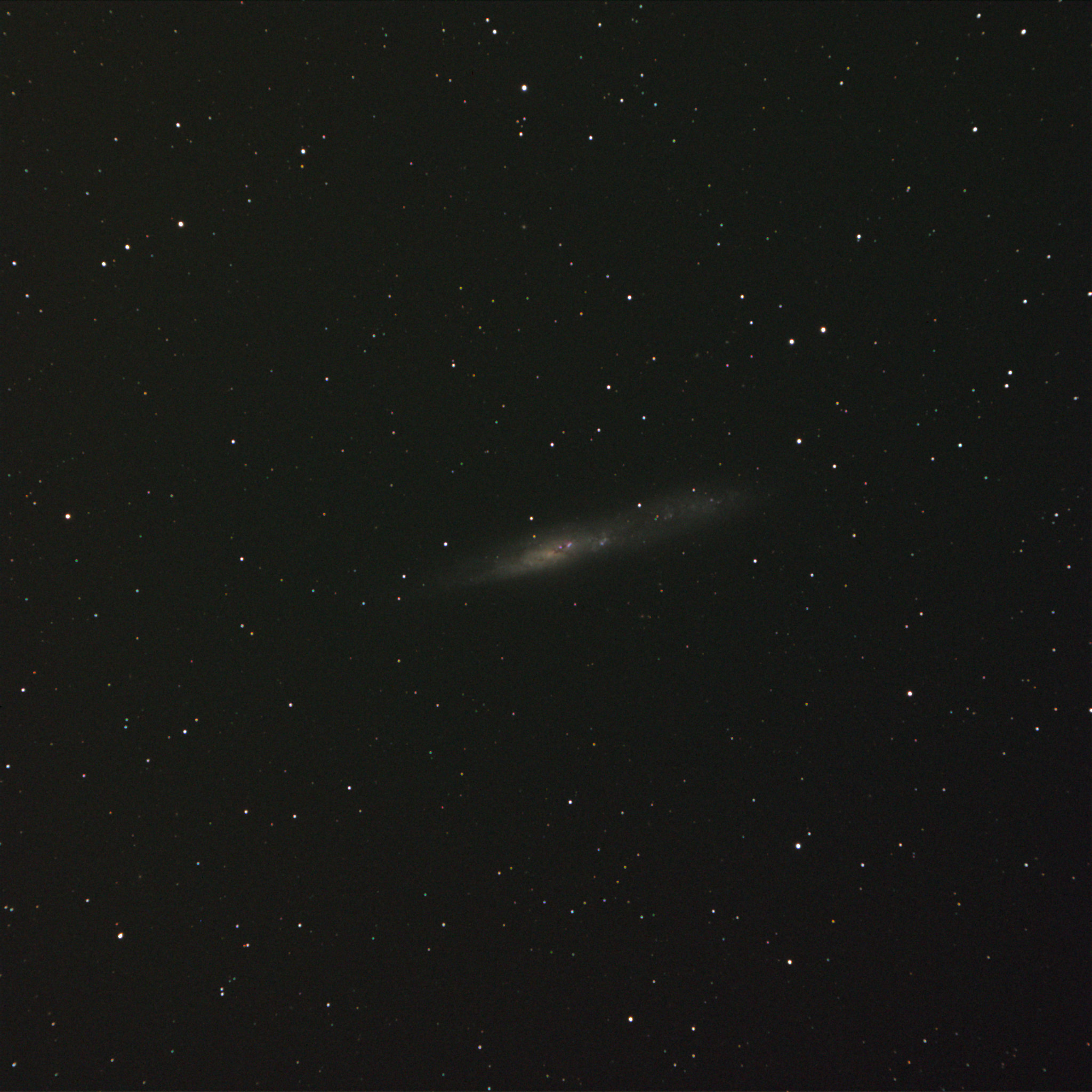
    NGC55
    NGC55 image by Morris Jones, used with permission 😉

    While Mojo and I were observing at Amboy Crater on October 22, 2011, Cliff, another observer at the site pointed out the constellation Grus, The Crane, low on the southern horizon. Grus isn’t a constellation I’ve paid attention to before – you need to be able to see down to the southern horizon in the fall, and you need to be observing at +34N Latitude or further south. If you can see well below Capricornus, Sagittarius and Sculptor in the autumn, give it a try!

    None of the star charts I brought on that occasion showed Grus, but I had just the startool at home for the following weekends (October 29) outing — the Herald-Bobroff Astroatlas! I hadn’t needed this lovely atlas since my 1999 Ayer’s Rock Australian observing trip with 20 other astronomers, and welcomed reacquainting myself with it. The atlas begins with the A Charts – wide swaths of the sky, showing several entire constellations. From there you are directed to the B Charts (image at your left), showing smaller segments of the sky and bright stars. The C Charts (9th mag stars and 14th mag. deep sky objects) are where I headed for this night’s observing, but in the past I have drilled down to the D (11th mag. stars and 15th mag deep sky objects), E and F charts for detail showing Coma and Virgo galaxy clusters and the Magellanic Clouds.

    There aren’t any bright galaxies to hunt for in the constellation Grus, and observing low to the horizon doesn’t afford the best views, either. But even so, I quickly observed the top ten or so – including some lovely galaxy clusters. First I went for NGC7590 and 7599, a pretty pair of spiral galaxies discovered by John Herschel and Charles Dunlop. I didn’t see the distant Abell 1111 cluster, 2 billion light years away, just the two brighter galaxies.

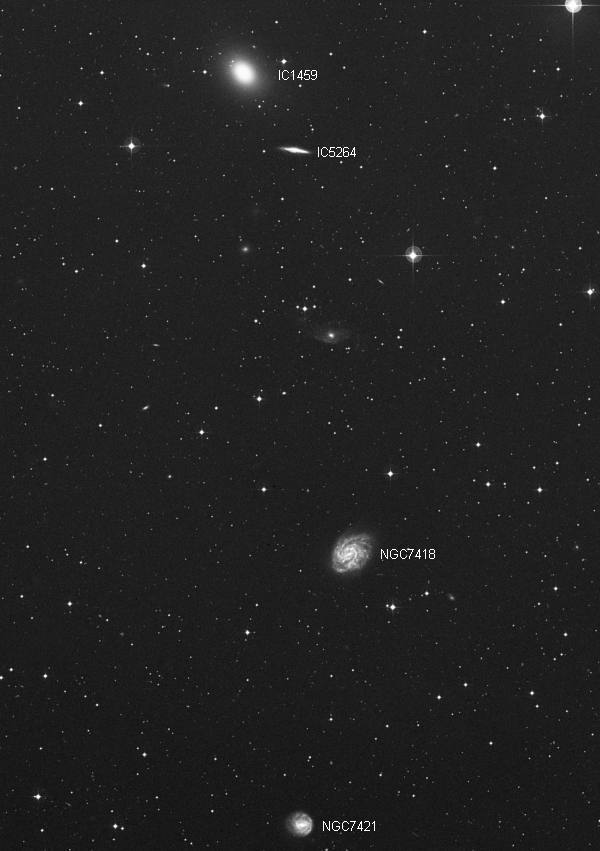
    Next I hunted down a group of galaxies near NGC7418 – a face-on spiral galaxy nestled in a pretty string just below Fomalhaut on the Grus Sculptor border. Here’s a photo of the galaxies I observed. 7418 was discovered by Sir John Herschel at the Cape of Good Hope with an 18-inch f/13 speculum telescope in 1847. A supernova erupted in this galaxy in 1983. And Allan Sandage (1975, Astrophysical Journal, 202, 563-582) notes that this galaxy is a member of the IC1459 Grus Group.

    Well after midnight on this perfect observing night, our friend Dave came over and told me he had just observed some objects he had not logged before. “A pair of galaxies, with a little dice-shaped asterism of five stars next to it”. Soon I was on my own hunt for NGC131 and 134. It’s to the lower left of big open cluster Blanco 1 on the star chart. The smaller 131 was discovered by John Herschel in 1834, and the larger 134 was discovered in 1826 by James Dunlop in Australia. They are part of our local group of galaxies (LGG), and the galaxy group is also known as LGG-007 located 63 to 82 million lights years away. My sketch is to the left.

    This part of the sky is littered with easy to find galaxies, and I spent several hours hopping from one to another. I was observing NGC55, an interesting barred irregular galaxy only 7 million light years away. It’s one of the closest galaxies to our own local group! I encouraged Mojo image it, even though it was low to the horizon. I love his image, and it looked a lot like this through the eyepiece, too. I made a rough sketch of the galaxy, and when I looked at Mojo’s image we both showed the pretty lineup of stars outlining the galaxy.

    This is just a sample of the dozens of galaxies I looked at in the deep southern sky on a late October evening. Fall offers long nights of darkness for galaxy starved amateur astronomers tired of all the bright milky way objects of summer. So ladies and gentleman, start your telescopes, and point as low as you can go. Aim your telescopes where the wings of the southern birds Grus and Phoenix fly. If you can’t go that low, Sculptor offers dozens of amazing objects to view. Open your atlas to the constellations around the South Galactic Pole near Sculptor, and you’ll enjoy hours of surfing the southern skies.

    Here are Mojo’s Astrophotos from October 29, 2011. I enjoyed visually observing these objects, and then seeing these postcards sent from the universe through Mojo’s astrophotography.

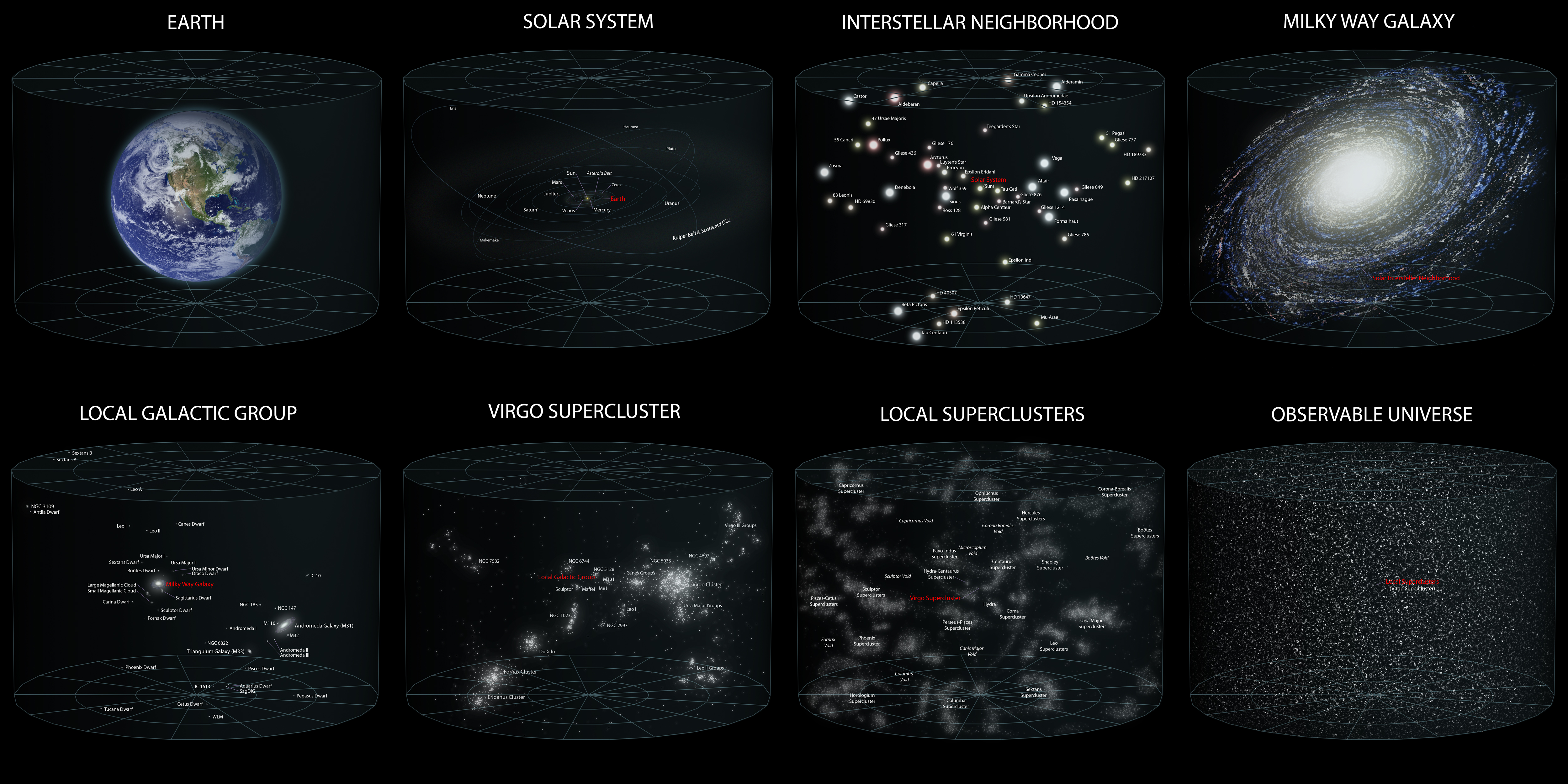
    Diagram of the Observable Universe

    Review of the Herald-Bobroff Astroatlas

    Images showing our observing spot at sunset and waiting for moonset

  • Watching asteroids fly by

    It was 23°F inside the observatory while we were observing the asteroid
    It was 23°F inside the observatory while we were observing the asteroid
    Asteroid 2005 YU55 sketched November 8, 2011
    Asteroid 2005 YU55 sketched November 8, 2011

    Asteroid 2005 YU55 wasn’t my first visual observation of an asteroid passing near Earth, but preparing to view it brought back some great memories of our first one, asteroid 2002 NY40, nearly ten years ago.

    Here’s a little writeup about both observations. First up, Tuesday night’s observing of Asteroid 2005 YU55. It’s 400 meters (1,300 feet) in diameter. On November 8, 2011 it passed 0.85 lunar distances (324,600 kilometers or 201,700 miles) from the Earth. It has been studied by radar using NASA’s Deep Space Network’s Mars Antenna in California’s Mojave Desert. The Herschel Space Observatory took some measurements in the far-infrared. The Swift Telescope observed it, too. Oh, also legions of amateur astronomers imaged, sketched and observed this “once in-a lifetime” event, including me!

    Tuesday afternoon, I drove 100 miles to a friend’s private observatory near Mt. Pinos. I knew as soon as I looked at the sky that I’d never find the asteroid in my telescope. The near full moon wiped out all the fainter stars I’d need for star-hopping to the asteroid. It was 30°F upon arrival, snow on the ground, and it got colder as soon as the sun set – to a low of 23°F.

    After an hour, Steve, the owner of the observatory found asteroid 2005 YU55. He was stunned at the movement as it zipped across the eyepiece view. Three of us took turns stepping up a ladder to reach the wide field eyepiece atop his 14-inch reflector. The 1 degree field of view in the eyepiece we used is equal the apparent diameter of two side-by-side full moons. We took turns watching the faint asteroid move for about a minute or two, then letting the next person have a look. It took the asteroid about 9 minutes to traverse the eyepiece field. My sketch shows the asteroid’s motion in about 2 minutes, and this star chart gives you an idea what the we saw in the sky and in the eyepiece.

    You can see the constellation Pegasus high overhead on the star chart. That’s where we were aiming. As we tried to follow the faint asteroid in the eyepiece, we each made a triangle out of slightly (magnitude 9 and 10) brighter stars which the 11th magnitude asteroid would pass by. That way we had fixed objects to anchor our view of the motion.

    This was no glittering diamonds on black velvet view. The nearly full moon was right next to where we were looking, and it brightened the sky and the ground. Only the brightest stars were visible. “It was a fast-moving ghost against other fixed ghosts in the moonlit background sky”, described Steve. I saw a grey poppy seed moving against a grey felt sky. It made us gasp in amazement that we were looking at it with our own eyes, especially since it was so small and so faint! After an hour or so of viewing, we packed up and headed back home, 100 miles away.

    Now, here’s a little trip down memory lane for me – my first asteroid flyby on August 17, 2002.

    On August 17 and 18, 2002, Asteroid 2002 NY40 zipped past Earth 1.3 lunar distances – 530,000 kilometers or 330,000 miles away. From 9:30 to 10:30 p.m. on August 17th our deck in suburban San Rafael, CA was filled with telescopes. We invited astro friends over for a spur-of-the-moment asteroid party, gambling that our inland location would be fog-free, unlike many of the usual astro spots.

    After a quick dinner, a dozen of us stepped out on the deck. Mojo was the first to spot the swift 9th magnitude asteroid 2002 NY40 in his 14.5-inch f/4.8 LITEBOX reflector. Our friend Jim also found it in his 8-inch LX-10. Our friend Stacy was happy to spot the moon in her new 10-inch dob without a finder. For a good hour we kept the asteroid in Mojo’s scope. All our pals got to see the asteroid whiz through the field of view several times through two telescopes.

    Both observations were amazing. You can always go back and look at videos and images, but you only get one chance to see celestial events like these with your own eyes. And I plan to try and observe every once-in-a-lifetime event that I can. 🙂

    Nasa JPL Press Release about the November 8th close flyby of 2005 YU55

    Nasa Science News about the close flyby of 2002 NY40

  • Solar System, Milky Way, Local Group, Extragalactic observing

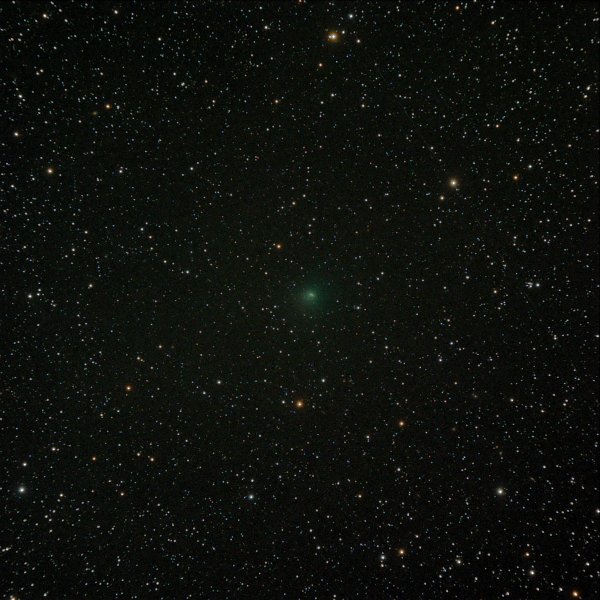
    Comet/2010 G2 (HILL)
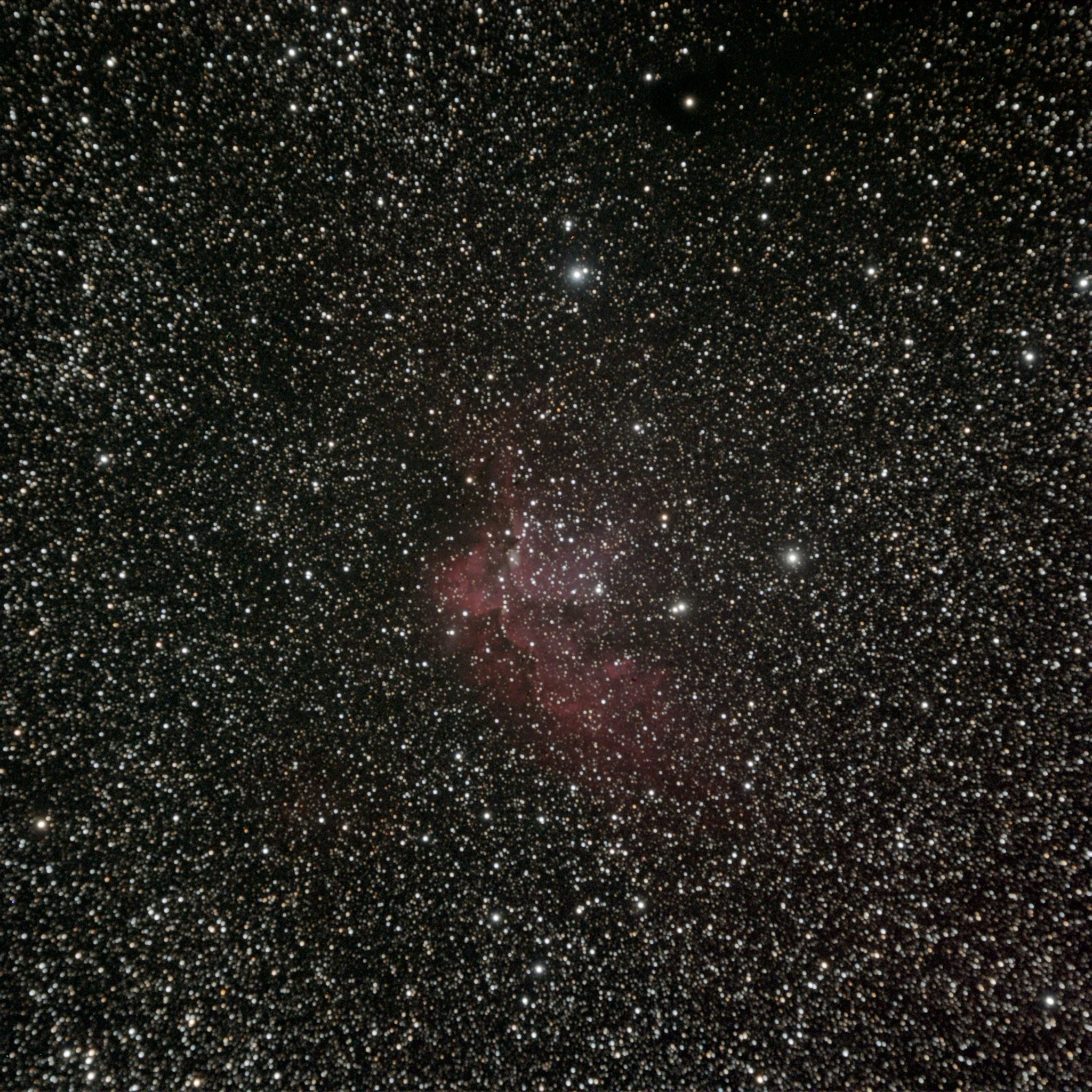
    NGC7380 emission nebula and cluster
    NGC7380 emission nebula and cluster
    The Great Galaxy in Andromeda, M31, with M32 and M110 nearby
    The Great Galaxy in Andromeda, M31, with M32 and M110 nearby
    The Pegasus 1 galaxy cluster
    The Pegasus 1 galaxy cluster

    I love to take my telescope out to observe the sky, and I find that the objects studied or discovered by scientists (from the past or the present) make for an even more rich observing (and learning) experience. Here are just a few observations from a fantastic night at Amboy Crater October 22, 2011. Amboy Crater is well worth a visit for daytime hikes as well as for spectacular stargazing at night.

    IAU circular No. 9134, issued on 2010, April 11, announced the discovery by R. E. Hill of a new comet on Apr. 10, 2010, in the course of the Catalina Sky Survey. After posting on the Minor Planet Center’s NEOCP webpage, many observers checked out this 19.5 magnitude object, designated C/2010 G2 (HILL). (HILL) is well known and well respected Rik Hill of the Lunar and Planetary Lab at University of Arizona, Tuscon. He literally wrote the book about observing sunspots for the A.L.P.O. Sunspotter program. I used this book to sketch sunspots and complete the ALPO Sunspotter program last solar maximum in 2002, and I encourage you to complete this amazing program now, as solar maximum is coming up! I observed Rik’s comet on October 22, 2011, when it was magnitude 10.78 and 1.5 AU distant from Earth. It was small, the coma diameter was 6.2′ – and it was very hard to find! Here’s Mojo’s lovely image from that night. In the eyepiece the green color was absent, in fact it was nearly a no-see-um! Here’s a finder chart. Now, off to explore the Milky Way.

    NGC7380 is an open cluster sometimes referred to as the Wizard Nebula located in the constellation Cepheus. It’s about 7,000 light-year away from Earth. The stars of NGC7380 have emerged from the star-forming region in the last 5 million years or so, making it a relatively young cluster. Here’s the image from NASA’s WISE Mission of NGC7380 in 2010. It’s a mosaic of images spanning an area on the sky of about 5 times the size of the full moon. Caroline Herschel discovered this cluster on August 7, 1787 when her brother William Herschel was away in London. She discovered many objects, include comets on the nights she was not recording William’s famous observations. Let’s check out a galaxy in our local group now.

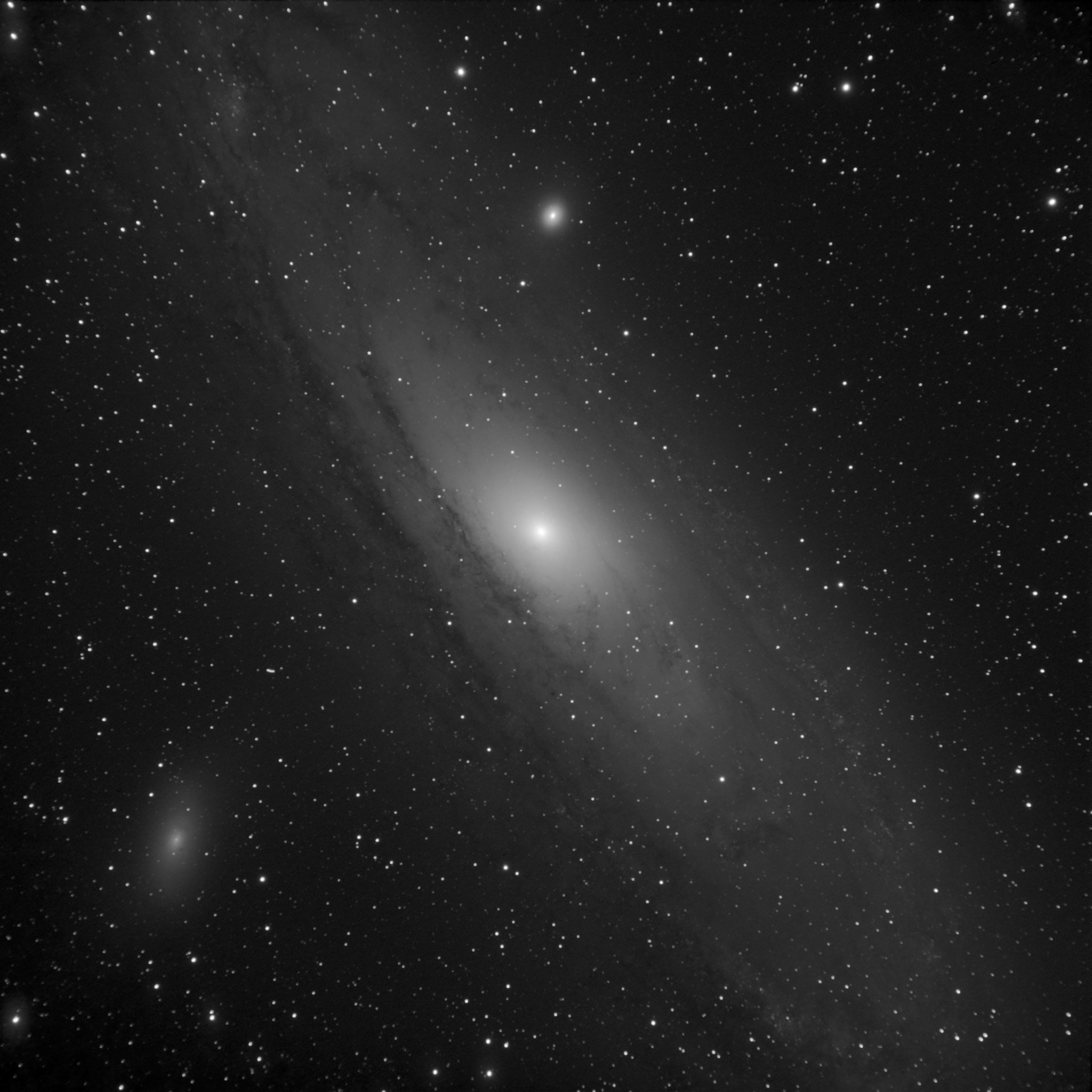
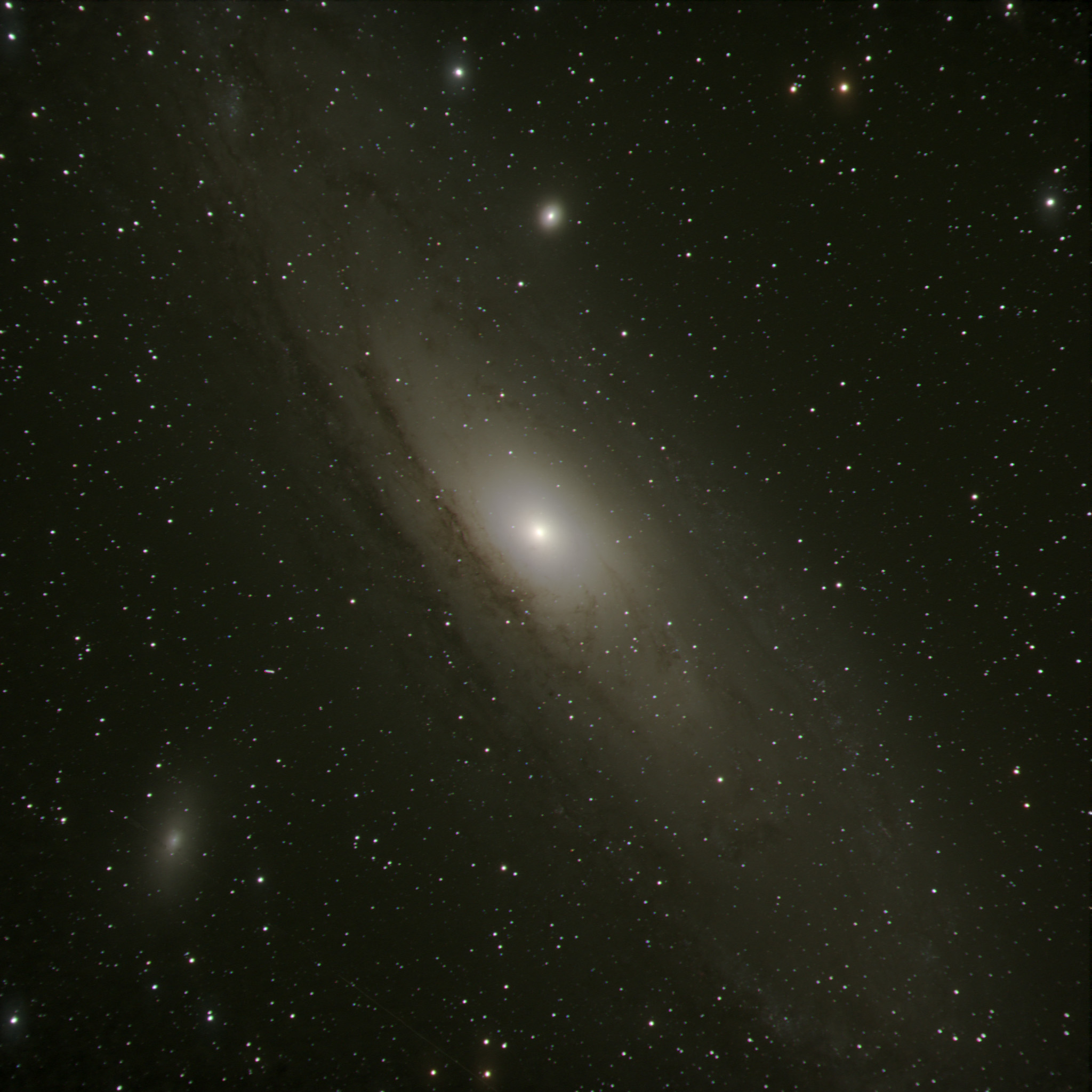
    Everyone with a telescope observes the great Andromeda Galaxy, M31 as soon as convenience and sky conditions allow. It’s the largest galaxy of our galactic family, the Local Group, which consists of not only the Andromeda Galaxy, and our own Milky Way galaxy, but also the Triangulum Galaxy, M33, and about 30 other smaller galaxies. It’s visible with the unaided eye if you know where to look from a dark sky. It’s magnificent in binoculars, and unsurpassed in a telescopic view, no matter how big or small the telescope might be. Here’s the image from NASA’s Spitzer Space Telescope which studied our neighbor galaxy. Mojo reprocessed this image a week later. Now let’s move out beyond our local group and check out something extragalactic.

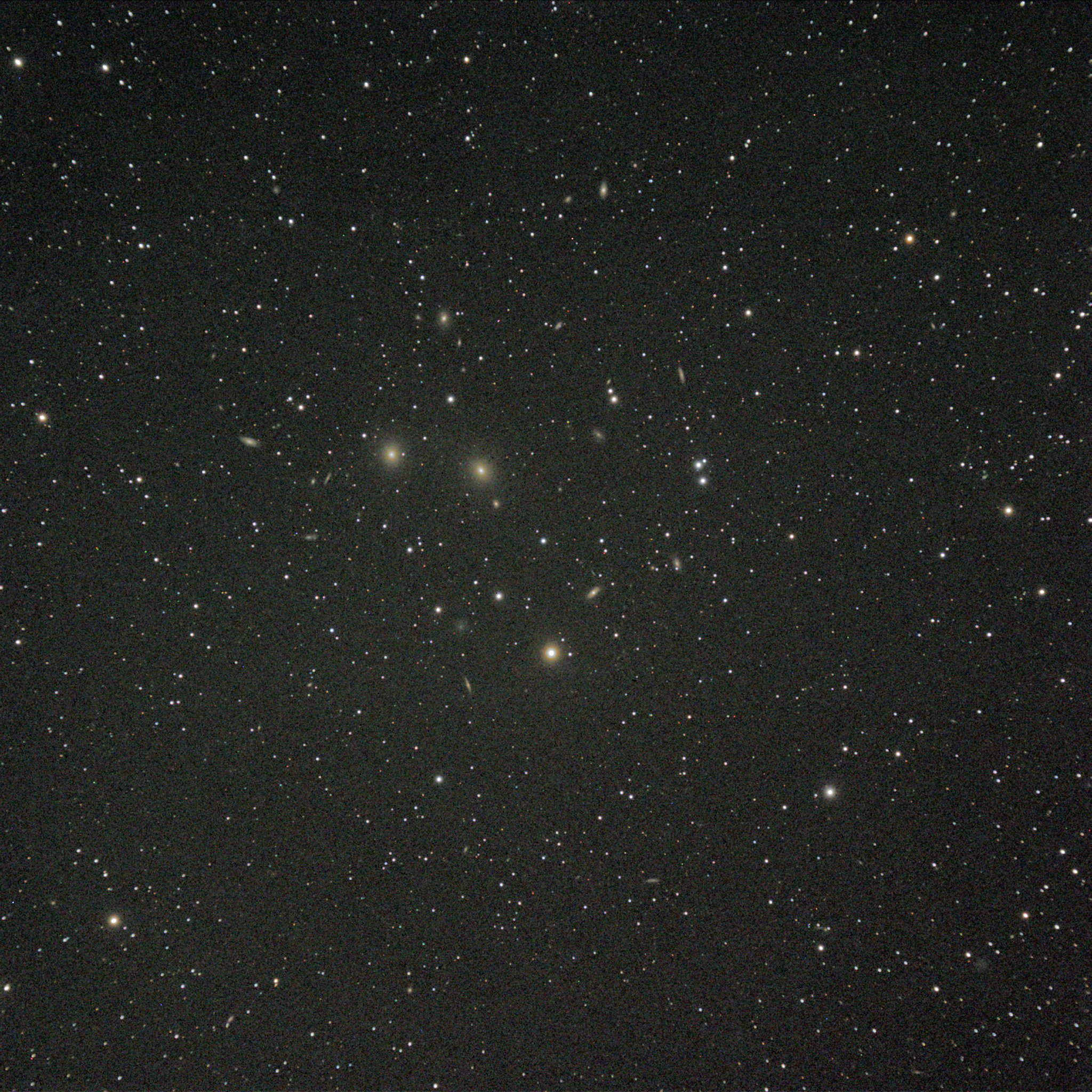
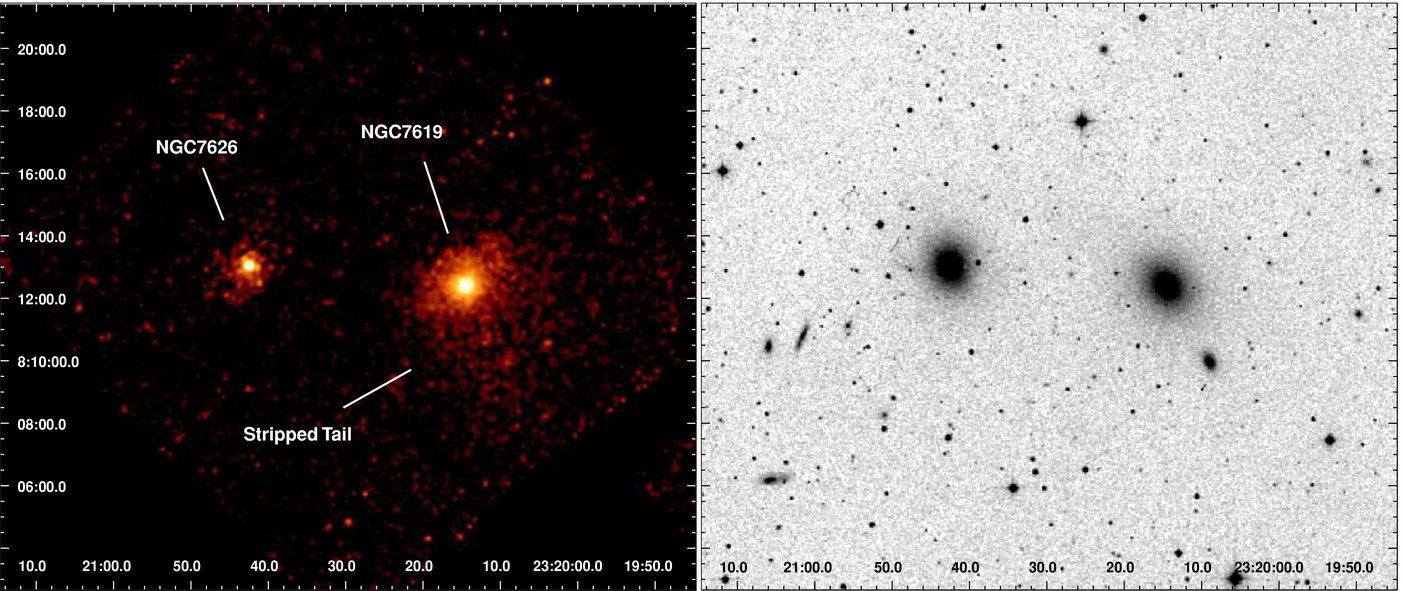
    Perseid 1 Galaxy Cluster is 250 million light years distant. It’s not in the local group! The brightest members are a pair of magnitude 11 elliptical galaxies — NGC7619 and NGC7626 — which you can see in Mojo’s first image from October 22. Here’s a fascinating (and local) report on NGC7619 by Mt. Wilson Observatory’s Milton Humason written in 1929. In the early twentieth century, the construction of big telescopes at Mount Wilson (the 60-inch and 100-inch) allowed astronomers to determine the motions of galaxies for the first time.

    Milton Humason used the 100-inch telescope on Mt. Wilson. He writes “During the past year two spectrograms of N. G. C. 7619 were obtained with Cassegrain spectrograph VI attached to the 100-inch telescope. This spectrograph has a 24-inch collimating lens, two prisms, and a 3-inch camera, and gives a dispersion of 183 Angstroms per millimeter at 4500. We present new observational results of NGC 7619, an elliptical galaxy with a prominent X-ray tail and a dominant member of the Pegasus group”.

    More recently, Chandra and XMM-Newton observations confirmed the presence of a long X-ray tail on NGC7619. I love seeing objects our space telescopes study and image! And I often spend many enjoyable hours learning the science behind my stargazing targets when I’m back at the armchair.

    Here is Mojo’s blog + photos from October 22 at Amboy Crater.

    Here is Mojo’s blog + photos from October 29 at Red Cloud Road.

  • A Month of Moon Views

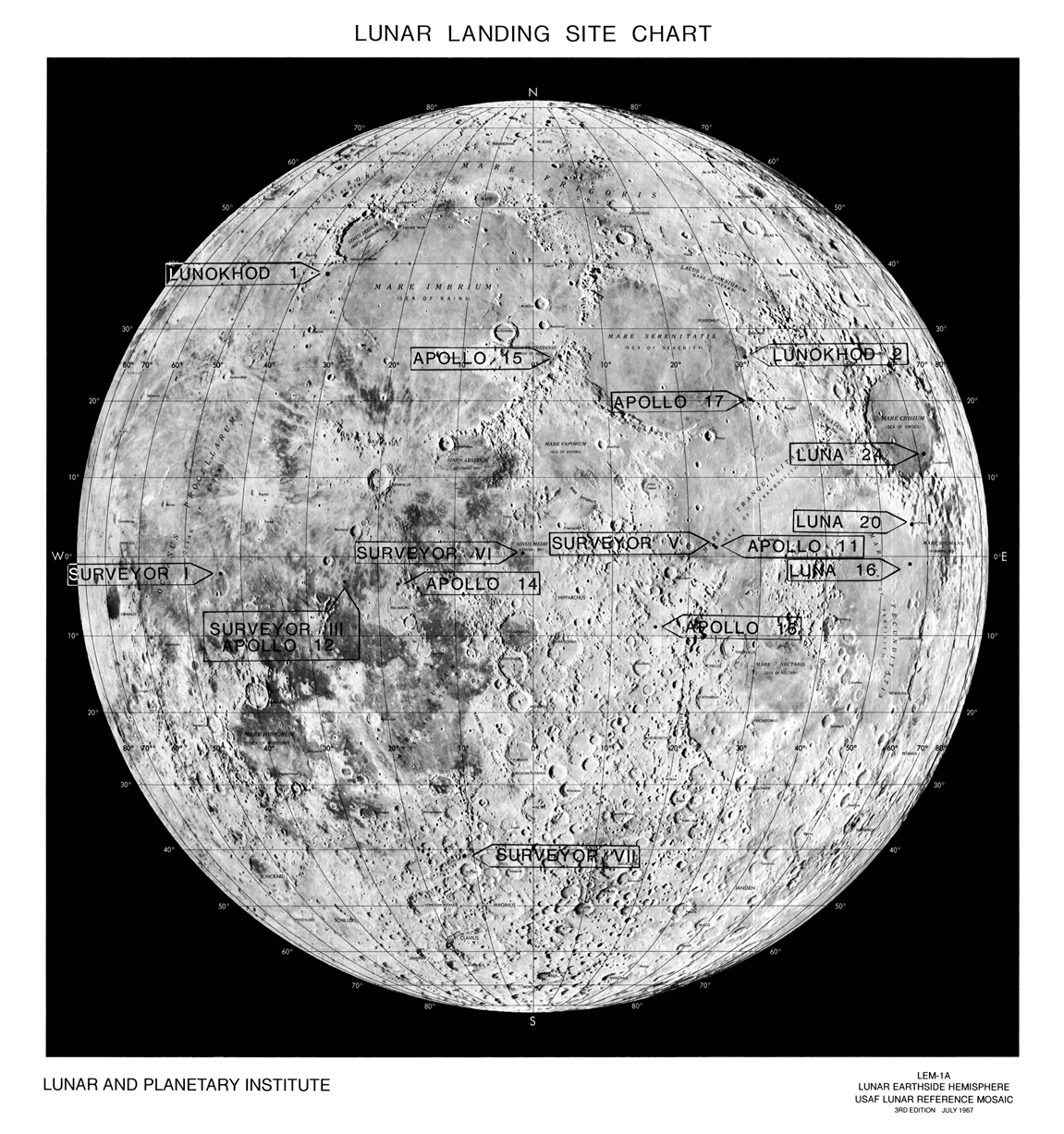
    Lunar Landing Site Chart – click for larger versions. Courtesy Lunar and Planetary Institute
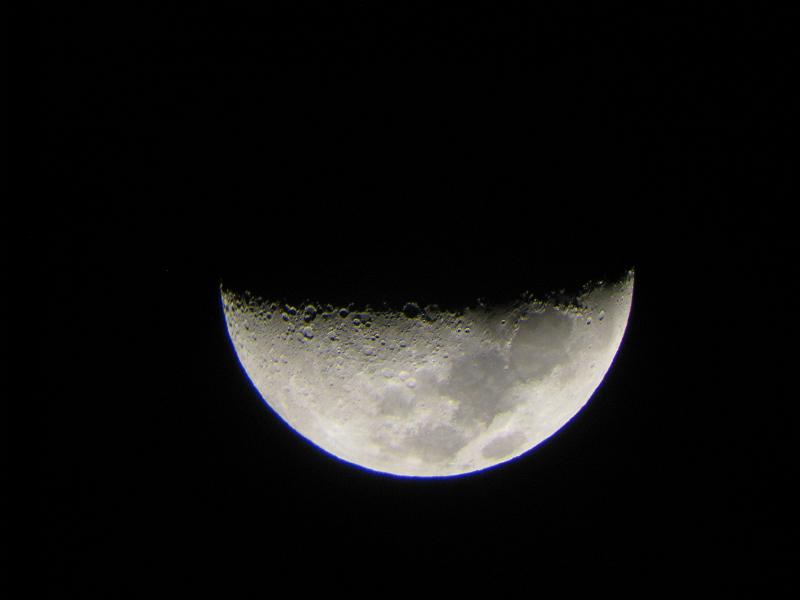
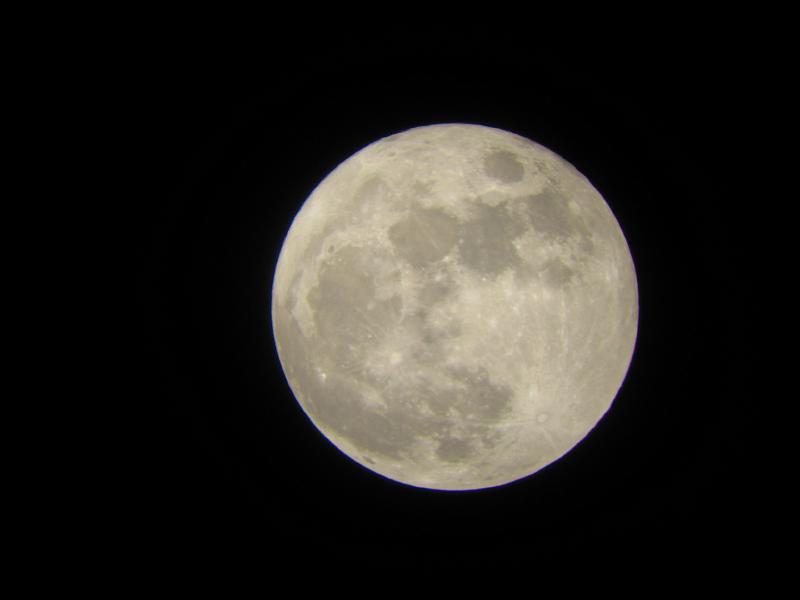
    My photo of a three day moon. East is at the bottom. Mare Crisium is the egg-shaped feature on east limb.
    Here’s my photo of a five-six day moon, near first quarter. East is at bottom here too. The middle sea visible above/West of Mare Crisium is the Sea of Tranquility, site of the Apollo 11 landing.
    Here’s my photo of a fourteen day or full moon. East is at the top. Notice the features are less distinct, but look for the long rays spreading out from the two large craters Copernicus (lower middle left) and Tycho (lower right).
    Finally, my photo of a 21 day or third quarter moon. West is at the bottom left

    Fasten your seat belts. I’m going to take you on a guided month-long tour of the moon and highlight some of my favorite lunar features. You can use this travelog all year to observe or sketch the moon any time the moon is visible. You’ll be surprised how some of the familiar geology you’ll see on our rocky neighbor changes as sunrise or sunset illuminates different sides of crater walls. If you don’t have a moon map, click on the one to the left, or the other one at the bottom.

    The visible features I describe will be illuminated by sunlight from the right to the left as shown on this moon chart. It takes 14 days from new to full moon. At full moon the entire disk will be illuminated, then sunset darkens the features night by night, from right to left. Try viewing the same features before, during and after the full moon.

    New Moon Phase Day 1 – 6 The moon rises at dawn, and sets at dusk. The new moon phase starts at solar conjunction. This is the starting point of the lunation or period of the Moon’s cycle around the sky. Day 1 is very difficult to observe. On day 2, the “sea” of Crises, Mare Crisium becomes visible. To the south is Petavius, a large crater with a central peak of over 8000 feet. Day 3 brings Mare Fecunditatis, south of Mare Crisium, into view. On day 4, Mare Crisium and Mare Fecunditatis are fully visible, and the walled plain Janssen is visible. On day 5, Theophilus, Cyrillus and Catharina make a nice group of craters. The crater Maurolycus, with a central peak like Theophilus, appears on day 6. The moon is now approaching first quarter. The terminator (boundary between the sunlit and dark parts of the moon) is now at the center of the moon’s disk.

    First Quarter Phase Day 7 – 13 The moon rises at noon, and sets at midnight. The crater Hipparchus is at its visible best near the terminator on day 7. Look for two craters within Hipparchus. Day 8 brings into view the rugged Appenine mountains, and to the north the oval walled plain Plato. With binoculars or telescopes, find the “Straight Wall”, a lunar fault line. Tycho and Copernicus are on the terminator on day 9, and so is Clavius, the large walled plain south of Tycho. On day 10 look for the Jura Mountains and Sinus Iridum (the bay of rainbows) with its hook-like curved mountainous point on the edge of Mare Imbrium. This is one of my favorite objects on the moon to observe and sketch. On day 11, look back on the whole moon and observe the dark lunar lava plains divided by mountains. On day 12, look at Gassendi, a large crater with a smaller crater next to it. Together they look like a diamond ring. As full moon approaches, look back over the objects you observed each night and see how different they look.

    Full Moon Phase Day 14 – 21 The moon rises rises at dusk, and sets at dawn. Look at the bright ray systems. The direct sunlight on the moon at this phase washes out features, and you see no shadows, just like when the sun is directly overhead on earth. The long rays of Tycho are most dramatic at full moon! Day 15 brings sunset to Crisium, 2 weeks after we first viewed its sunrise. Watch the shadows cast on the walls of the plains including the darkened Mare Crisium, and craters on day 16 through 18. Day 19 is a good one to view the “Sea” of Tranquility, famous as the landing site of Apollo 11. There is a link to lunar landing sites at the bottom of the page, by the way. Day 20 brings the terminator to another of my favorite observing and sketching sites, the three craters Theophilus, Catharina and Cyrillus. Mountains are the highlight of day 21. The Apennines, and the large craters Kepler, Copernicus and Tycho are beautiful at lunar sunset. The last quarter moon has arrived.

    Last Quarter Moon day 22 -27 The moon rises at midnight, and sets at noon. You really have to be dedicated to view this phase, or maybe just sleep deprived. Mare Imbrium and Copernicus are darkening on day 23. On day 24 through 27, most observers are sleeping when the moon is visible. Use binoculars to observe earthshine over the surface of the moon. These are the days (or rather nights) to turn your eyes, binoculars or telescopes to other wonders of the night sky: planets, comets, meteor showers and galaxies. Say good-night to our close neighbor. If you didn’t catch all these features, there’s always next month!

    A moon map with almost all the features labelled

    Check out all 6 Apollo landing sites, plus moon phase/landing site maps on this flyer I made for the GRAIL mission launch week in September 2011. (PDF)

    USNO’s great Phases of the Moon and Percent of the Moon Illuminated pages

    Here’s the original 1990 article I wrote for John Dobson’s Sidewalk Astronomy newsletter. My mom contributed the adorable lunar drawings.

    My Sketches at the Eyepiece website

  • Meteor observing tips – updated old blog for 2015

    My meteor shower first aid kit
    Waiting for moonset on Perseid night 2010, observing from Amboy Crater, CA
    Notice elevated rates from August 7th-15th, and a secondary peak on the 17th, and the 20th?

    Here’s what you can expect to see from a dark sky observing for several hours like the 2010 Perseids which peaked on a moonless night like this year.

    I enjoy observing meteor showers from the darkest sky I can drive to in one night. Here’s where I go, what I bring (and don’t bring), and how I observe.

    You will want a comfy chair that supports your neck. I bring a clipboard with blank sheets of paper and Finnish Triangle limiting magnitude star charts to determine my limiting magnitude throughout the night.

    I also pack binoculars, but not for observing meteors. I just like to have them with me to look at galaxies and star clusters when not counting meteors. I leave my telescope at home, too. I bring a digital clock that doesn’t emit any light, a red flashlight, pencils, an audio recorder, and a cooler full of snacks and water. I keep on hand layers of clothes, a blanket or sleeping bag, and hand-warmers for cool nights. For comfort, I carry a first aid kit including eye drops, chap stick, and sting-ease for bug bites. One more thing I keep handy – a piece of string, in case I want to trace a meteor to its radiant by holding it up to the streak of light.

    I don’t keep any light emitting devices within eyesight – no cell phone, no interior car lights, no telescope mounts or cameras that emit or blink light. You don’t have to be that drastic about darkness, but I often drive a long way to a dark sky and want to see faint meteors. Any car or phone light will ruin my dark adaptation. It can take up to an hour for your eyes to adjust again. If a car or a friend stops by, I will just take a break, or shut my eyes until the light is gone.
    Once I am ready to begin observing, I scan the area of the sky I plan to watch. Note! You don’t have to look in the direction of the radiant. The Perseids all appear to radiate from (fly out of) a point – the radiant – in the constellation Perseus, and so they will appear everywhere. That’s where the string or shoelace are helpful — to trace the meteor back to its point of origin. Then I memorize the magnitudes of familiar stars nearby so I can accurately note the meteor magnitudes on my observing paper – one sheet for every 15 minutes I plan to observe. The info all ends up on this visual observing form, prepared from all the raw data. Then I sit in my comfy chair, clipboard on my lap, and wait for that first meteor to streak across my viewing field.

    2015 Perseids – Live updates!

    My accounts of the 1998-2002 Leonid Storm Multi-Instrument Aircraft Campaign (MAC)

    My account of the 2007 Aurigid Outburst, Perseid MAC

    2011 Draconids MAC

  • Mission Juno Launch, August 5, 2011

    The day before launch – Atlas V in 551 configuration (5-meter payload fairing, 5 solid rocket strap-ons). Under the fairing is a Centaur second stage and Juno.
    Launch 12:25 p.m. EDT August 5, 2011
    Bound for Jupiter – a plume sundial. You can tell the time of launch by the shadow of the plume – the sun is nearly overhead

    Two weeks after I started work at NASA’s Jet Propulsion Laboratory in late 2003 I was given my first “real” assignment. I was asked to sit in on Mission Juno’s design meetings and write the E/PO (Education and Public Outreach) proposal outline for the mission, a page-and-a-half summary with a budget. It was exciting to delve into a new kind of out-of-this-world work and begin a dream-come-true job as the informal and public outreach person on the Cassini Mission, with occasional planetary mission proposal writing forays.

    Fast forward nearly 8 years and I find myself sitting in the shadows of Kennedy Space Center writing a blog about my own adventures at the launch of the mission which launched my own career at JPL. There will be many blogs, photo essays, and tweets from the 150 Tweetup attendees and many other launch guests. Mojo was one of the lucky 150 attendees at the tweetup and his blog is here.

    My job at the launch was threefold. My first role was at the NASA tweetup itself. I’ve been the @CassiniSaturn Twitter persona since June 2008, and so I was working the tweetup backing up my outer planetary mission buddy @NasaJuno on Twitter duty the hours leading up to, at and after launch. I was also on hand to talk about NASA’s Year of the Solar System and show my What’s Up podcast during the hour just before launch at the Tweetup.

    My second job was to organize a “star party” for the launch guests and create a flyer for all the attendees. The guests included the Juno mission’s invited Goldstone Apple Valley Radio Telescope Program students and educators, who came out to my star party. Each of the several thousand launch goodie bags had that star chart flyer featuring Saturn, the moon, Jupiter and Vesta, with a link to my What’s Up for August 2011 podcast and to NASA’s Year of the Solar System website outreach material. The podcast and website feature the Juno mission and planetary windy worlds like Saturn and Jupiter this month.

    My third role was to participate in the Planetary Science Mission Directorate’s “Scientists in Action” webcast, live-streamed to museum audiences remotely. Museum audiences all over the country, and probably the world, watched this and other Juno launch programming.

    In addition to the “work,” I was also a starry-eyed space girl at the NASA Tweetup, and was beyond excited to see my first launch. Just like the others, I was lapping up all the speaker comments and tweeting from @jhjones like crazy, when I wasn’t tweeting from @CassiniSaturn or @NASAJuno. I was stunned at the amazing bus tour stops, in spite of the sweltering heat. And I soaked up the electric camaraderie and atmosphere of everyone at the Tweetup program.

    Although it was a “you had to be there” kind of event, I hope these pictures and tales give you a taste of the magic that is NASA. I almost can’t believe I get to go to NASA planetary mission launches at Cape Canaveral/Kennedy Space Center for work! And share the excitement of Cassini, Juno, and next month, Grail with informal education outreach! I’m not on cloud nine, I’m above it!

    My Juno launch photo album

    The NASA Juno website

    Juno launch videos

  • A Micro-Vacation to Savannah Georgia

    A room with a view – overlooking beautiful Jones Street
    Chippewa Square, location of Forrest Gump's bench scenes

    Back in November 2010 I took a micro-vacation to Savannah, Georgia. Even though my visit was less than 24 hours long, I packed a lot of sightseeing into my short visit. I was traveling from Atlanta, Georgia, to meet up with Mojo in Orlando, Florida, and took an extra day to see Savannah. As I left Decatur, Georgia, I was thinking of the Civil War and the destruction of Atlanta. When I crossed the Oconee River I realized I was following William Tecumseh Sherman’s March to the Sea in November and December 1864.

    I arrived in Savannah at about 3 p.m. in the afternoon on a bitterly cold late November day. I meandered through the historic district to the Eliza Thompson House, an exquisite 1847 inn located on W. Jones Street. I settled into my room — the tiny but lovely Lee Room, with a 12-foot ceiling, plantation shutters and a bay window overlooking the beautiful oak trees on Jones Street. A charming exposed brick wall separated the bedroom and bath.

    Then I set out for a pre-dinner walk through some of the famous squares of Savannah. As I walked down the Factors Walk, where cotton was bought and sold, I figured an early dinner was in order. I didn’t want to walk the mile back to my hotel, and it was about 20 degrees outside. As I wandered along River Street, I found just the restaurant and view I was looking for. And so I ended up having fried green tomatoes plus wild Georgia shrimp and grits at Vic’s on the River Restaurant and Bar, watching the sunset darken the skies over the Savannah River as I ate.

    During my Wednesday afternoon, and Thursday morning walks the next morning, I visited half a dozen of Savannah’s famous squares, the Colonial Park Cemetery, the Savannah River, writer Flannery O’Connor’s childhood home, the birthplace of Girl Scouts of America founder Julia Gordon Low, and the Savannah College of Art and Design. Why not take a stroll through Savannah in my photo essay? I’m sure it will whet your appetite for a visit to this lovely city!

    My Savannah Photojournal