Jane's blog banner

Category: Road trips

  • NASA Social at Dryden Flight Research Center, May 4, 2012

    This way to the first @DrydenSocial
    This way to the first @DrydenSocial
    New NASA Social lanyard, badge and patch, old tweetup pins
    New NASA Social lanyard, badge and patch, old tweetup pins
    Here I am inside the Astronaut CTV (Crew Transport Vehicle) I would have laid down on the bed I'm sitting on, but I was too excited!
    Here I am inside the Astronaut CTV (Crew Transport Vehicle) I would have laid down on the bed I’m sitting on, but I was too excited!
    Here are the fabulous handouts and books for the attendees
    Here are the fabulous handouts and books for the attendees
    My other car is not an F-18 Hornet :-(
    My other car is not an F-18 Hornet 🙁

    I was one of the lucky attendees at the first NASA Social at Dryden Flight Research Center last Friday, May 4, 2012. Here’s my first blog about the event — a play-by-play rundown of the speakers and tours on the agenda. NASA selects attendees who use social media, so naturally we’re encouraged to share the experience. Who wouldn’t want to do that, anyway? Here’s my social self for you to follow if you’d like: @jhjones on Twitter and JaneHoustonJones on Facebook. My NASA video podcast, What’s Up, with RSS feed and iTunes link is here, on YouTube here, and expanded with educational activites, starcharts and web links here.

    But, first of all, I’d like to offer my sincere thanks to the Dryden Office of Strategic Communications team for a flawless and exhilarating experience! Thank you Kevin, Lisa, Terry, Beth, Leslie, and the many others who put this event together. Thanks to the speakers, the pilots, and the many interpreters, managers, AV team, oh, gosh thanks everyone at the Dryden Flight Research Center for allowing 50 Aeronautical geeks/social media savants into your world for a day. We really appreciated it!

    In looking over the agenda, I noticed a url below every single speaker’s name and most of the aircraft and other venues we visited. What a brilliant addition to the program!

    Introductions
    Kevin Rohrer, Chief of the Office of Strategic Communications Kevin’s Bio
    Stuff I learned: Kevin makes his own beer, and drinks it too!

    Welcome
    David McBride, Center Director David’s bio
    Stuff I learned: Dryden has the most manned launches of ANY @NASA center! And David watches my What’s Up podcast via itunes on his iPad.

    History of Dryden Flight Research Center
    Christian Gelzer, Chief Historian About Dryden Stuff I learned: Dryden started in 1946 to test the X-1 and find out if supersonic flight was possible (and survivable).

    Sonic Booms
    Ed Haering, NASA Aerospace Engineer
    Sonic Booms
    Dryden sonic boom research Stuff I learned: “The boom you heard today started in 1947. You look out on the lake bed and realize how blessed you are to be doing this.”

    Historical aircraft tour
    Pete Merlin, Dryden Historian
    X-1E
    LLRV-Lunar Landing Research Vehicle Stuff I learned: The LLRV was used to study and analyze piloting techniques needed to fly and land the Apollo Lunar Module in the moon’s airless environment
    M2-F1 lifting body I learned: M=Manned, F= Flight. The wingless, lifting body aircraft design was initially conceived as a means of landing an aircraft horizontally after atmospheric reentry.

    Global Hawk (unmanned)
    Phil Hill, NOAA Pilot
    Global Hawk Learned: is an unmanned aircraft for high-altitude, long-duration Earth science missions. 111,000 nautical mile range, 30-hour endurance.

    Ikhana (Predator B unmanned)
    Hernan Posada, Mark Pestana
    Ikhana – unmanned science demonstration aircraft. I learned Mark Pestana’s daughter is an intern at JPL, in fact, I’m meeting her tomorrow I met her two days ago and took her on a tour of JPL’s Space Flight Operations Facility “Darkroom”. And I learned Ikhana is a Choctaw Native American word for “intelligent, conscious, or aware, and this drone is used to conduct long-duration Earth observations. One more thing I learned: Mark Designs NASA Mission Patches in his spare time!

    Gulfstream- III
    Ethan Baumann and Natalie Spivey, NASA Engineers
    Gulfstream-III Learned – it’s a multi-role cooperative research platform testbed for a variety of flight research experiments.

    Dryden Pilots
    Nils Larson, Acting Chief pilot Nils’ bio
    Stuff I heard: Great quotes on working at Dryden: “”You look out at the lakebed and you think ‘It’s so cool’…It’s like being paid to eat ice cream.” “U-2 most difficult plane to fly, F/A-18 most fun, F-15 is the Cadillac” Why did you choose @nasaDryden? “Dryden is Mecca for test pilots” “flew between 90 & 100 different planes, blimps, etc. U2 is fun to fly because it can have bad day!”

    Link to all Dryden Pilots (warning, includes many astronauts who worked here at Dryden.)

    Lunch Break in the Dryden cafe – I had chicken salad with pilots in flight suits! @Camilla_SDO seated (perched) at the next table, gave me the stink-eye >.< Automatic Collision Avoidance Technology Mark Skoog, Project Manager Automatic Collision Avoidance Technology Link to awesome avoidance vids posted soon. I learned to follow the lunch break with collision avoidance videos. Wow!

    Flight Opportunities Program
    John Kelly, NASA Program Manager
    3 min Flight Opportunities vid Stuff I learned: Flight Opportunities system has tested orbital emergency surgery techniques and fire extinguishers prior to use on ISS, helping private companies test in more space-like environs, gets suborbital flights for payloads needing to fly in 0g, stuff like that.

    Experimental Fabrication Lab
    Ed Swan, Structural Fabrication Branch Chief
    Experimental Fabrication Labs What I learned: Best quips of the day. “No aircraft flies here without something pointy sticking out of it.” and “What was your most interesting job?” / “Cutting a four-engine airplane in half.” “@NASADryden understands that parts need to be perfect, they give us our time. Parts can be worth millions in data. Best Quote: “You have a whole project waiting on the part, you don’t have time to tweet”. Here’s another Fabrication Lab feature.

    Life Support
    Phillip Wellner, Aircrew Life Support Technician
    Dryden Aircrew Life Support Systems Stuff I learned: If a pilot flew above the Armstrong limit using only an oxygen mask and no pressure suit, the water wetting his lungs would boil as would the saliva in his mouth. Blood would boil too.
    Stuff I watched: Phillip inflated a SR-71 flight suit with a shop vac, High-altitude flight suit fashion show, Helmet foo. Stuff I ate: high altitude Chicken a la king, Sloppy Joes, applesauce in a silvery toothpaste-ish tube.

    Flight Load Labs
    Larry Hudson, Chief Test Supervisor
    Flight Loads Lab What I learned: Watched a plane flap its wings during flight load testing in fast motion. Large quartz lamps apply radiant energy to test airframes to simulate heat in flight. Flight Loads Lab tests not only structural loads, but heat and environmental loads, too!

    Photography
    Jim Ross, Multimedia Supervisor
    Jim Ross link. Stuff I learned: Astronaut Gordon Fullerton, retired, former Chief Pilot at Dryden is mentioned in nearly every presentation. He referred to Jim Ross (and other video/photog staff) as “self loading baggage” with a wink, I bet. (I tweeted that!) Bonus: We all got autographed shuttle/747 picture by Jim (#NASA904 and #OV103).

    Videography
    Lori Losey, Senior Video Producer/Director
    Here’s the video we saw. Lori Losey award writeup. What I learned: Awesome presentation, more great quotes from Lori: I have the best seat in the house. “You can Puke in a bag at 3G’s. You tie it off, put it in your suit, and keep filming.” “Compressed my spine, dislocated my shoulder, bruises from harnesses.”

    Hangar 4802 (Aircraft tour and F-18 cockpit photos)
    F-18 Hornet aircraft It was an FA-18 flyover test with a sonic boom for the @DrydenSocial!
    Crew Transportation Vehicle Learned: Seven seats (and a few beds) for seven Shuttle astronauts in the Crew Transport Vehicle.
    YO-3 Only 11 YO-3’s built in the Vietnam era and this is the only remaining functional one. Used for baseline sound tests (it’s very quiet) YO-3A propeller: 78 layers of birch.
    T-34 At Dryden, the T-34C is primarily used for chasing remotely piloted unmanned air vehicles which fly slower than NASA’s F-18’s mission support aircraft can fly. It is also used for required pilot proficiency flying.
    T-48 This is the 1st time the public has been allowed to see the X-48C Hybrid Wing Body.
    Gulfstream II NASA 944, one of four Gulfstream II Shuttle Training Aircraft, arrived at NASA’s Dryden Flight Research Center from the Johnson Space Center in Houston Aug. 19 in preparation for its retirement and eventual static display.
    Beechcraft Kingair One of Dryden’s King Air aircraft, NASA 801, (N801NA) serves as a testbed for various research projects, and is also flown for a range of mission support activities.

    Media and blog links

    May 1, 2012 feature Behind the Scenes @NASADryden

    May 7, 2012 feature NASA Social: Behind the Scenes at Dryden

    See what the #DrydenSocial attendees tweeted here!

    Flying through the Leonid Storm of 2002, aboard NASA Dryden’s DC-8 Airborne Research Laboratory with Astronaut Gordon Fullerton as our pilot. Lots of interior DC-8 photos of our scientific equipment, too.
  • Meteor observing tips – updated old blog for 2015

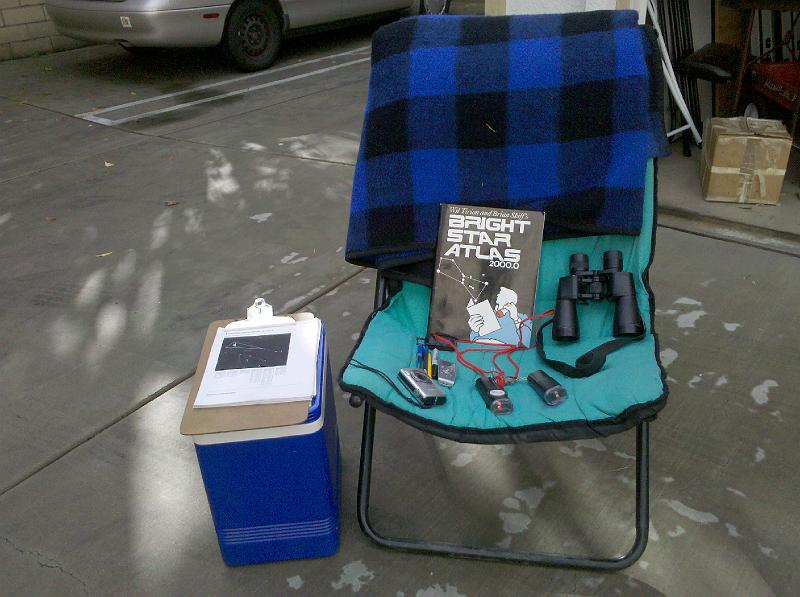
    My meteor shower first aid kit
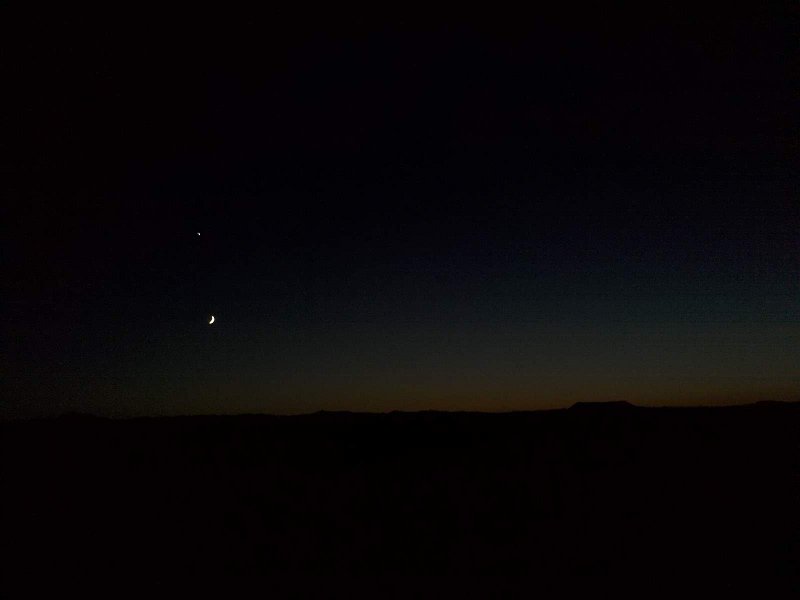
    Waiting for moonset on Perseid night 2010, observing from Amboy Crater, CA
    Notice elevated rates from August 7th-15th, and a secondary peak on the 17th, and the 20th?

    Here’s what you can expect to see from a dark sky observing for several hours like the 2010 Perseids which peaked on a moonless night like this year.

    I enjoy observing meteor showers from the darkest sky I can drive to in one night. Here’s where I go, what I bring (and don’t bring), and how I observe.

    You will want a comfy chair that supports your neck. I bring a clipboard with blank sheets of paper and Finnish Triangle limiting magnitude star charts to determine my limiting magnitude throughout the night.

    I also pack binoculars, but not for observing meteors. I just like to have them with me to look at galaxies and star clusters when not counting meteors. I leave my telescope at home, too. I bring a digital clock that doesn’t emit any light, a red flashlight, pencils, an audio recorder, and a cooler full of snacks and water. I keep on hand layers of clothes, a blanket or sleeping bag, and hand-warmers for cool nights. For comfort, I carry a first aid kit including eye drops, chap stick, and sting-ease for bug bites. One more thing I keep handy – a piece of string, in case I want to trace a meteor to its radiant by holding it up to the streak of light.
    I don’t keep any light emitting devices within eyesight – no cell phone, no interior car lights, no telescope mounts or cameras that emit or blink light. You don’t have to be that drastic about darkness, but I often drive a long way to a dark sky and want to see faint meteors. Any car or phone light will ruin my dark adaptation. It can take up to an hour for your eyes to adjust again. If a car or a friend stops by, I will just take a break, or shut my eyes until the light is gone.

    Once I am ready to begin observing, I scan the area of the sky I plan to watch. Note! You don’t have to look in the direction of the radiant. The Perseids all appear to radiate from (fly out of) a point – the radiant – in the constellation Perseus, and so they will appear everywhere. That’s where the string or shoelace are helpful — to trace the meteor back to its point of origin. Then I memorize the magnitudes of familiar stars nearby so I can accurately note the meteor magnitudes on my observing paper – one sheet for every 15 minutes I plan to observe. The info all ends up on this visual observing form, prepared from all the raw data. Then I sit in my comfy chair, clipboard on my lap, and wait for that first meteor to streak across my viewing field.

    2015 Perseids – Live updates!

    My accounts of the 1998-2002 Leonid Storm Multi-Instrument Aircraft Campaign (MAC)

    My account of the 2007 Aurigid Outburst, Perseid MAC

    2011 Draconids MAC

  • Mission Juno Launch, August 5, 2011

    The day before launch – Atlas V in 551 configuration (5-meter payload fairing, 5 solid rocket strap-ons). Under the fairing is a Centaur second stage and Juno.
    Launch 12:25 p.m. EDT August 5, 2011
    Bound for Jupiter – a plume sundial. You can tell the time of launch by the shadow of the plume – the sun is nearly overhead

    Two weeks after I started work at NASA’s Jet Propulsion Laboratory in late 2003 I was given my first “real” assignment. I was asked to sit in on Mission Juno’s design meetings and write the E/PO (Education and Public Outreach) proposal outline for the mission, a page-and-a-half summary with a budget. It was exciting to delve into a new kind of out-of-this-world work and begin a dream-come-true job as the informal and public outreach person on the Cassini Mission, with occasional planetary mission proposal writing forays.

    Fast forward nearly 8 years and I find myself sitting in the shadows of Kennedy Space Center writing a blog about my own adventures at the launch of the mission which launched my own career at JPL. There will be many blogs, photo essays, and tweets from the 150 Tweetup attendees and many other launch guests. Mojo was one of the lucky 150 attendees at the tweetup and his blog is here.

    My job at the launch was threefold. My first role was at the NASA tweetup itself. I’ve been the @CassiniSaturn Twitter persona since June 2008, and so I was working the tweetup backing up my outer planetary mission buddy @NasaJuno on Twitter duty the hours leading up to, at and after launch. I was also on hand to talk about NASA’s Year of the Solar System and show my What’s Up podcast during the hour just before launch at the Tweetup.

    My second job was to organize a “star party” for the launch guests and create a flyer for all the attendees. The guests included the Juno mission’s invited Goldstone Apple Valley Radio Telescope Program students and educators, who came out to my star party. Each of the several thousand launch goodie bags had that star chart flyer featuring Saturn, the moon, Jupiter and Vesta, with a link to my What’s Up for August 2011 podcast and to NASA’s Year of the Solar System website outreach material. The podcast and website feature the Juno mission and planetary windy worlds like Saturn and Jupiter this month.

    My third role was to participate in the Planetary Science Mission Directorate’s “Scientists in Action” webcast, live-streamed to museum audiences remotely. Museum audiences all over the country, and probably the world, watched this and other Juno launch programming.

    In addition to the “work,” I was also a starry-eyed space girl at the NASA Tweetup, and was beyond excited to see my first launch. Just like the others, I was lapping up all the speaker comments and tweeting from @jhjones like crazy, when I wasn’t tweeting from @CassiniSaturn or @NASAJuno. I was stunned at the amazing bus tour stops, in spite of the sweltering heat. And I soaked up the electric camaraderie and atmosphere of everyone at the Tweetup program.

    Although it was a “you had to be there” kind of event, I hope these pictures and tales give you a taste of the magic that is NASA. I almost can’t believe I get to go to NASA planetary mission launches at Cape Canaveral/Kennedy Space Center for work! And share the excitement of Cassini, Juno, and next month, Grail with informal education outreach! I’m not on cloud nine, I’m above it!

    My Juno launch photo album

    The NASA Juno website

    Juno launch videos

  • A Micro-Vacation to Savannah Georgia

    A room with a view – overlooking beautiful Jones Street
    Chippewa Square, location of Forrest Gump's bench scenes

    Back in November 2010 I took a micro-vacation to Savannah, Georgia. Even though my visit was less than 24 hours long, I packed a lot of sightseeing into my short visit. I was traveling from Atlanta, Georgia, to meet up with Mojo in Orlando, Florida, and took an extra day to see Savannah. As I left Decatur, Georgia, I was thinking of the Civil War and the destruction of Atlanta. When I crossed the Oconee River I realized I was following William Tecumseh Sherman’s March to the Sea in November and December 1864.

    I arrived in Savannah at about 3 p.m. in the afternoon on a bitterly cold late November day. I meandered through the historic district to the Eliza Thompson House, an exquisite 1847 inn located on W. Jones Street. I settled into my room — the tiny but lovely Lee Room, with a 12-foot ceiling, plantation shutters and a bay window overlooking the beautiful oak trees on Jones Street. A charming exposed brick wall separated the bedroom and bath.

    Then I set out for a pre-dinner walk through some of the famous squares of Savannah. As I walked down the Factors Walk, where cotton was bought and sold, I figured an early dinner was in order. I didn’t want to walk the mile back to my hotel, and it was about 20 degrees outside. As I wandered along River Street, I found just the restaurant and view I was looking for. And so I ended up having fried green tomatoes plus wild Georgia shrimp and grits at Vic’s on the River Restaurant and Bar, watching the sunset darken the skies over the Savannah River as I ate.

    During my Wednesday afternoon, and Thursday morning walks the next morning, I visited half a dozen of Savannah’s famous squares, the Colonial Park Cemetery, the Savannah River, writer Flannery O’Connor’s childhood home, the birthplace of Girl Scouts of America founder Julia Gordon Low, and the Savannah College of Art and Design. Why not take a stroll through Savannah in my photo essay? I’m sure it will whet your appetite for a visit to this lovely city!

    My Savannah Photojournal

  • A Dreamcatcher, And A Blanket Of Stars

    Red Willow dreamcatcher with Big Dipper and Milky Way
    Red Willow Dreamcatcher with Big Dipper and Milky Way
    The Fisher Stars, painting courtesy of Edwin Bighetti, Mathais Colomb First Nation
    The Fisher Stars, painting courtesy of Edwin Bighetti, Mathais Colomb First Nation
    Wesakaychak Pointing - courtesy of Edwin Bighetti, Mathais Colomb First Nation
    Wesakaychak Pointing – courtesy of Edwin Bighetti, Mathais Colomb First Nation

    In March 2010, I was invited to be the keynote speaker at the Manitoba First Nations Education Resource Centre’s annual Science and Career Fair. Two participating schools from the Nisichawayasihk Cree Nation in Nelson House, Manitoba invited me to visit their community. So in November 2010 I spent two days with the students, teachers at the K-8th grade Otetiskiwin Kiskinwamahtowekamik School, and the 9-12th grade Nisichawayasihk Neyo Ohtinwak Collegiate.

    After a day of school presentations in early November, I was invited to a community gathering of shared songs, the music of flute, hand and water drums, and stories from several storytellers. Joe Mercredi, a school cultural coordinator and a wonderful storyteller told several stories, after he played the flute – a six-hole flute made of mountain juniper by Navajo flute maker Jonah Thompson. Joe makes flutes, too, but he chose this one for this night because “it has a sweeter voice than his own,” he told me recently. Joe also helped me remember the stories he told that night two months ago. He told me that all stories are related to each other. How we remember them depends on what we need to learn at the time.

    His first story is a variation of the Dakota Woodpecker Flute story. A poor young boy with no male relatives lived with his mother. He was friends with the chief’s daughter. They were good friends and spent much time together. When of age, he asked the chief for her hand. The chief questioned his ability to support his daughter. He was mortified and left the camp. After some days he fell asleep under an old cedar tree and was woken up by a woodpecker up in the tree. This being in the time when animals could speak to men, a conversation ensued and the young man was gifted with the first flute. In the end the two become a couple and the young man found fame and fortune as a flute maker. This story can be found in one of the Joseph Bruchac series “Keepers of the Earth/Sky/Night/Life” books.

    Joe then held his Dreamcatcher, and told this story. Red Willow Woman was a woman who taught the children in her community until her death, and, when given the choice by the Great Mystery to be returned to her people, she chose to return as a red willow to demonstrate that every one has the ability to achieve greatness if one reaches beyond one’s limits. Red willow forms the frame of the Dreamcatcher.

    You can see the big dipper stars (or Fisher stars) on the right side of the woven web within the red willow frame. And you can see a chaotic jumble of stars on the left. The legend of how Fisher became the Big Dipper and how animals of long ago decided to share summer and winter, and how the fisher came to be in the northern sky is told by Murdo Scribe, and is known as Murdo’s Story.

    Long ago, in one part of the animal world and bird world it was always summer and in the other half of the world it was very cold with no warm weather. The northern animals and birds had to find summer. Fisher (a small wolverine) carried summer, and the summer animals chased him. They shot at him and an arrow hit Fisher and took him to the northern skies, with the summer. Fisher still lives in the northern sky, and summer is now shared with all animals and birds everywhere. Fisher can be found circling the North Star. Some people call him the big dipper.

    The Dreamcatcher is formed from two willow branches depicting strength and softness intertwined — the need for give-and-take in a respectful loving relationship. Joe decided to map the Big and Little Dippers in the Dreamcatcher. But just like in the Wisakechak story of the Milky Way, he mapped the big dipper, but the trickster, Wisakechak decided to mess up some of the stars. You can see an extra star in the big dipper.

    Legend tells that Wisakechak was meticulous in his placement of the stars, but Fox wanted Wisakechak to play with him, and got tired of waiting for him to finish so he grabbed the blanket of stars and scattered them all over the place. Those stars represent the Milky Way. If you look in the winter sky you will see Wisakechak (sometimes spelled Wesakaychak and many other ways, too) pointing to the Pleaides, which figure in many other legends. Wisakechak is represented by the constellation Orion.

    You can see the big dipper stars in the web of the Dreamcatcher. The handle star, Alkaid is near the top of the Dreamcatcher , and you can see the bowl stars at 3 o’clock. There is one “extra” star woven into the web near the bowl, put there by the trickster, Wisakechak. And you also see the other stars from the blanket of stars Fox threw into the sky on the left side of the Dreamcatcher below the center hole. You’ll also see the thirteen tie-points, where the sinew is tied to the willow hoop. These thirteen ties represent the 13 new moons of a year.

    After Joe finished his stories of Red Willow Woman, Wisakechak, the Fisher stars, and the Milky Way, he walked over to me and gave me his Dreamcatcher. As I look at my Dreamcatcher now, three months after my visit, I can still hear the drums, the flute and the stories of the stars I heard in Nelson House that snowy November night. Now, when I read Murdo’s Story I can see how all of these stories are related.

    Murdo Scribe was born in Norway House, Manitoba and was a World War II veteran with the Canadian Army. After the war he returned to a life of fishing, trapping and seasonal work. In 1975, he was appointed coordinator of the Traditional Individualized Education Program with the Native Education Branch of the Manitoba Department of Education. He wrote many stories based on his own experiences and those of the elders he had known.

    I thank Joe Mercredi, who is a master storyteller, maker of flutes, weaver of dreamcatchers for sharing these stories with me. I must also thank science educator Wilfred Buck, of the Manitoba First Nations Education Resource Centre, who I met two years ago at the NYAA (Ontario) Starfest when he gave a talk about Atchakosuk: The Spirit Lights Up Above . I have been slowly learning more about the spirit lights above. Two years ago, Wilfred ended his presentation with a quote from one elder, “We are blessed to live under a blanket of stars.”

    I will do the same.

  • November in Manitoba

    Map of Manitoba showing Winnipeg, Nelson House and Churchill
    Map of Manitoba showing Winnipeg, Nelson House and Churchill
    RASC Ron Berard and Guy Westcott at speaker dinner before my RASC talk
    RASC Ron Berard and Guy Westcott at speaker dinner before my RASC talk
    my school talk at Otetiskiwin Kiskinwamahtowekamik K-8th school in Nelson House
    my school talk at Otetiskiwin Kiskinwamahtowekamik K-8th school in Nelson House
    Churchill, Polar Bear Capital of the world, on Hudson Bay
    Churchill, Polar Bear Capital of the world, on Hudson Bay

    In early November 2010, I embarked on a wonderful ten-day speaking tour of Manitoba. I’ll write some separate adventure blogs, but here is the itinerary.

    November 2, 2010 – I flew from LAX to Duluth Minnesota, celebrated my cousin Kathy’s birthday, and (almost) finished my presentations, by working late into the night.

    November 5th – I flew to Winnipeg from Duluth early in the morning, and RASC’s Ron Berard collected me at the airport, and whisked me to the Toastmaster’s Conference Hotel, The Marlborough. That night I gave a Cassini talk and handed out Saturn lithos, NASA decals and Titan bookmarks to the RASC-Winnipeg Centre members and University students and professors that night. Before my talk we went out to dinner with the club members. After my talk we headed for Glenlea Observatory for a spot of Jupiter viewing. And after observing, it was time for beer and pizza! This was a very very long day! My wake up call was 3 a.m. in Duluth that morning and didn’t get home from the pizza after-party until 1 a.m.

    November 6th – Early the next morning, I gave an educational talk to the Winnipeg Toastmaster’s District 64 Fall Conference at 10 a.m. My talk was informal and about tips and tricks to public speaking: in other words, what to do if you have a MAC and your room has a PC. Or if your computer battery dies. Or if an asteroid hits your building. (just joking about the asteroid). After my talk, RASC’s Guy Westcott took me on a lovely afternoon driving and sightseeing tour of Winnipeg. I got back in time to hear a few of the toastmaster speaking contests, and clean up for the Toastmaster’s conference banquet, where I was the keynote after-dinner speaker. The conference theme was “Out of this World”, and the table decorations were constellations punched into coffee cans, Cassini and Saturn Trading Cards (which I mailed ahead of my visit) and some (ahem) Astrology sign placards, which you can see in the picture. After the dinner and the keynote talk, there was dancing and the hospitality suite, conveniently located right next to my own suite at the Marlborough. It was wonderful to wind down after speaking to the toastmasters. I was nervous in the morning, but bring-it-on-ready after dinner. Three talks down, eleven to go!

    November 7th – At 10 a.m. Sunday morning, Guy Westcott collected me at the hotel and drove me to Union Station, Winnipeg’s beautiful train station. He also lent me a sleeping bag, as the overnight train would be cold. Actually it wasn’t cold, but I loved having a sleeping bag. Thanks to the wonderful Guy! We also traded NASA for Manitoba pins, but that’s another story. About 2:00 p.m. and two hours late, the 36-hour, 1000 mile or 1800 km long Winnipeg to Churchill VIA Rail Canada train departed. I continued working on my school talks on the train. My curious and friendly Economy-Class seatmates Carol (a Yosemite National Park interpreter), her husband John, and daughter Isabel were on a 3-month home-school rail trip, and I practiced my Solar System elementary school talk and High School Cassini Mission talk on them.

    November 8th – At about 2 p.m. the train pulled into Thompson, the “Hub of the North”, 800 km from Winnipeg. I departed the train, and was greeted by the principal and Science Coordinator from the Otetiskiwin Kiskinwamahtowekamik (OK) K-8th grade and the Nisichawayasihk Neyo Ohtinwak Collegiate 9-12th grade schools in nearby Nelson House. Nelson House is home to the Nisichawayasihk Cree Nation. We drove the 80km to Nelson House, and by just a little after 3 p.m. I was greeted by a huge gathering of the high school students, who launched a rocket to greet me! I gave a talk to the high schoolers, and settled in for some moose stew and homemade potluck goodies with the assembled teachers. My day wasn’t done yet. After dinner I was treated to a community cultural night of story, song, flute and drum performances, which will be recalled in a separate blog. At about 10p.m. I finally unpacked by bags from the 24-hour train trip, soaked in the tub and fell asleep.

    November 9 – a full day at school. At 8 a.m., I was meeting and greeting the elementary school teachers as they prepared for their day. At 9:00 a.m., I conducted a teacher workshop, handing out materials I had mailed to the schools – about 13 boxes worth. At 10 a.m. it was time for my talk in the auditorium. At noon, moose soup and bannock in the cafeteria. And after lunch, I visited about a dozen of the 20 or so elementary classrooms and met and had pictures taken with the students. At about 3 p.m. I was taken on a tour of the community, and at 6 p.m. I was off to a sweat lodge ceremony out of town. Back at midnight, I had a wonderful and leisurely home-cooked dinner with my hosts, and crawled into bed at about 3 a.m. Ten talks down, four to go!

    November 10 – after about 3 hours sleep, I was up and packed for a ride to the airport in Thompson, for a 7:30 a.m. flight to Churchill, Polar Bear Capital of the world. The population of Churchill is 923 and the polar bear population is 900. I arrived at about 10 a.m. and was whisked to the Duke of Marlborough school for a slate of 4 afternoon talks. It was polar bear season, so all the hotel rooms in town were booked. I was given an overnight doctor and nurse residency apartment. After dropping off my things in the apartment, I headed over to the school, where I gave talks to the 10th-12th graders, the 4th-7th graders, the 8th -9th graders and finally the adorable 2nd-3rd graders — who asked the very best questions! I talked to nearly all the 180 students of the school, just missing the first grade, who were out of school already. At about 4 p.m. I headed out in a blizzard, and walked the streets to find a grocery store, buy my Tundra Buggy ticket for the next day and have dinner at one of the colorful local restaurants, the Reef Dining Room at the Seaport Hotel. By about 10 p.m. I braved the blizzard, and slipped and slided my way back to my room. My 14 talks in 6 days were over! Whew!

    November 11 – I was collected at 8 a.m. by a Tundra Buggy bus, and for the next hour, picked up passengers for a full day polar bear sightseeing trip out on the tundra. We saw 27 polar bears, and I’ll write more about that in a separate blog. I took Michel, a cuddly stuffed Polar bear belonging to a colleague at work, with me on the trip. Here’s Michel’s Polar bear adventures! At 11:11 a.m. the Tundra Buggy stopped and observed a moment of silence for Remembrance Day. The tundra was windswept and snowy white, the fierce blizzardy wind shook the buggy, as we stopped and remembered those fallen armed forces. Then I gave a little impromptu talk (to a few people) on the buggy about Auroras on Earth and Auroras at Saturn. At 6:00 p.m. I was back on the Churchill to Winnipeg train, for a 36-hour trip back to Winnipeg.

    November 12 – This was a day of rolling scenery, chatting with fellow travelers, meeting new people in the dining car. I managed to give my Solar System and Cassini talks to my new seatmates gathered in the dining car, tho. 😉

    November 13 – We rolled into Winnipeg at about — I forget– but it was 4 p.m. or so. I walked Anne-Marie and her dad from Vancouver to their nearby –and haunted — Fort Garry Hotel. Then I continued on to my hotel for the night, the Marlborough. Two hours later I was on my way to dinner with University of Manitoba astronomer Jayanne English. After a lovely dinner with Jayanne (and a grad student), we headed over the the Garry Hotel’s Palm Court for a nitecap. What a lovely way to end my trip!

    November 14 – My flight back to Los Angeles left too early for the famed Sunday Brunch at the Fort Garry Hotel. Guy Westcott (again) was pressed into service and drove me to the airport Sunday morning. Mojo and I were reunited after a long but rewarding and very memorable trip to Manitoba – my second of the year. And lucky me! I’ll be back in Winnipeg April 6 and 7 this year, to speak once again, and to be an honorary judge at the Manitoba First Nations Education Resource Centre’s annual Science and Career Fair.

    Manitoba Road Trips

    Nelson House, November 8-10, 2010 A Dreamcatcher, And A Blanket Of Stars

    Churchill, November 10-11, 2010 Michel sees real polar bears!

    Photo Journals

    March 23, 2010 MFNERC Science Fair and a quick tour of Winnipeg

    November 5-8, 2010 RASC, Toastmasters talks, Winnipeg tour, ViaRail Canada Train

    November 8-10, 2010 Nelson House school talks

    November 10-11, 2010 Flight to Churchill from Thompson Tundra Buggy day trip

  • A Ten Planet Night

    Setting up my favorite Pluto hunting telescope, a 17.5 inch f/4.5 Litebox reflector. Oh, in case you were wondering, its name is Hagrid. All my telescopes have names.
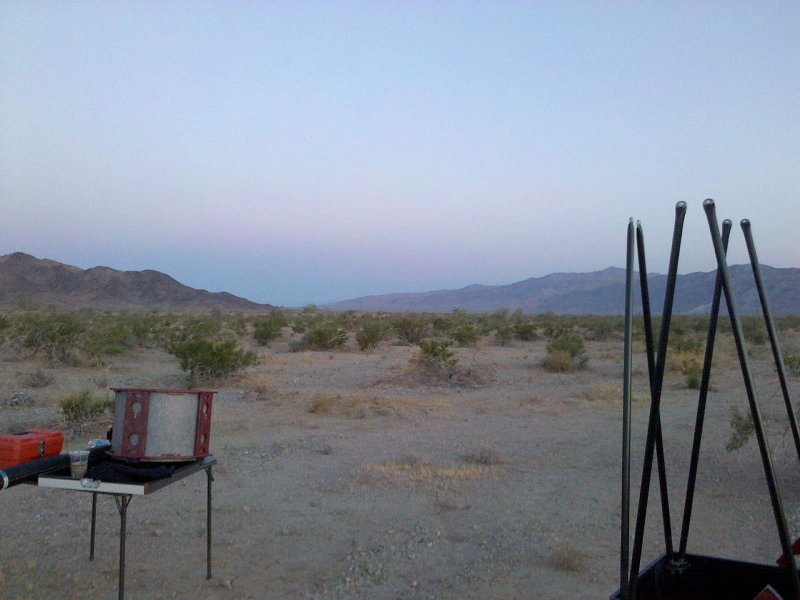
    Chuckwalla Bench horizons
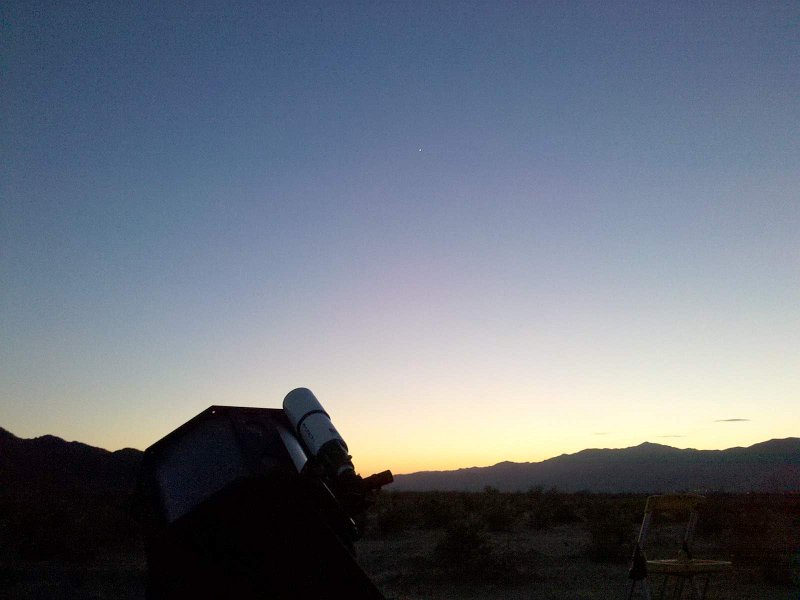
    Earth shadow at sunset, and Mojo setting up his astrophotography rig
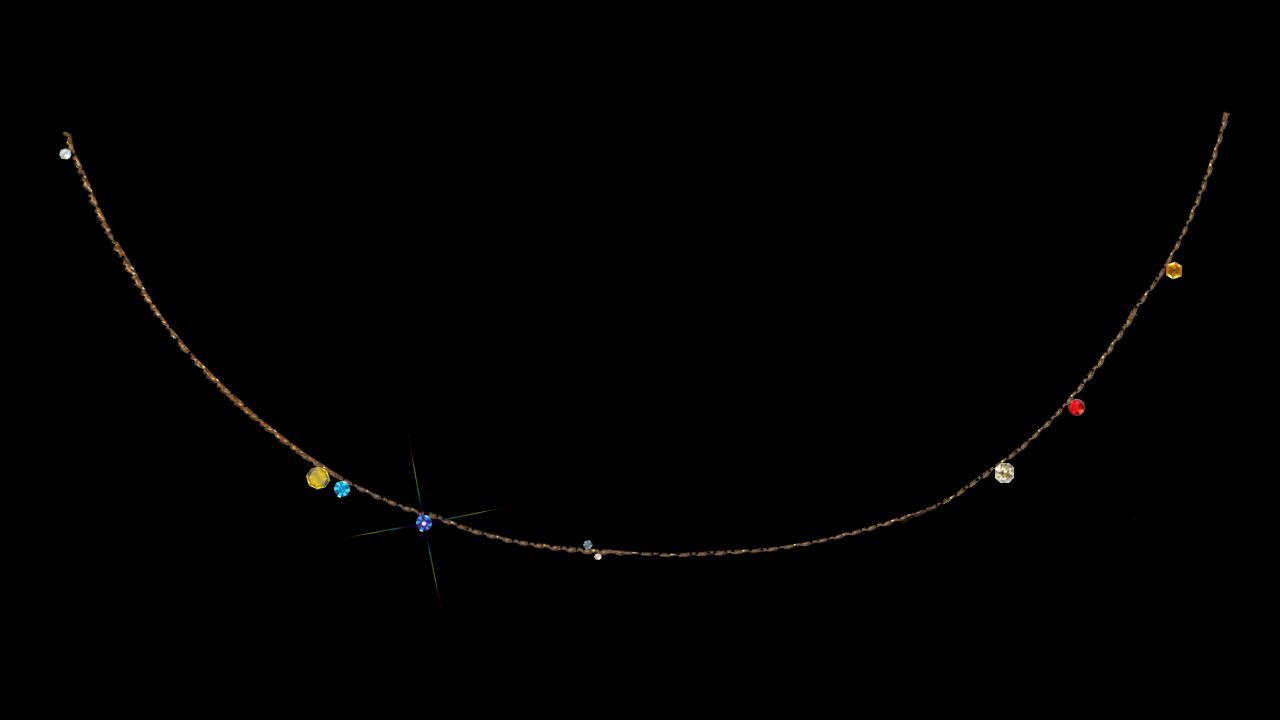
    A starry necklace spans the sky from dusk to dawn
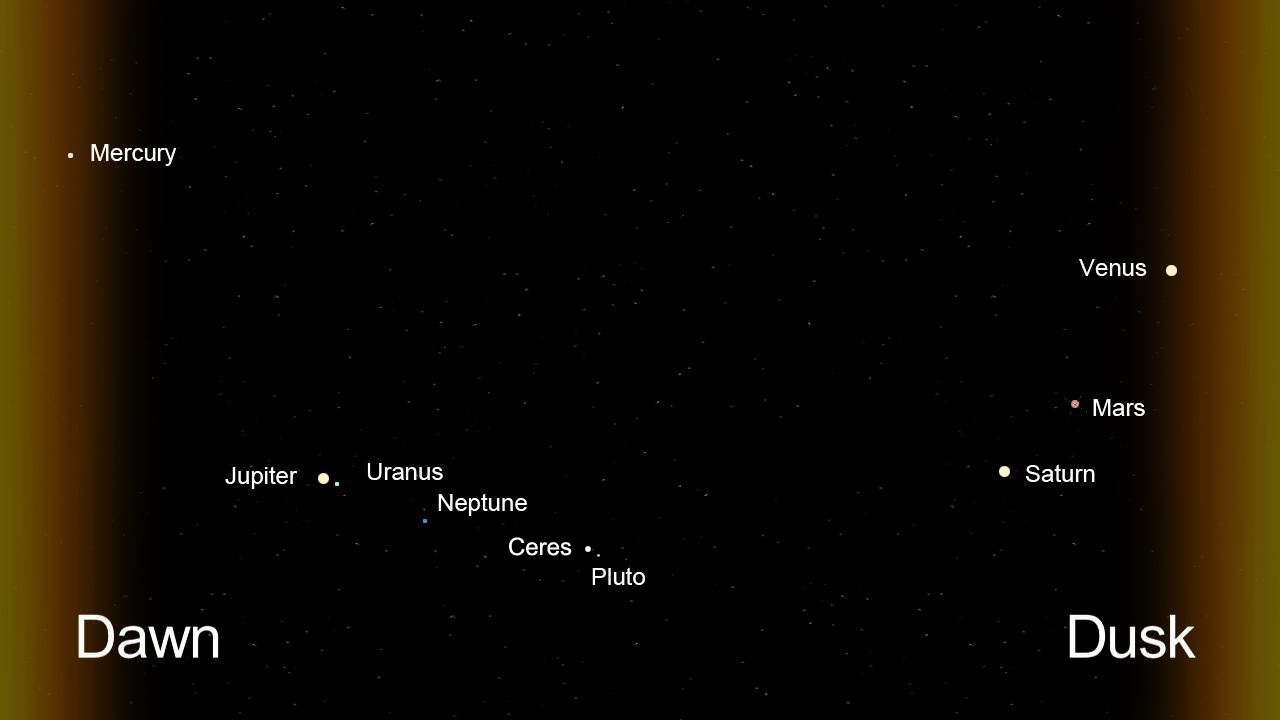
    The planetary lineup from dusk to dawn
    Two planets, Venus and Earth at sunset
    M24 cluster and 60 day path of Pluto
    Do you see the Sagittarius teapot and the Milky Way "steam" rising from the spout? How about M24, the huge Sagittarius starcloud (the oval of stars 1pm above center) where Pluto hides?
    Earth shadow at sunrise
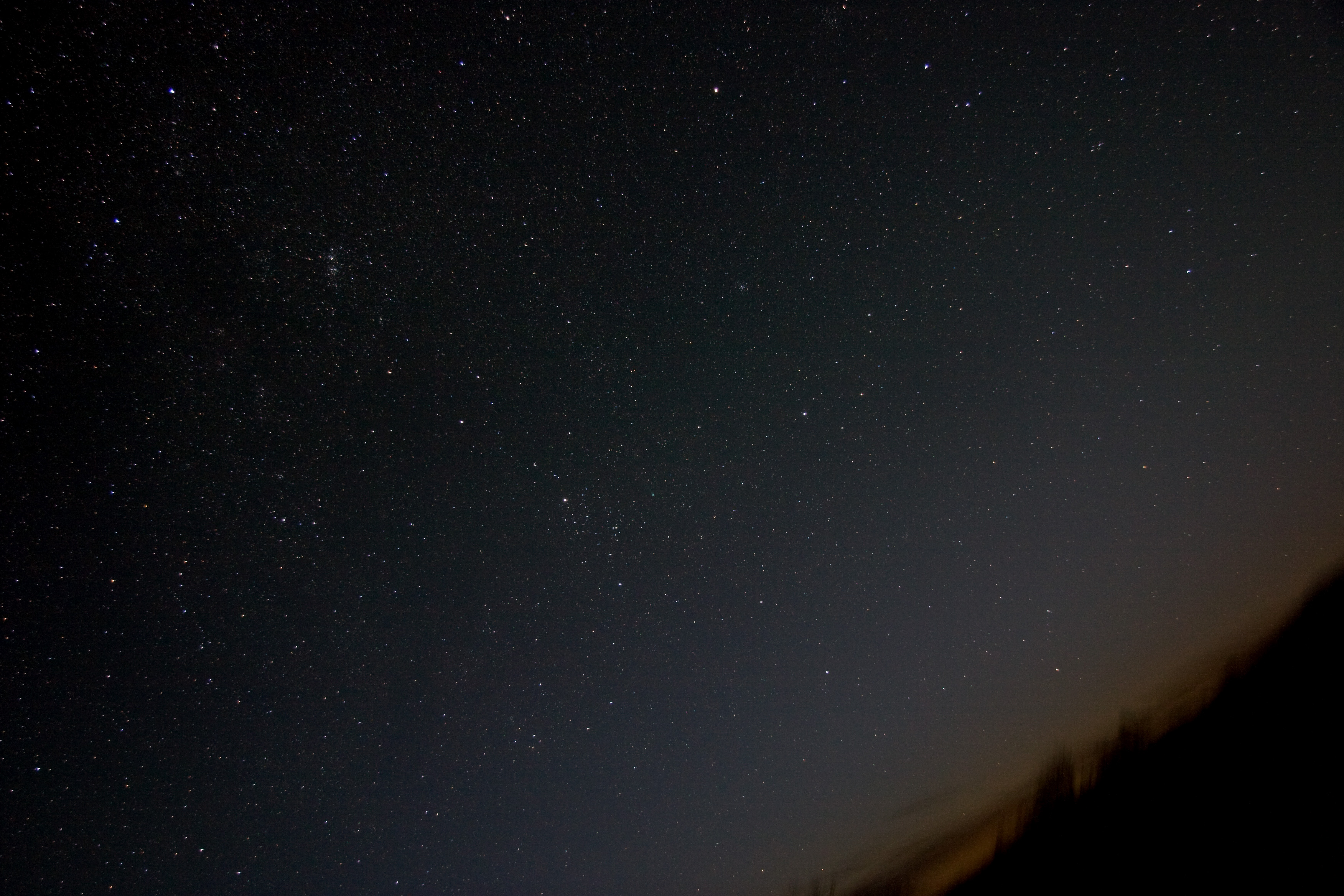
    Bonus picture: This is the "naked eye" view of the sky where Comet McNaught can be found. Can you see the green comet near the Perseus Cluster? If not go to Mojo's Blog for closeup. Click to enlarge. It took binoculars for most of us to spot the first time. 🙂

    Every couple of years I get the yearning to see all the planets in one night. Saturday night, June 12 seemed like the perfect opportunity. Our Old Town Sidewalk Astronomers club planned an outing to our regular observing spot, Chuckwalla Bench, which has very good horizons. We needed good horizons to catch Mercury rising just before sunrise.

    Here are my planet observations, in observing order. All distances are listed in astronomical units and represent the distance from Earth on June 12, 2010, the night of my observations.

    Earth! Facing away from the setting sun, the Eastern horizon turned shades of blue above the pinkish sky. That’s the shadow of the Earth! The dark blue band seems to rise above the landscape and spans 180 degrees. The pinkish sky above the shadow is the antitwilight arch. As the sun sets, the boundary between the reddened (pink) color and the horizon grows until it blends with the darkening night sky. The same thing happens at dawn of course. Look for it, and tell me what you see!

    Venus! The first “star” to appear in our sky after sunset was Venus. Through the telescopes its gibbous phase is unmistakable! Its distance from Earth is 1.2 AU (astronomical units).

    Mars! I was not expecting to see any features on Mars, since it is so far away and so small. Mars is 1.7 AU from Earth, but only half the diameter of Earth. I was surprised that I could see some dark markings, through a small refractor. When we checked a Mars map for the time of the observation, the large dark feature Syrtis Major was indeed right smack on the central meridian – the imaginary line in the center of the planet facing Earth at that moment.

    Saturn! What’s not to love about Saturn! The brownish cloud bands contrasted against the butterscotch hued planetary globe. The slender ring, appearing nearly edge-on, bisected the planet, showing a tiny glimmer of sunlight shining on the north side of the rings. Several moons were visible, though one of the larger ones, Dione, was transiting (crossing in front of) the planet on this night. I spotted Mimas and Enceladus — tiny beacons of light — hovering near the edge of the rings. Titan and Hyperion were on the same side, only further away. Rhea was on the other side. Dione’s shadow marched across the face of the planet for astrophotographers to capture. I didn’t see it visually. Distance from Earth is 9.4 AU right now.

    Pluto! This small icy world is 30 AU away from Earth. Once a planet, it is now a dwarf planet. But that doesn’t alter my enjoyment of seeing it through a telescope. For the past few years, Pluto has been marching slowly towards the richest part of our Milky Way galaxy making it a challenging object to confirm in backyard telescopes. Right now it is found skimming the Northern border of M24, the Milky Way Star Cloud. That’s a lot of stars to wade through to find one dwarf planet!

    I printed out star charts showing just the few surrounding stars and Pluto, indicating the motion over the evening so I could go back and verify the observation closer to dawn. I also made zoomed out charts, showing larger and larger areas of the region. I had some galactic luck this month! A small open cluster called NGC6603 was nearby to Pluto within the larger M24 open cluster. A few distinctive star patterns separated the dwarf planet from the small star cluster, and I was able to easily starhop and make a positive ID. With Pluto bagged, I was feeling confident about the rest of my planetary to-do list.

    Note: From July 4th through the 8th Pluto will pass in front of a dark nebula on the Northwest border of the M24 named B92. This should make the tiny magnitude 14 speck-of-a-former-planet easy to spot.

    Ceres, another ex-planet was nearby so I hopped over to have a look at it. Ceres spent half a century after its discovery in 1801 as our 8th planet. Then it was demoted to an asteroid, but its significance was cemented by its designation, 1 Ceres. After many years working the solar system as chief #1 asteroid or minor planet, in 2006 Ceres was promoted to dwarf planethood along with Pluto. Ceres is 1.8 AU from Earth, by the way.

    With the dwarf planet observations under my belt, I took a short nap to allow Jupiter, Uranus and Neptune to rise higher in the sky.

    Uranus and Jupiter! When two planets are at opposition at nearly the same time they appear to pass each other from our viewing vantage point on Earth. This year we will see Jupiter pass Uranus, then appear to loop backwards–in retrograde–passing near Uranus a second time, then resuming its forward motion with third final close pass. The next time this will happen is 2037, so you might want to aim your binoculars at this pretty pair of planets this year. This is the first pas de deux, so you have many months to view the dance of the two gas giants. Through the telescope, Jupiter, which is 5.1 AU from Earth, looked unusual to me. It was my first look at the planet since the Southern Equatorial Band disappeared. A few months ago, this chunky ruddy band went missing.

    Uranus has a beautiful aquamarine color. It has several moons just on the border of visibility through large amateur telescopes. I was able to spot three of the brighter moons of this planet — the ones farthest from the planet’s glow. Titania and Oberon on one side and Ariel on the other. A big ‘scope and good dark and steady skies help to see the faint moons! Uranus is 20 AU from Earth. Try looking up at Jupiter in a dark sky and see if you can spot a blue-green “star” nearby.

    Neptune! Neptune sports an azure-blue hue and appears like a tiny disc. It’s nearly 30 AU away near the southern tip of Capricornus. At this time of year, that means waiting until 3 am or later for a view.

    Now I had snagged all the planets except Mercury. It would be rising an hour before sunrise at 5:30 am, but the elevation of hills on the SE horizon were difficult to measure. I kept my eyes on the Pleaides star cluster as Mercury would rise directly below the famous cluster. By 4 am, with an hour and a half until sunrise, the sky was already brightening. First, the glorious Milky Way faded until it was nothing but a memory. Then, one by one the constellations disappeared, except for their brightest starry ambassadors. I steadied my binoculars as the Pleiades or “Seven Sisters” disappeared one by one. I kept the remaining Pleiades stars in my binocular view while moved back and forth, scanning the horizon for Mercury. Soon the rays of pending dawn punctuated the horizon, and I worried that I’d miss it as sunrise made the landscape visible once again. I could still see some of the Pleiades, and kept looking for over 45 minutes. Finally, just a few minutes before 5:00 am, a bright beacon appeared on the horizon. It was Mercury! I had seen ten planets in the span of nine hours!

    The nine hours passed so quickly. With sunrise comes daylight and the views of the night sky fade from view but not from memory. Join us out in the desert sometime or find a local astronomy club closer to you so you can see these wonders of our solar system for yourself! You really have to see this!

    Mojo’s report/astrophotos from the same night

    Jane’s June 2010 What’s Up podcast: “A Planetary Necklace”

    Mercury Rising A nine planet observing night in 2001.

  • The Chuckwallas of Amboy Crater

    Once a year the Old Town Sidewalk Astronomers pack tents and telescopes and caravan to Black Canyon Group Campground in Mojave National Preserve, an hours drive from Amboy Crater and about 3 hours from home.

    Once the tents are pitched we put on a star party with assistance from the National Preserve staff, leaders of the National Park Conservation Association and the Mojave National Preserve Conservancy plus many of their friends and members. The public is invited too, and unsuspecting nearby campers were thrilled to chance upon a starshow. Best of all, once the star party is over, we get to explore the national preserve!

    On this trip (April 2010) my observing project was to see a Chuckwalla, the big pot-bellied lizard living in this desert area. We searched for them last year with members of the Southwest Herpetologists Society but didn’t see any.

    Sunday after the star party, when tents & telescopes were stowed back in our cars we headed off to Amboy Crater in search of wildflowers, and hopefully, our first Chuckwalla.

    Amboy Crater — well worth a trip for Geology, spring wildflowers, and lizard hunting — was formed by ash and cinders, and last erupted 10,000 years ago. The lava field terrain (43 square miles of it, actually) surrounding the crater is prime Chuckwalla territory. It’s easy to reach Amboy Crater from Barstow or Twentynine Palms, and you even get to drive on old Route 66. It is well worth a journey!

    Chuckwallas can reach 16 inches in length, weigh up to 2 pounds and are specially adapted for desert living. They are strictly vegetarians and store water from plants in special glands to survive the harsh desert heat. The surrounding landscape is very salty and the Chuckwalla absorbs enough salt to kill most living things. But they have salt-removing glands in their nostrils, and as salt builds up on these glands, the lizard sneezes, and this expels the crystallized salt!

    We were walking towards the crater and most everyone was way ahead of me. I was lagging behind, checking every lava outcrop for my first Chuckwalla sighting.

    I stopped at one especially large outcrop, and scanned the sunny ledges. There, sunning herself, was Mrs. Chuckwalla! She was flattened against the rock to prevent airborne predators from seeing her shadow. Her round midsection was prominent, leading one herpetologist to suggest she was pregnant. I called to my hiking party who all quickly returned to see her. Soon, this poor shy girl was the subject of paparazzi!

    Then Mr. Chuckwalla came out to see what the fuss was about. Male Chuckwallas have more of the red color (and black heads) and females are more tan/yellowish brown. They are majestic large lizards, and adapt their coloring to the rocks they inhabit. They’re not really fast, and need some sunshine to warm up in the morning. So, when danger approaches, they scoot into rocky crevices, puff up by gulping air, and wedge themselves into the cracks in the rock. This makes them difficult for predators to reach.

    We also observed dozens of spring wildflowers on this hike and our earlier hike to Teutonia Peak, which I didn’t even write about here. Have a look at these images of our wonderful adventure, and put a Mojave spring wildflower/Chuckwalla play-date on your calendar. This is also a prime Desert Tortoise sighting location, but it was a bit windy on this weekend, and the tortoises were in their burrows.

    Mojo’s amazing panoramas and additional images from both hikes are worth a look and will encourage you to put this park on your to-visit list. You will not be disappointed!

  • Driving a Tesla

    Unique vehicles abound at JPL
    Unique vehicles abound at JPL
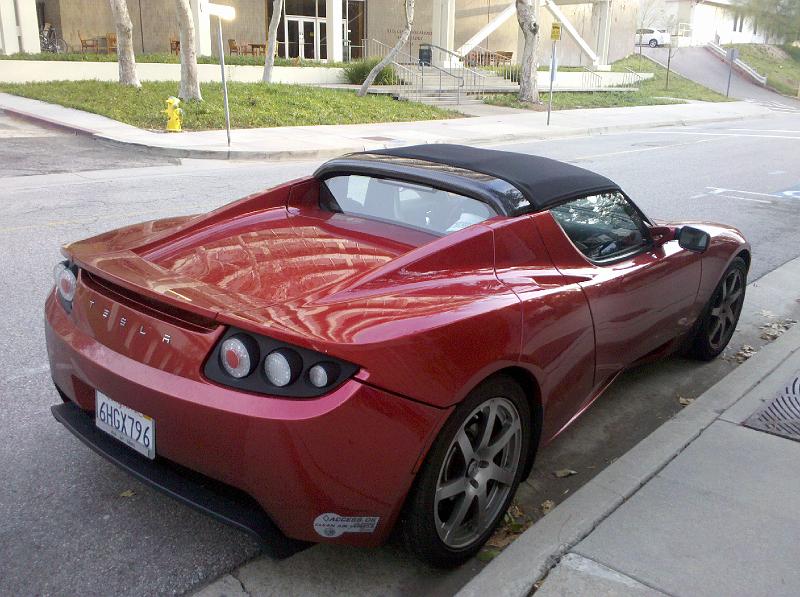
    I saw this car parked in front of my building at JPL last week
    I saw this car parked in front of my building at JPL last week
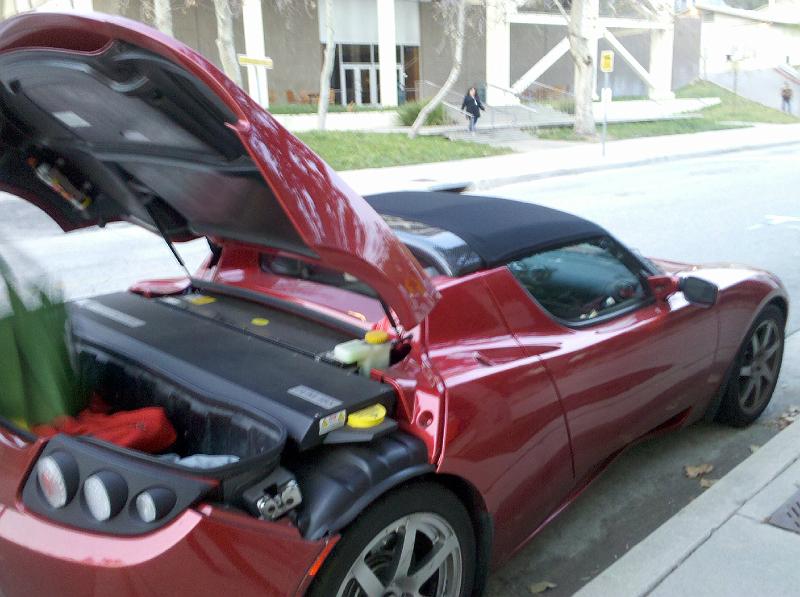
    checking out the Tesla's trunk
    Checking out the Tesla’s trunk
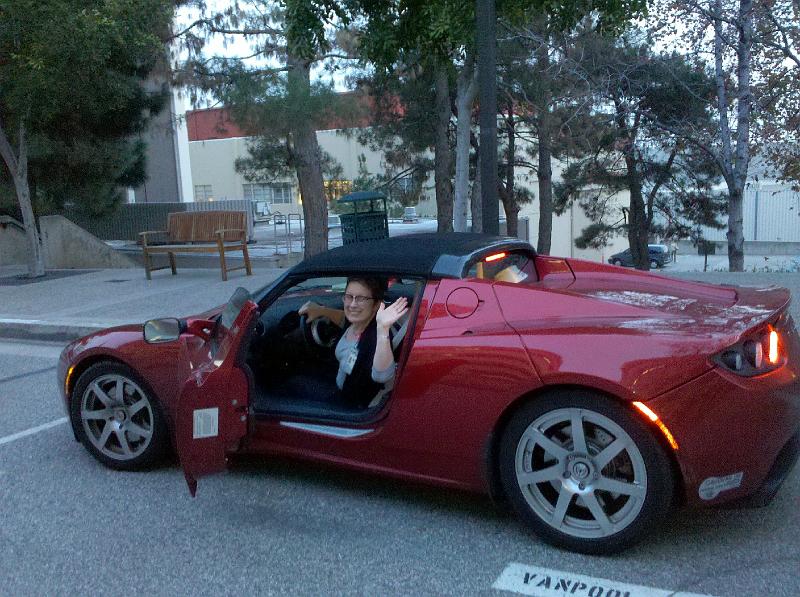
    Back at work after my 20 minute Tesla drive
    Back at work after my 20 minute Tesla drive
    Nikola Tesla's laboratory, circa 1900
    Nikola Tesla’s laboratory, circa 1900

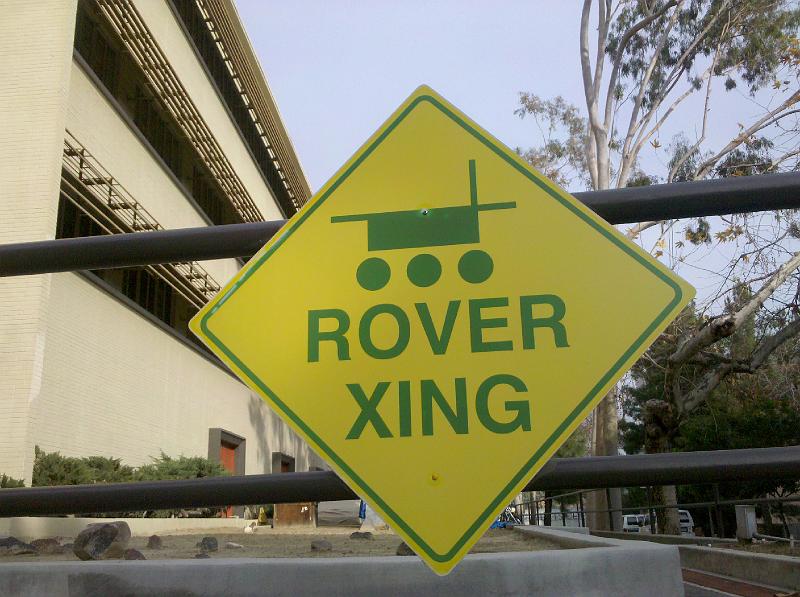
    My favorite sign at JPL is this Rover Xing sign.

    It is not unusual to see robotic vehicles on the roads around the laboratory, especially during the weeks surrounding our annual open house when a dozen or more rovers, robots and spacecraft are out on public display.

    One recent morning, I noticed a unique vehicle parked next to my building. It was a Tesla Roadster! I stopped and took a photo of it – it is such a gorgeous car! Then, of course, I tweeted it, and put the picture on Facebook.

    On my lunch hour I went back out and looked at it, and noticed the license plate holder said “My Other EV is on Mars!”

    Toward the end of the day, I overheard a group of colleagues talking about the Tesla, and I joined them. A minute later the Tesla’s owner walked up and asked me if I wanted a ride! When she drives the Tesla to work, she becomes an Electric Vehicle EVangelist and offers half-hour rides around Pasadena. She has a long waiting list, but had a cancellation, and offered me the 5 p.m. time-slot. It’s her way to spread the EVangelism and make more people aware of electric vehicles. 🙂

    Within a few minutes I was stowing my purse in the trunk of this gorgeous car! Then after a few rules (pay for your own tickets, don’t crash, etc.) I was handed the keys! I opened the driver’s door and stepped down in the drivers seat. Wow, this car is just my size!

    I aligned the side mirrors by rolling down the window and manually adjusting them. I familiarized myself with the blind spots, adjusted the seat and put the key in the ignition.The roadster came silently to life. I shifted from neutral to drive, checked for traffic behind me, pressed the throttle pedal and drove the Tesla down JPL’s Mariner Road, out the security gate and onto the 210 or Foothill Freeway.

    My friend encouraged me to accelerate, and I obeyed instantly! In seconds I was cruising at 60 MPH, changing lanes while caressing the three-spoke steering wheel, pedal to the metal, and watching all the ordinary cars turn green with envy.

    I couldn’t help but think of the car’s namesake, Nikola Tesla, whose inventions include the induction motor and alternating-current power transmission. The Tesla Roadster was unveiled just days after the 150th anniversary of his birth in 2006. If he were alive today, I think he’d enjoy a test drive with me in and around NASA’s Jet Propulsion Laboratory!

    Soon, it was time to return the car so another lucky driver could share my experience, and join the cadre of Tesla EVangelists!

    I drove back through the gates, parked the car, shifted back into neutral, set the brake,and turned over the keys, but not before I got a picture of my first and maybe my last Tesla test drive.