The moon's summer and winter path, courtesy NASA's Starchild websiteThe winter’s moon – a smiling crescent just after sunset Feb 5, 2011 (click to see moon upper center) Closeup of winter crescent moonThe summer's "backwards C" crescent moon at sunset, late June 2007 (click to see moon in lower right)Closeup of summer crescent moon
Have you ever wondered why the crescent moon looks like a smile in the winter and spring and like a backwards “C” in the summer and fall? It looked like a smile right now – below, next to and above Jupiter for several days after the February new moon. You can see the same waxing (getting bigger) crescent in early March 2011. Just look in the western sky after sunset beginning the day after new moon, on about March 5 or 6th. You’ll also see Jupiter and Mercury just above the horizon an hour after sunset.
Early birds can see a repeat of the waning (getting smaller) crescent moon phase a few days before the new moon, too. Look in east the last days of February up until new moon on March 4th. That bright object sharing the dawn skies with the crescent moon is the planet Venus! You can read more about moon phases here on the EarthSky website.
The best way to understand the reason why, is to look where the sun is, and how and where it shines on the moon. Draw an imaginary line connecting the setting sun, the moon, and any other planets that appear in the sky. That imaginary line is the ecliptic – the path the sun takes through the stars. It’s also the Earth and planets’ orbital plane. You can think of it as a projection of Earth’s plane on a sky sphere. The planets orbit the Sun, and the moon orbits the Earth and so you will always find the planetary lineup along the ecliptic.
In the winter and spring, the ecliptic appears almost vertical and arcs higher in the sky. The moons’ lit side faces the sun. That makes the waxing crescent moon look like a smile, or a boat, or the old moon in the new moons’ arms once light reflected off the Earth – called earthshine – reveals the unlit disk of the moon lit by reflected from Earth.
In the summer/fall, the ecliptic has a lower or shallower angle in the sky, and the lit crescent, as always, faces the sun, showing us a lit crescent facing the sun, which appears like a backwards “C”. I could write more, but instead, I’ll let you enjoy the images from our own observing sessions in the winter and the summer, and then get out and see the crescent moon for yourself soon.
Johann Bode's 1801 Uranographia, showing Quadrans Murales, Boötes and other constellationsBoötes, Canes Venatici, Coma Berenices and Quadrans MuralisThe Northeast sky Jan 4 at 1:00 a.m. PST. Look between Ursa Major and Minor, and the bright star Arcturus in Boötes for the location of Quadrans Muralis on the Boötes-Draco borderLooking Northeast before sunrise, chart courtesy of Spaceweather.com
Most meteor showers radiate from a recognizable constellation like Leo’s Leonids, Gemini’s Geminids and Orion’s Orionids. What’s up with the January Quadrantids? Where do you find their constellation? In Quadrans Muralis, a demoted constellation.
The first 60+ Roman constellations didn’t cover the sky south of the equator, so over the years, astronomers took up the task and filled in the empty spaces with new constellations, including some in the northern sky.
The International Astronomical Union divided up the sky into official constellations in 1930. 88 constellations remained, but over 30 constellations didn’t make the cut. Among those demoted was Quadrans Muralis, the location of January’s brilliant, but brief Quadrantid meteor shower. Apis, the bee, Felis, the cat, and Solarium the sundial were other constellations demoted into obsoleteness. One ancient constellation, Argo Navis, didn’t survive, either. It’s the only one of the 48 constellations listed by 2nd century astronomer Ptolemy no longer officially recognized as a constellation. Like other pieces of large real estate, it was subdivided into smaller segments in the 17th century, and those constellations — Carina the Keel, Vela the Sails, and Puppis the Poop Deck — survived demotion.
There were good reasons to define and standardize the constellation list, even if it meant losing some historic or whimsical constellations. One reason, according to the IAU was “to aid in the naming of new variable stars, which brighten and fade rather than shine steadily. Such stars are named for the constellation in which they reside, so it is important to agree where one constellation ends and the next begins.”
Quadrans Muralis was added to the constellations by Joseph J. de Lalande in 1795, to commemorate the quadrant he used to observe and measure stellar positions. The quadrant was an instrument very similar to today’s sextant. A few years later, in the early 1800’s a meteor shower was discovered to radiate from this constellation, and the meteor shower was named for the constellation.
Created from stars found to the north of Boötes, the herdsmen; Quadrans Muralis can be found in a rich area of the northern sky filled with pretty constellations. The big and little dippers (the most recognizable parts of Ursa Major and Ursa Minor) are the most familiar sights but you’ll also find the Northern Crown, Corona Borealis, Boötes and his two hunting dogs Asterion and Chara in Canes Venatici, and Coma Berenices, the hair of Bernice. Take a tour of the area through binoculars on January 3rd before midnight while waiting for the radiant to rise.
Update for 2012 for Southern California meteor observers: “The radiant rises at 1:00 am local time and the moon sets at 3:00 am. The predicted peak (2:30 am Eastern 11:30 PST (07:30 UT January 4, 2011).
The Quadrantids (QUA) or January Bootids are active from January 1st through the 10th. A sharp maximum is predicted to occur near 0730 Universal Time on the 4th. This corresponds to 02:30 EST and 23:30 PST (January 3rd). This is good timing for viewers located in eastern North America as the radiant will rising above the northeastern horizon. It would even be better if the maximum were a bit later as the radiant would be located higher in the sky, producing more activity.
Rates will depend on the exact time of maximum and whether the moon is still above the horizon. Assuming the 0730 UT timing is correct, the further one is located in North America, the better. Eastern observers may be able to see 60-75 Quadrantids per hour. If your skies are very clear and dark, allowing you to see faint meteors, your rates could top 100 per hour. Observers located in the western portions of North American will have lower rates but will also have the opportunity to see Quadrantid “earthgrazers”. Earthgrazers are meteors that skim the upper portion of the atmosphere therefore lasting much longer than normal and producing long trails in the sky. These meteors can only be seen when the radiant lies close to the horizon. As the radiant rises, the meteor paths
will become shorter with shorter durations. Observers in the northern hemisphere outside of North America can expect to see a maximum of 25 Quadrantids per hour between moon set and dawn.
At maximum the radiant is located at 15:21 (230) +49. This position lies in a barren region of extreme northern Bootes, ten degrees northeast of the fourth magnitude star Beta Bootis. At 42 km/sec. the Quadrantids produce meteors of medium velocity. During exceptional activity some Quadrantid fireballs may be witnessed. Courtesy Bob Lundsford posting on the MeteorObs Yahoo Group.
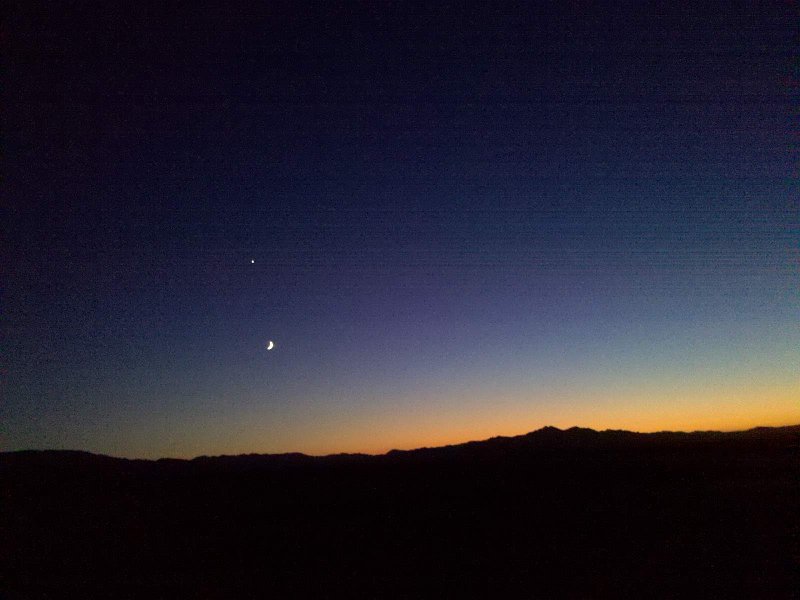
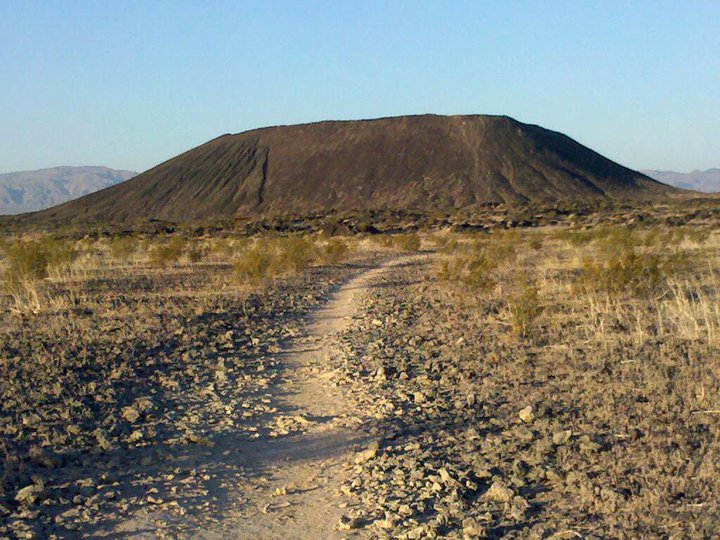
Perseid Peak Aug 12-13 18h-7h UTMy Perseid count Aug 13 06h-11h UTSunset at Amboy Crater, with moon and VenusAmboy Crater by day
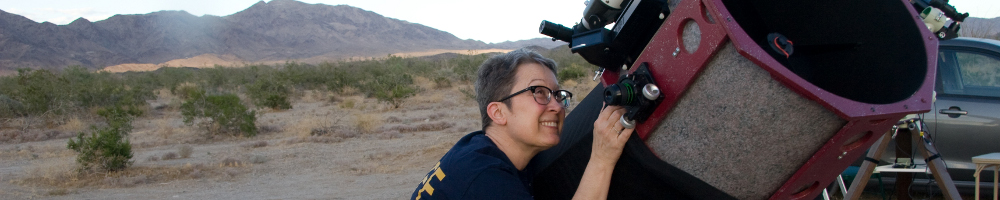
For the past year I’ve been traveling to dark skies to observe and count meteors during the major showers. Armed with a clipboard and a comfy chair, I stare at a section of the sky, hoping to see members of the well known showers, and contribute my data to that of other meteor observers around the world.
This writeup is really about how I observed, recorded and submitted my 2010 Perseid meteor shower data to the International Meteor Organization. I hope I inspire you to try it, even if you don’t submit your paperwork the first time. (I didn’t, in fact it took me longer to fill out the paperwork the first time than it did to actually observe the meteors!).
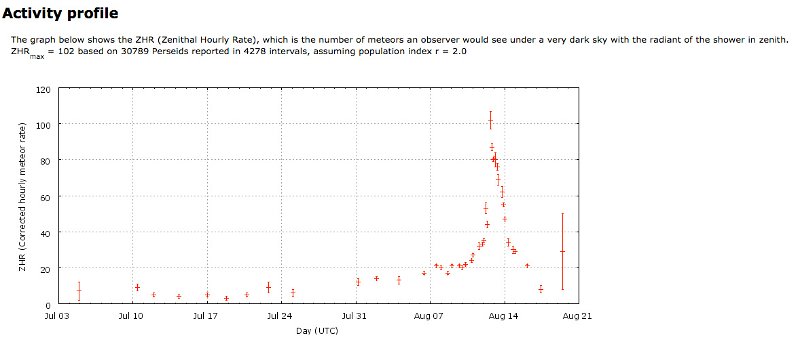
The first chart shows the peak of the Perseids – August 12-13 between 18h and 7h Universal Time. That means for people like me on the west coast of the US, the peak was nearly over before I started counting! It’s important for worldwide observers to keep counting, because many showers have secondary peaks or other characteristics.
The second chart is my data. Before I arrived at the site, I recorded the latitude, longitude, elevation and name of my observing location. This is easy to do using your GPS devices these days. I wrote down my name, my IMO codename (JONJH) and the shower (Per for Perseids). I decided not to try and identify individual minor showers though there were many. I called all non-Perseids Sporadics.
Before I began observing, and several times during the night I assessed the darkness of the sky using Limiting Magnitude star charts. This field is identified as LM on my observing form. The IMO says: “The darker and more transparent the sky and the more sensitive your eyes, the more meteors you can see. To use your observations for scientific analyses a quantitative characterization of these factors has to be established. The limiting magnitude (which is defined as being the magnitude of the faintest star near the zenith that the observer can detect using the slightly averted naked eye) defines both the condition of the sky’s clarity and the quality of the observer’s eyes.”
I keep a set of these charts on a clipboard and assess the sky darkness every time I observe. My assessment was a very high limiting magnitude. I could see magnitude 6.5 stars with my unaided eyes.
On a clipboard, I clipped a bunch of blank sheets of paper – one piece for each hour of the night. I wrote down each meteor I observed and noted the time using a nearby clock. I also wrote down the magnitude of each meteor – using a shorthand of 5 magnitudes of brightness. (F for faint-mag. 4, B for bright mag. 1, etc. J for Jupiter bright bolides) I had a selection of stars in the area already memorized for comparison against the Perseids. For spectacular meteors, I plotted them on star charts I had printed out for this purpose.
In a nutshell: Mag 6.5 skies, clear, 80 degrees overnight. Amboy Crater, one of the darkest observing locations in the US, was a great location for meteor observing.
Between 9 and 11 p.m. (04h-06h UT) I unofficially saw about a dozen mostly very bright meteors while setting up my chair, eating dinner, etc. I didn’t start seriously recording the meteors until 11 p.m. (06h UT)
04h-05h UT – 2 Perseids, 1 sporadic
05h-06h UT – 4 perseids, 3 sporadics **the first Perseid came in at 9:34 p.m.
06h-07h UT – 15 Persieds, 12 sporadics
07h-08h UT – I took a nap
08h-09h UT – 27 Perseids, 8 sporadics
09:19-03:19 – 43 Perseids, 3 sporadics didn’t take a break since the rates were so high…
03:20-04:20 – 39 Perseids 1 sporadics (with a 7 minute break)
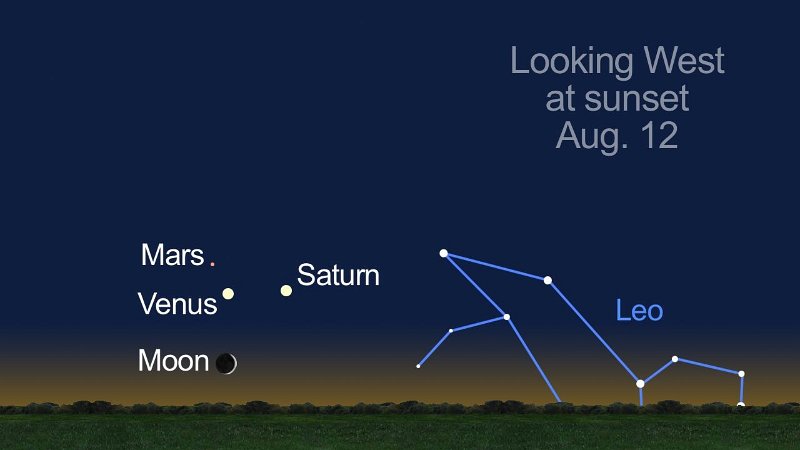
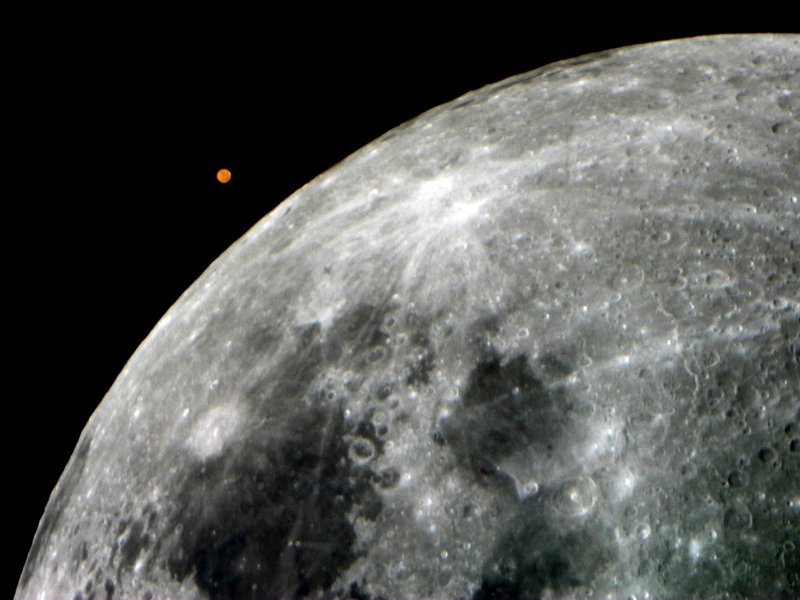
See the moon and planets low in the west August 12, courtesy NASA/JPL-CaltechThe view from Earth – the planetary lineup in orbital perspective courtesy NASA’s Solar System Simulator, courtesy NASA/JPL-CaltechMars and moon imaged same day with same equipment (in 2005) courtesy Jim KeenA trio of planets, without the moon August 7, 2010, courtesy Morris Jones
Are you eager to see the annual Perseids on Thursday night? You’ll have to wait until after 10:00 p.m. local time to see them, so why not pass the time until showtime by viewing the planets right from your doorstep? Step outside for the planetary warm-up act.
All you have to do is look towards the west as soon as the sun sets. Bright Venus is the first to appear. It’s really bright, and you can’t miss it! Now, hold your clenched fist up to the sky covering Venus. To the right of Venus, about 1/2 of a clenched fist away is a second planet. That’s Saturn. And to the upper left of Venus is another planet… That’s Mars.
But wait, there’s more! Look below Venus for the slender crescent moon. If you don’t see the moon, look again Friday night – it will be a larger crescent to the left of Venus a day later.
Though the three planets appear together in our line-of-sight they are really far apart from each other and from us on Earth. Mars is about 300 million km (186 million miles) from Earth, while Venus is 112 million km/70 million miles distant. Saturn? It’s 1,535 million km/954 million miles from Earth right now. The moon? 363 thousand km, or only 225 thousand miles away. It’s fun to compare the size of the moon and Mars, especially if you received that annual email (which incorrectly) states that Mars will be as big as the moon this month. Do the math. It’s impossible!
The Solar System Simulator is a great public resource for geeks. You can see any planet or spacecraft from any vantage point on any date you select. I picked August 12th to show the view of the planets and moon from Earth.
I hope you can sense the three-dimensional orbits of nearby Venus, far-away Mars and distant Saturn. Have some fun with it! Every day the Cassini Mission website shows a view of Saturn from Earth, from Cassini, and right now Enceladus, as we close in on a flyby of that exciting moon later this week.
In this image of the moon and Mars, Jim Keen made a “true-to-life” size comparison. He made a “blended” image of the Moon and Mars back in July 2005. He recalls, “I had set up my telescope in my backyard and stuck a camera on the back of it. I took separate images of the Moon and Mars – both of which were “up”, but in separate areas of the sky – and later combined the two images to get one, showing the actual size difference using the same equipment, same camera, same magnification, and taken within a few minutes of each other.”
Jim’s image shows the apparent size of the moon and Mars really nicely! If he took the same image this month, Mars would appear super tiny! In the 2005 image Mars was about 50 million miles from Earth, and today it is 186 million miles away.
The final image shows the trio of planets imaged Saturday night August 7th by my hubby, Morris (aka Mojo) Jones. Click on the image to see the two fainter planets above Venus. He posted several images in his blog post called Sky full of planets and lightning. It’s really worth a read! The lightning was amazing Saturday night!
I hope this little planetary warm up act will whet your appetite for more sky watching this week. The Perseids will be a real spectacle, especially if you can get away from the city lights. I’ve pretty much decided to head out to the Mojave desert and see the star show from Amboy Crater. Clear Skies everyone, and happy solar system observing to you all!
California Clear Sky Chart Black dots indicate the darkest observing areas. Amboy Crater, on the southern border of Mojave National Preserve is the closest “black dot” dark observing area and will require a drive of over 200 miles for Thursday’s Perseids.
Size comparison of Mars (at closest and furthest approach) and the moonSee Mars and the moon near one another in mid August
2010 marks the eighth annual return of 2003’s Mars In August email.
The email always says something about Mars appearing as large as the moon, but there are annual variations to the theme – one year a ridiculous Powerpoint mis-information file was attached to the email.
Sometimes the email mentions a particular date (like August 27th) when the moon and Mars will appear as two big moons. That date refers to when Mars was closest to Earth in 2003, and it did look quite large through a telescope back then. But even then, Mars was 36 million miles away from Earth, while the moon was about 250 thousand miles away. So it is just impossible for Mars to ever appear the same size as the moon!
The original email compared a telescopic view of Mars to a naked eye view of the moon. It never said Mars and the moon would appear to look the same size with the unaided eye. But every rewrite of the 2003 email omitted that telescope view comparison info. 🙁
The email does give us a great opportunity to test our critical thinking skills. Critical thinking is a way to apply the scientific method to everyday life, and everyday life includes getting weird claims delivered to your own e-mail in-box. Here’s what you can do:
First, ask yourself a question — Is Mars going to be bigger than the moon in August this year?
Next, do some research. Read up on when Mars is closest to Earth in its orbit around the Sun. I’ve included some of this information in the link at the bottom.
Then construct your hypothesis. A hypothesis is your educated guess. It might be something like this. “If I look at the moon and Mars in August they will both appear the same size.”
Now, you can test your hypothesis by doing some experiments. Find the days when both Mars and the moon will be visible in the sky. Use the star chart above or check other online resources like this to find out when and where to look.
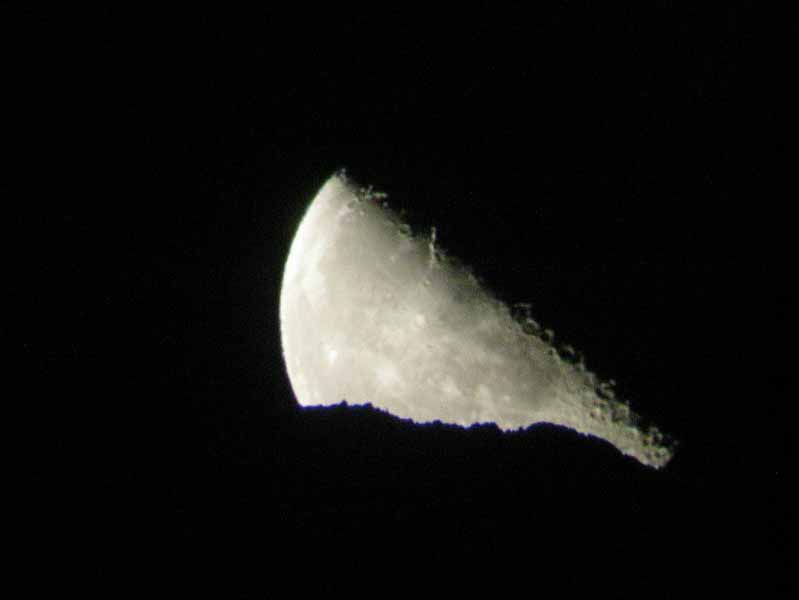
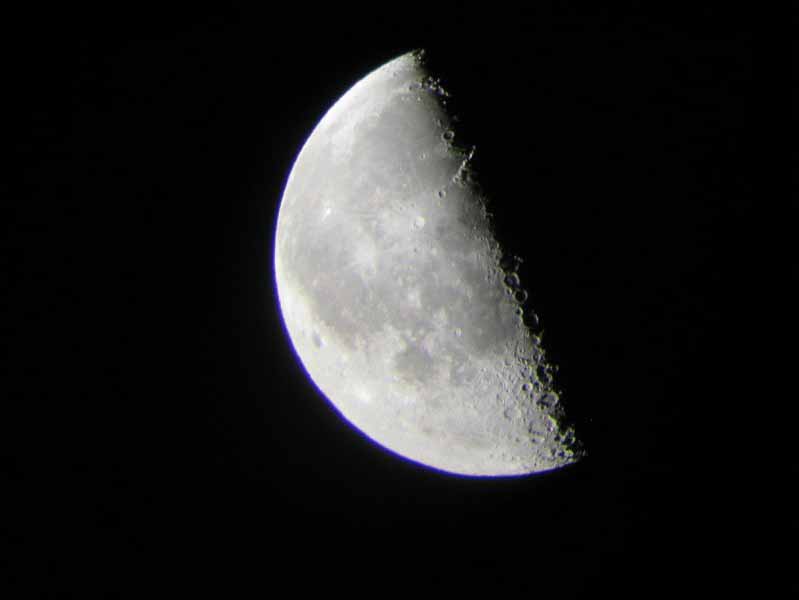
Moonrise over Chuckwalla Mountains July 3, 2010 about 11:30 p.m.Third quarter moon, a half hour laterMy small 70mm Televue Ranger was used for the moon images
Summer dark sky observing means short nights, and it’s usually too hot for comfort in the Colorado desert location we love. But Mojo and I decided to pack a cooler full of ice cubes, and take our chances. The predicted daytime high was 102 F, and it would be (we persuaded ourselves) a few degrees cooler at “our” spot. The low temperature for the night was forecast to be 75 degrees. We could live with that!
It didn’t get dark enough to observe anything except planets until 9:00 p.m. and so we only had two and a half hours of dark sky before moonrise would make it too bright.
One of the benefits of living and observing in Southern California is that at latitude 33N, we can see deep into the southern skies.
Summer nights are just made for observing Scorpius. The Bug Nebula NGC 6302 is one of my favorites ever since I saw and sketched it high in the Australian skies in 1999. NGC 6231, the Table of Scorpius is another favorite. It’s an open cluster near Zeta Scorpii, the first star marking the Scorpion’s curvy tail.
This is a delightful region (great with binos too) full of Milky Way wonders, including emission nebula IC4628. Mojo captured the area beautifully in his image of Scorpius last night. The star cluster center bottom is NGC 6231, and the reddish patch just above it is the emission nebula IC4628.
This is the area I was aiming my big telescope at until about 11 p.m. when we could see the lunar light dome emerging. We finished up our projects and waited for that first “wedge” of moonlight to breech the mountain ridge to the east.
I took some afocal images using my Canon Powershot SD870IS Digital camera held at the eyepiece of my small refractor. I’m pretty happy with the results.
Since it was a short night, this is a short observing report. 🙂
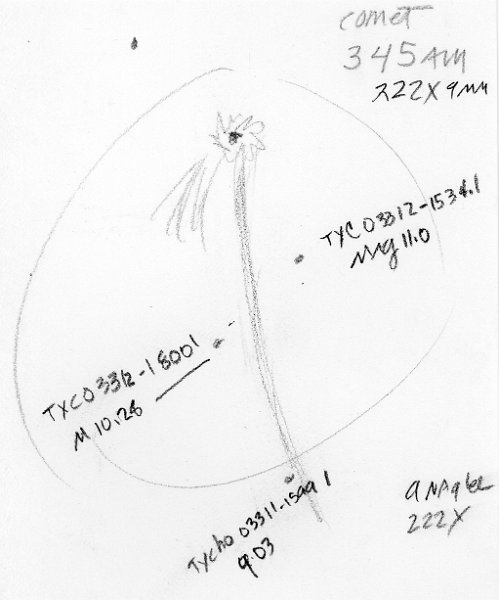
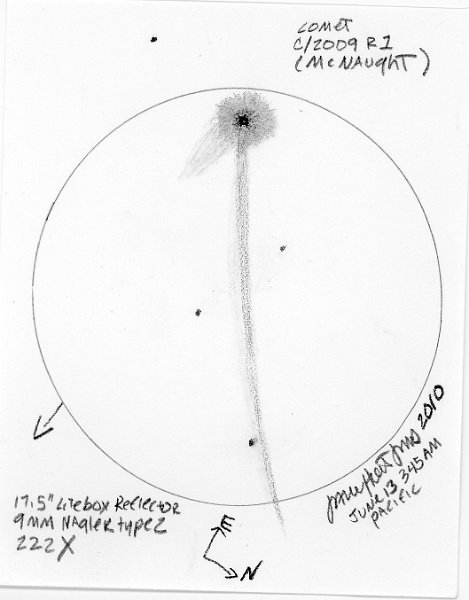
Use a chart like this to locate where to look for your objectCan you find the constellation Perseus and comet McNaught in Mojo’s lovely skyscape?Mojo's photo of Comet McNaughtQuick comet sketch with notes. See the long ion tail, the bright coma, and the short dust tail in my sketchesComet C/2009 R1 (McNaught) June 13, 3:45 am from Chuckwalla Bench observing site, Colorado Desert. Lat 33N, Long 114W, Elev 1400 ft
I wish everyone in the world could see just one comet! Right now, there is one visible just as the dawn brightens the night sky. Unfortunately, it’s not easy or convenient to see this one, and in another ten days it will disappear below our horizon. It’s just barely visible to the unaided eye. Timing your viewing window is tricky, too. You have to find a balance between the time the comet rises high enough to see, and the coming of dawn, which robs the night of its darkness and guidepost stars an hour or two later.
Here are some tips to help you have a successful comet viewing experience now or in the future. When you first hear about a visible comet, you can usually find some online sky charts from astronomy magazines such as Sky and Telescope and Astronomy. Many online sources can offer guidelines and observations, too.
Star charts are fine, but you have to go out and navigate the real sky to find unfamiliar constellations. From the city, or close to dawn, this is a real challenge. You may only see a few bright stars in the sky. Try to see the stars making up the constellation Perseus in Mojo’s image. I’ll admit, it isn’t easy, especially when you are rushing against time. Now, compare his image to the star chart. And you’ll soon see the figure of the hero, Perseus, starting to emerge.
I use the familiar “W” shaped constellation Cassiopeia as a signpost to locate Perseus. Then I see Perseus with his two running legs, joined at the bright star Alpha Perseus (Mirfak). Nearby you can see the naked-eye open cluster known as either Melotte 20 or the Alpha Perseii cluster. Next, I make a mental triangle out of Alpha, Delta and Kappa Perseii, the three bright stars closest to the comet shown on the star chart.
Finally, I aim my binoculars at the triangle of stars and hold my breath. Then I see it, and I quietly say “hello” to the swift celestial traveller. I get chills every time I see a comet. And this time is no different. A little green fuzzball is right where the comet should be.
Now I jump into action. I dust the cobwebs out of my brain, as well as I can at 3:45 am in the morning. I’ve just woken up from a short nap. I quickly sketch what I see in the eyepiece of my big telescope, taking care to mark any stars nearby, and note the time. Then I call everyone who is awake over for a look. We all move sluggishly in the near dawn light, like we are walking through sandy molasses. We share views with one another, through binoculars and a variety of telescopes large and small.
Overhead, the Milky Way has disappeared, and the glow of twilight grows brighter. I have yet another predawn observing target, so I quickly make a second sketch with a little more detail. Then I nod goodnight to the beautiful green comet, aim my binoculars just a little to the east and wait. It will be nearly one hour before Mercury will rise over the mountains.
This comet is making its first approach around the sun, in its long hyperbolic orbit from the Oort Cloud. At the time of my observation, the comet was 0.6 AU from the Sun and 1.1 AU from Earth. By the end of June, it will be lost to our view. It reaches perihelion on July 2nd when it is about 0.4 AU from the sun. Then it will fade and be seen no more.
Added postscript: According to this Space.com article, the comet may be visible “after June 22 both in the evening sky for a short while just after sunset very low above the north-northwest horizon and in the morning sky just before sunrise very low above the north-northeast horizon.” I’ll update if/when I learn more.
See more of Mojo’s photos from this observing night.
Join our Old Town Sidewalk Astronomers email list and find out when our next dark sky outing will be. Or join us at our next in-town new telescope users clinic and planet/moon viewing event. Hey, that’s tonight, June 19! Clinic (RSVP required) begins before dark at 7 p.m. Star Party continues until 9:30 p.m. at Library Park in Monrovia, CA.
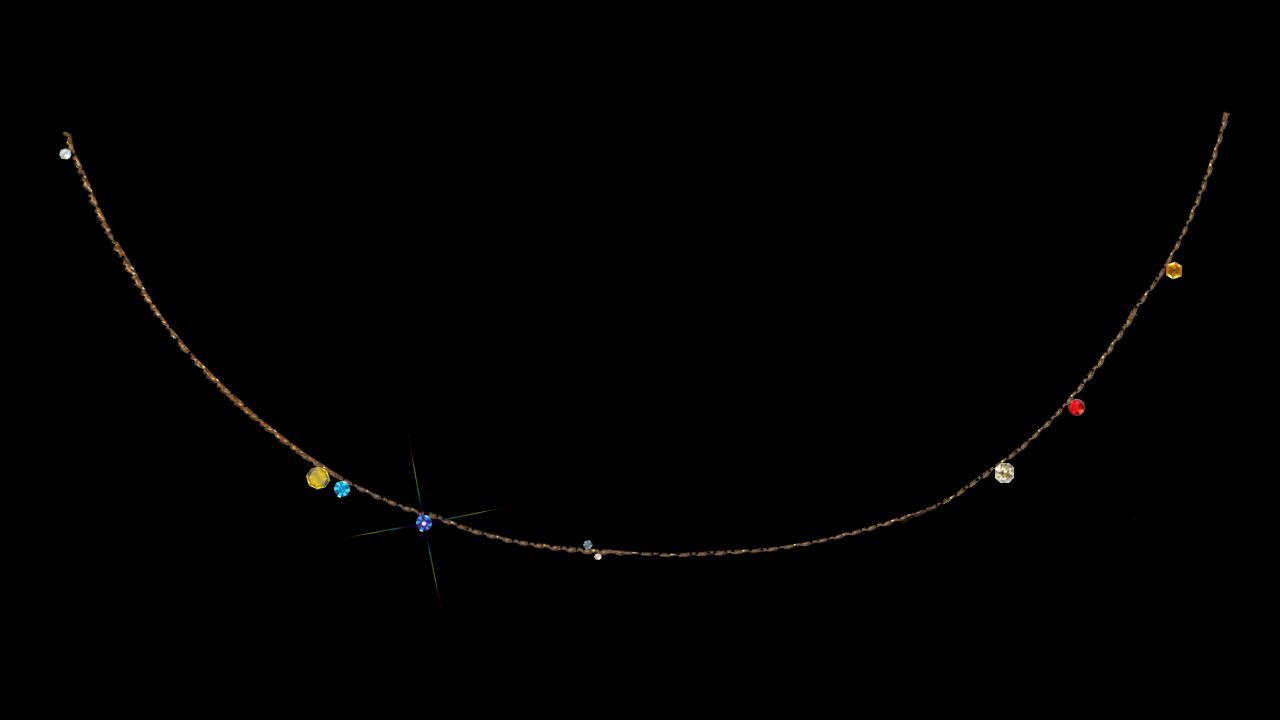
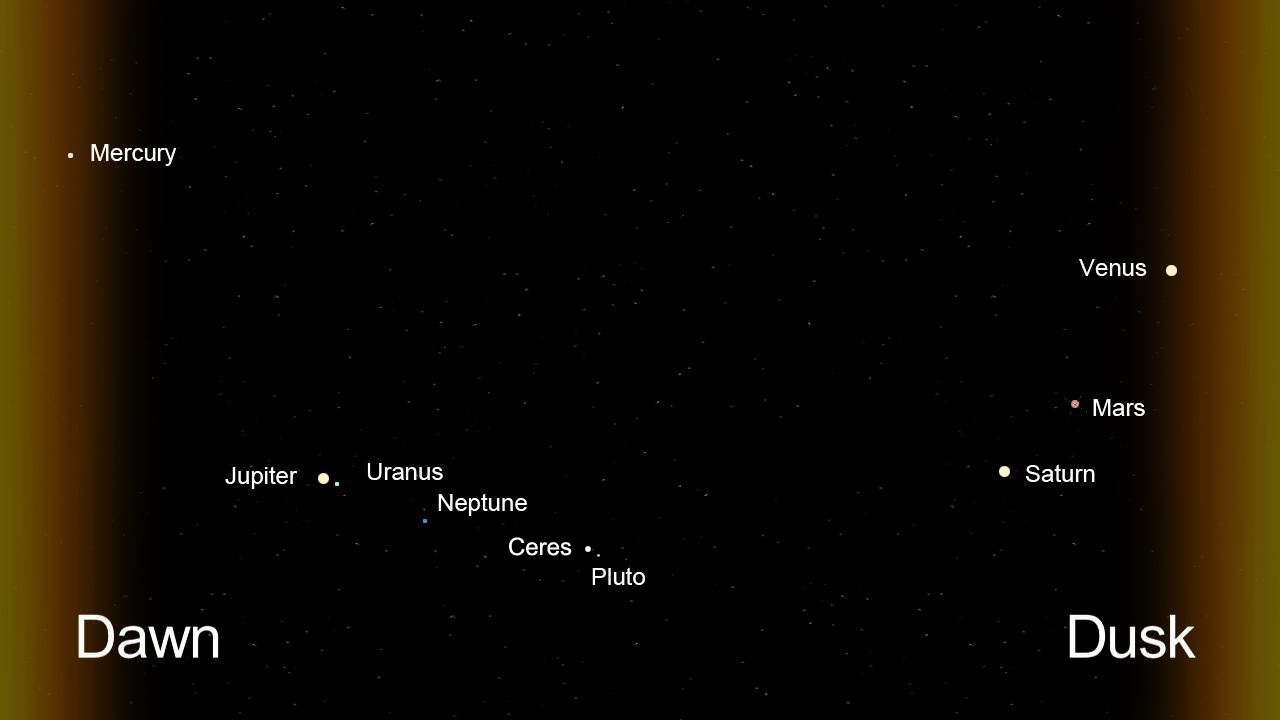
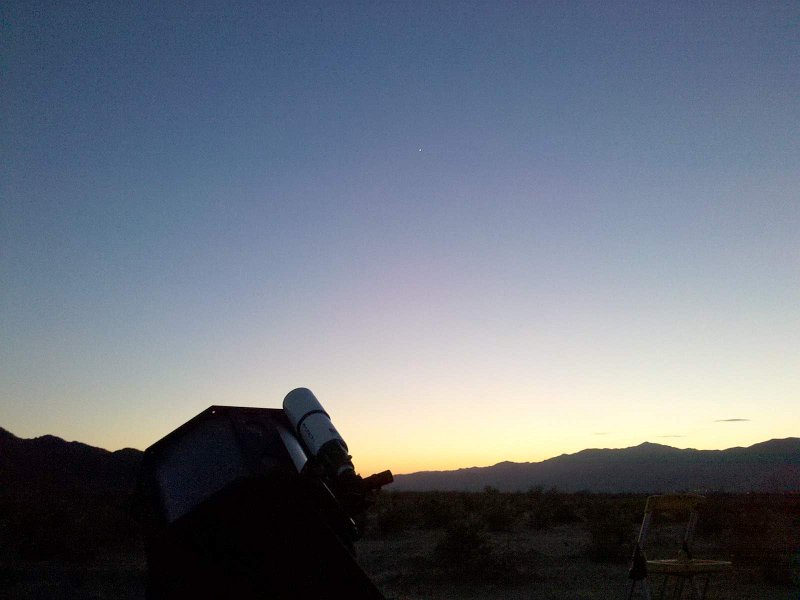
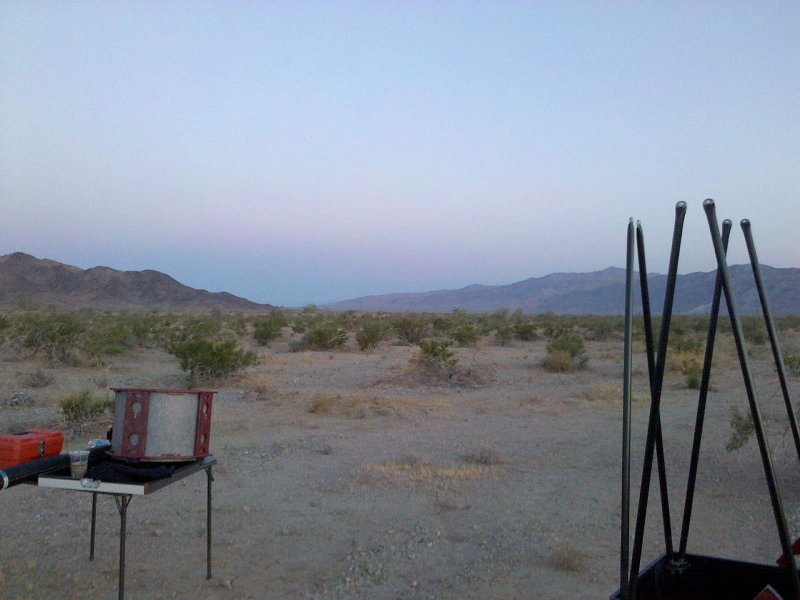
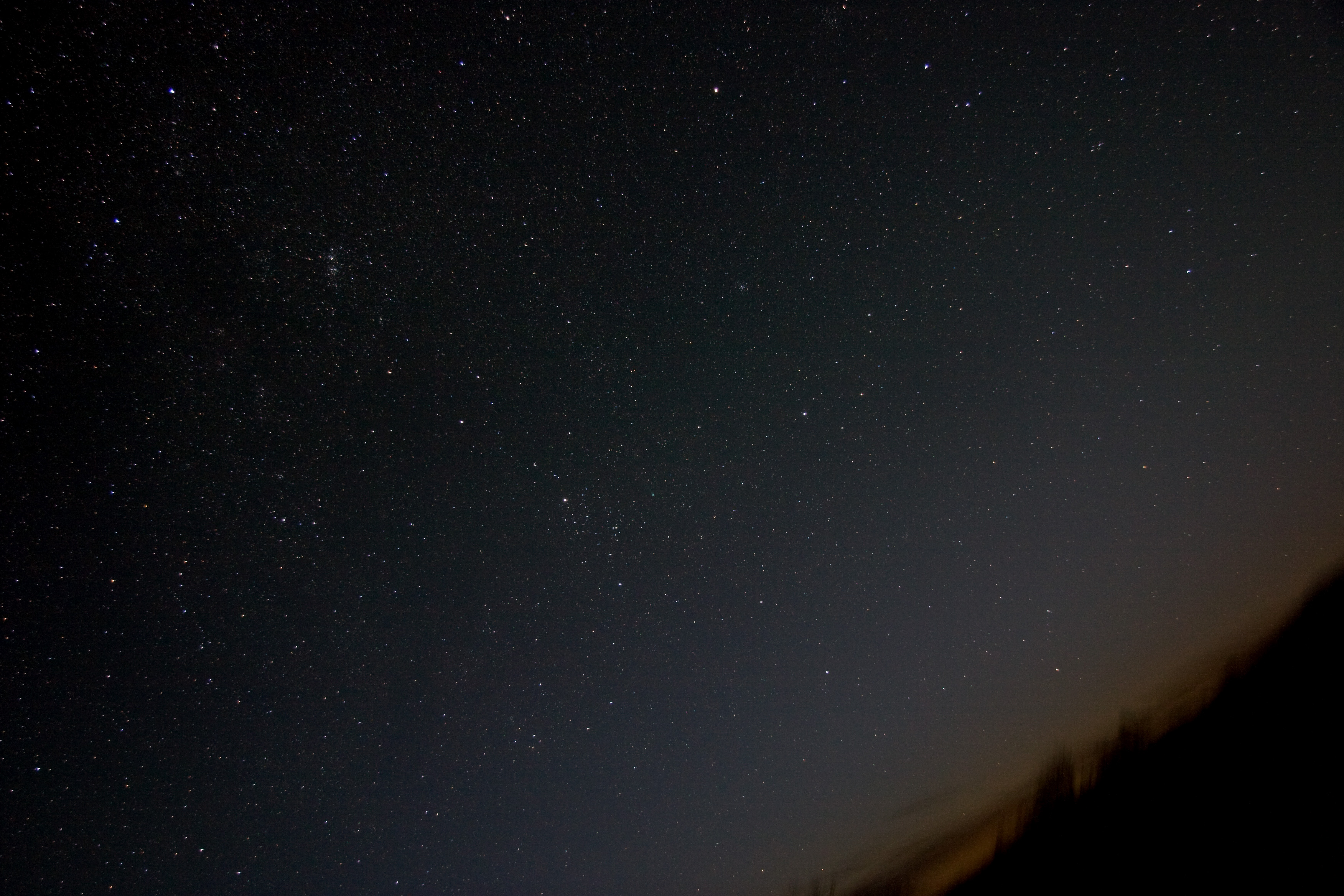
Setting up my favorite Pluto hunting telescope, a 17.5 inch f/4.5 Litebox reflector. Oh, in case you were wondering, its name is Hagrid. All my telescopes have names. Chuckwalla Bench horizonsEarth shadow at sunset, and Mojo setting up his astrophotography rigA starry necklace spans the sky from dusk to dawnThe planetary lineup from dusk to dawnTwo planets, Venus and Earth at sunsetM24 cluster and 60 day path of PlutoDo you see the Sagittarius teapot and the Milky Way "steam" rising from the spout? How about M24, the huge Sagittarius starcloud (the oval of stars 1pm above center) where Pluto hides?Earth shadow at sunriseBonus picture: This is the "naked eye" view of the sky where Comet McNaught can be found. Can you see the green comet near the Perseus Cluster? If not go to Mojo's Blog for closeup. Click to enlarge. It took binoculars for most of us to spot the first time. 🙂
Every couple of years I get the yearning to see all the planets in one night. Saturday night, June 12 seemed like the perfect opportunity. Our Old Town Sidewalk Astronomers club planned an outing to our regular observing spot, Chuckwalla Bench, which has very good horizons. We needed good horizons to catch Mercury rising just before sunrise.
Here are my planet observations, in observing order. All distances are listed in astronomical units and represent the distance from Earth on June 12, 2010, the night of my observations.
Earth! Facing away from the setting sun, the Eastern horizon turned shades of blue above the pinkish sky. That’s the shadow of the Earth! The dark blue band seems to rise above the landscape and spans 180 degrees. The pinkish sky above the shadow is the antitwilight arch. As the sun sets, the boundary between the reddened (pink) color and the horizon grows until it blends with the darkening night sky. The same thing happens at dawn of course. Look for it, and tell me what you see!
Venus! The first “star” to appear in our sky after sunset was Venus. Through the telescopes its gibbous phase is unmistakable! Its distance from Earth is 1.2 AU (astronomical units).
Mars! I was not expecting to see any features on Mars, since it is so far away and so small. Mars is 1.7 AU from Earth, but only half the diameter of Earth. I was surprised that I could see some dark markings, through a small refractor. When we checked a Mars map for the time of the observation, the large dark feature Syrtis Major was indeed right smack on the central meridian – the imaginary line in the center of the planet facing Earth at that moment.
Saturn! What’s not to love about Saturn! The brownish cloud bands contrasted against the butterscotch hued planetary globe. The slender ring, appearing nearly edge-on, bisected the planet, showing a tiny glimmer of sunlight shining on the north side of the rings. Several moons were visible, though one of the larger ones, Dione, was transiting (crossing in front of) the planet on this night. I spotted Mimas and Enceladus — tiny beacons of light — hovering near the edge of the rings. Titan and Hyperion were on the same side, only further away. Rhea was on the other side. Dione’s shadow marched across the face of the planet for astrophotographers to capture. I didn’t see it visually. Distance from Earth is 9.4 AU right now.
Pluto! This small icy world is 30 AU away from Earth. Once a planet, it is now a dwarf planet. But that doesn’t alter my enjoyment of seeing it through a telescope. For the past few years, Pluto has been marching slowly towards the richest part of our Milky Way galaxy making it a challenging object to confirm in backyard telescopes. Right now it is found skimming the Northern border of M24, the Milky Way Star Cloud. That’s a lot of stars to wade through to find one dwarf planet!
I printed out star charts showing just the few surrounding stars and Pluto, indicating the motion over the evening so I could go back and verify the observation closer to dawn. I also made zoomed out charts, showing larger and larger areas of the region. I had some galactic luck this month! A small open cluster called NGC6603 was nearby to Pluto within the larger M24 open cluster. A few distinctive star patterns separated the dwarf planet from the small star cluster, and I was able to easily starhop and make a positive ID. With Pluto bagged, I was feeling confident about the rest of my planetary to-do list.
Note: From July 4th through the 8th Pluto will pass in front of a dark nebula on the Northwest border of the M24 named B92. This should make the tiny magnitude 14 speck-of-a-former-planet easy to spot.
Ceres, another ex-planet was nearby so I hopped over to have a look at it. Ceres spent half a century after its discovery in 1801 as our 8th planet. Then it was demoted to an asteroid, but its significance was cemented by its designation, 1 Ceres. After many years working the solar system as chief #1 asteroid or minor planet, in 2006 Ceres was promoted to dwarf planethood along with Pluto. Ceres is 1.8 AU from Earth, by the way.
With the dwarf planet observations under my belt, I took a short nap to allow Jupiter, Uranus and Neptune to rise higher in the sky.
Uranus and Jupiter! When two planets are at opposition at nearly the same time they appear to pass each other from our viewing vantage point on Earth. This year we will see Jupiter pass Uranus, then appear to loop backwards–in retrograde–passing near Uranus a second time, then resuming its forward motion with third final close pass. The next time this will happen is 2037, so you might want to aim your binoculars at this pretty pair of planets this year. This is the first pas de deux, so you have many months to view the dance of the two gas giants. Through the telescope, Jupiter, which is 5.1 AU from Earth, looked unusual to me. It was my first look at the planet since the Southern Equatorial Band disappeared. A few months ago, this chunky ruddy band went missing.
Uranus has a beautiful aquamarine color. It has several moons just on the border of visibility through large amateur telescopes. I was able to spot three of the brighter moons of this planet — the ones farthest from the planet’s glow. Titania and Oberon on one side and Ariel on the other. A big ‘scope and good dark and steady skies help to see the faint moons! Uranus is 20 AU from Earth. Try looking up at Jupiter in a dark sky and see if you can spot a blue-green “star” nearby.
Neptune! Neptune sports an azure-blue hue and appears like a tiny disc. It’s nearly 30 AU away near the southern tip of Capricornus. At this time of year, that means waiting until 3 am or later for a view.
Now I had snagged all the planets except Mercury. It would be rising an hour before sunrise at 5:30 am, but the elevation of hills on the SE horizon were difficult to measure. I kept my eyes on the Pleaides star cluster as Mercury would rise directly below the famous cluster. By 4 am, with an hour and a half until sunrise, the sky was already brightening. First, the glorious Milky Way faded until it was nothing but a memory. Then, one by one the constellations disappeared, except for their brightest starry ambassadors. I steadied my binoculars as the Pleiades or “Seven Sisters” disappeared one by one. I kept the remaining Pleiades stars in my binocular view while moved back and forth, scanning the horizon for Mercury. Soon the rays of pending dawn punctuated the horizon, and I worried that I’d miss it as sunrise made the landscape visible once again. I could still see some of the Pleiades, and kept looking for over 45 minutes. Finally, just a few minutes before 5:00 am, a bright beacon appeared on the horizon. It was Mercury! I had seen ten planets in the span of nine hours!
The nine hours passed so quickly. With sunrise comes daylight and the views of the night sky fade from view but not from memory. Join us out in the desert sometime or find a local astronomy club closer to you so you can see these wonders of our solar system for yourself! You really have to see this!
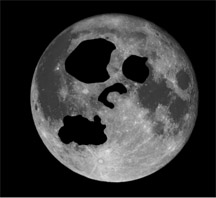
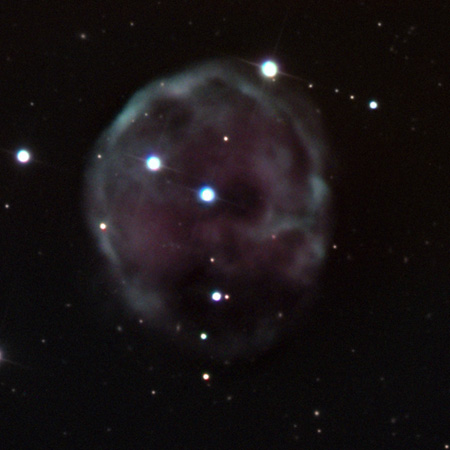
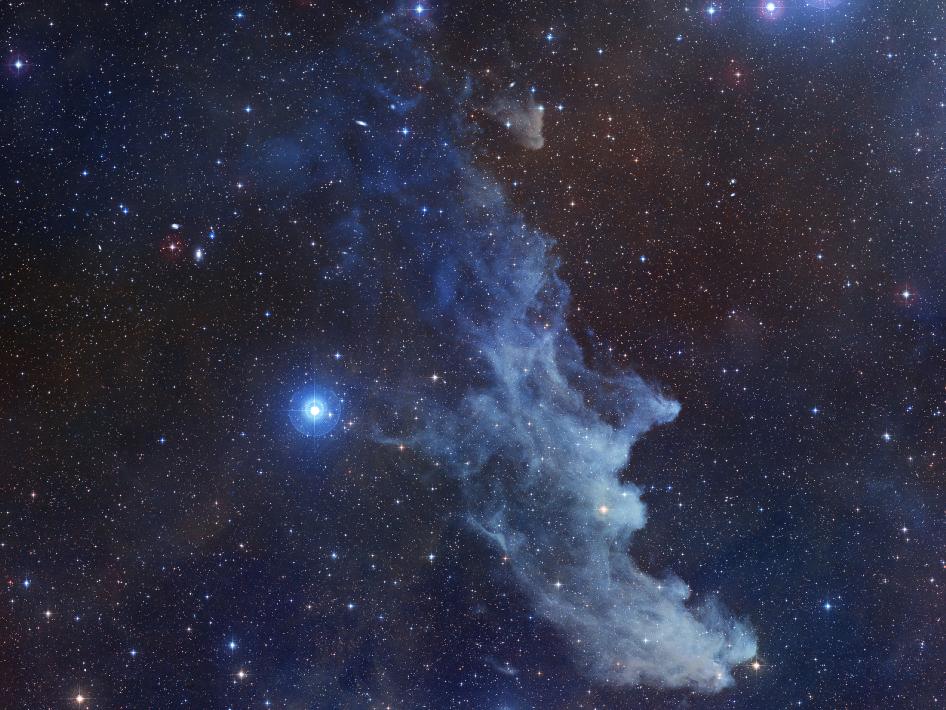
The ghoul on the moonNGC 246 the Skull NebulaIC 2118 Witch Head Nebula
It’s time to get out the Milky Way and Mars candy bars, the Moon Pies and the Starburst chews. It’s Halloween! The moon — just past first quarter — will greet your trick or treaters this year. A first quarter moon rises at noon and is high overhead at sunset. It sets around midnight. It’s the perfect Halloween moon, no trick for the astronomers to show and a real treat for their visitors to see.
Halloween falls on the 8th day of the lunar month in October 2014, and the rugged Appenine mountains, and the oval walled plain Plato are both visible. With binoculars or telescopes, find the
Straight Wall, a lunar fault line best visible on this night. Tycho and Copernicus are on the terminator the next day, and so is Clavius, the large walled plain south of Tycho. My astronomy group, the Old Town Sidewalk Astronomers shows the moon every first quarter moon Saturday night on our town square. Check your own local astronomers, museum, planetarium or college science department. I bet they do too!
Here are my favorite spooky named objects. Some are tricks and all are treats! The galaxies and nebulae will require a dark sky, but the lunar features and double stars are city observing targets. Have fun observing and let me know your favorites and I’ll add them to the list next year!
Mirach’s Ghost NGC 404 in Andromeda, magnitude 11,
size 4.3′ x 3.9′ This galaxy is hard to see. Move Mirach (Beta Andromedae) out of the way for a ghostly view.
The Phantom Streak NGC 6741 in Aquila, magnitude
10.8, size 6″. A fast evolving planetary nebula.
The Ghost of the Moon Nebula NGC 6781 in Aquila,
magnitude 11.8, size 1.8′. A nice round ghostly planetary nebula.
The Spider Galaxy NGC 5829 (Arp 42) in Bootes, magnitude
13.8, 1.7′ x 1.5′. Pretty face-on spiral galaxy in BOOtes. Scary!
The Skull Nebula NGC 246 in Cetus, magnitude 8,
size 3.8′. William Herschel discovered this large planetary nebula. It’s easy to find, and a real treat! I looked at this planetary nebula through my telescope just last Saturday night, October 25th, 2014! It’s one of my favorites.
The Witch Head Nebula. IC 2118 in Eridanis, magnitude 13, size 160′ by 80′. (About the same size as the Andromeda Galaxy which is 189′ by 61′). This very large and very faint reflection nebula is associated with the star Rigel but is almost 3 degrees west of the star. The blue color of the nebula is caused not only by blue color of Rigel, but also because the dust grains reflect blue light more efficiently than red. Earth’s daytime sky appears blue for the same reason.
The Ghost Ring Nebula IC 5148 in Grus, magnitude 13, size 2′. A pretty little planetary nebula in the neck of Grus the crane. If you can see Fomalhaut in Piscis Austrinus, look a little more south to find Grus. I tracked this one down and captured it in my eyepiece 2 weekends ago October 18, from my favorite dark sky site, Amboy Crater, in California’s Mojave Desert.
The Little Ghost Nebula NGC 6369 in Ophiuchus, magnitude
12.9, size 30″. A pretty planetary nebula, also discovered by William Herschel. Look for the mag 15.9 central star in this planetary nebula.
The Red Spider Nebula NGC 6537 in Sagittarius, magnitude
12.5, size 9″. A bipolar planetary nebula with a hot white dwarf star.
Phobos and Deimos (Fear and Terror) – the moons of Mars. It’s possible to see these small moons as you can see from my sketch, but easier to see when Mars is closer to Earth than it is now. Mars opposition in 2016 will be the best time to try! There’s nothing to fear!
Any lunar map will help you find your way to all of these lunar features, and they are all visible this year on Halloween. Here is my favorite lunar website Hitchhikers Guide to the Moon. You can get the general location of each Rukl lunar chart listed in the text below, then find the chart on the Rukl Map (most lunar observers favorite book of charts). This map shows where to find all the Lunar landing sites . Drop me a note if you would like a hard copy of this map, I have a whole box of them on my desk at work.
Hell, Rukl’s Atlas of the Moon, chart 64. 33 km crater near Deslandres, which is an amazing and very large and complex crater. The small crater Hell (actually named for 18th century Hungarian astronomer Maximilian Hell – who observed the 1769 Transit of Venus) is also near (north of) Tycho, one of the most prominent craters on the moon. Its’ bright rays will be easily visible a week after Halloween 2014 during the full moon phase. You’ll need a telescope to see Hell.
Lacus Doloris (Lake of Suffering), Rukl chart 23, 110 km mare. This Mare is just over the Montes Haemus from Mare Serenitatis (Sea of Serenity). If you’ve spotted the bright white (tiny) crater Linne, you’re close to the Lake of Suffering. This small lake is visible visible South of the bright crater Linne.
Lacus Mortis (Lake of Death), Rukl chart 14, 150 km diameter flooded crater. You’ll find it North of the great crater Posidonius, and North of easy-to-spot Mare Crisium, well placed for Halloween viewing this year. Through your telescope, find some great rilles (long, narrow depressions in the lunar surface that resemble channels) on the Western side of Lacus Mortis.
Lacus Timoris (Lake of Fear) and Palus Epidemiarum (Marsh of Epidemics), Rulk chart 63. In the Southwestern section of the moon. This section of the moon deserves a careful look through the telescopes. You’ll also find lunar domes and rilles in this region of the moon. Rima Hesiodus bisects the Eastern part of the Marsh of Epidemics. Lacus Timoris is an elongated region surrounded by mountains. Best seen near full moon, 6 days after Halloween 2014.
Palus Putrendis (Marsh of Rot), Rukl chart 22, 180 km small plain on the
prime meridian, near Hadley Rille and the Apollo 15 site. How can you not like the name Palus Putrendis? It’s easy to find between the crater Archimedes and Montes Apenninus. Well worth a look! Here’s a nice Lunar Map showing all the Apollo landing sites and more.
Boo Epsilon (36) (Bootes), double star, mag 2.5
and 4.9, yellow/orange and blue/green double
Boo Mu (51) Bootes, triple star, mag 4.3 and 7 and
7.6 triple, yellow primary, yellow/orange pair
Boo Xi (37) Bootes, quadruple star, mag 4.7
and 7.0, with a 9.6 and 12.6 companion, yellow and reddish/orange
Happy Halloween from PK 164+31.1 (Jones 1)
Jones 1, planetary nebula, faint but well worth the hunt
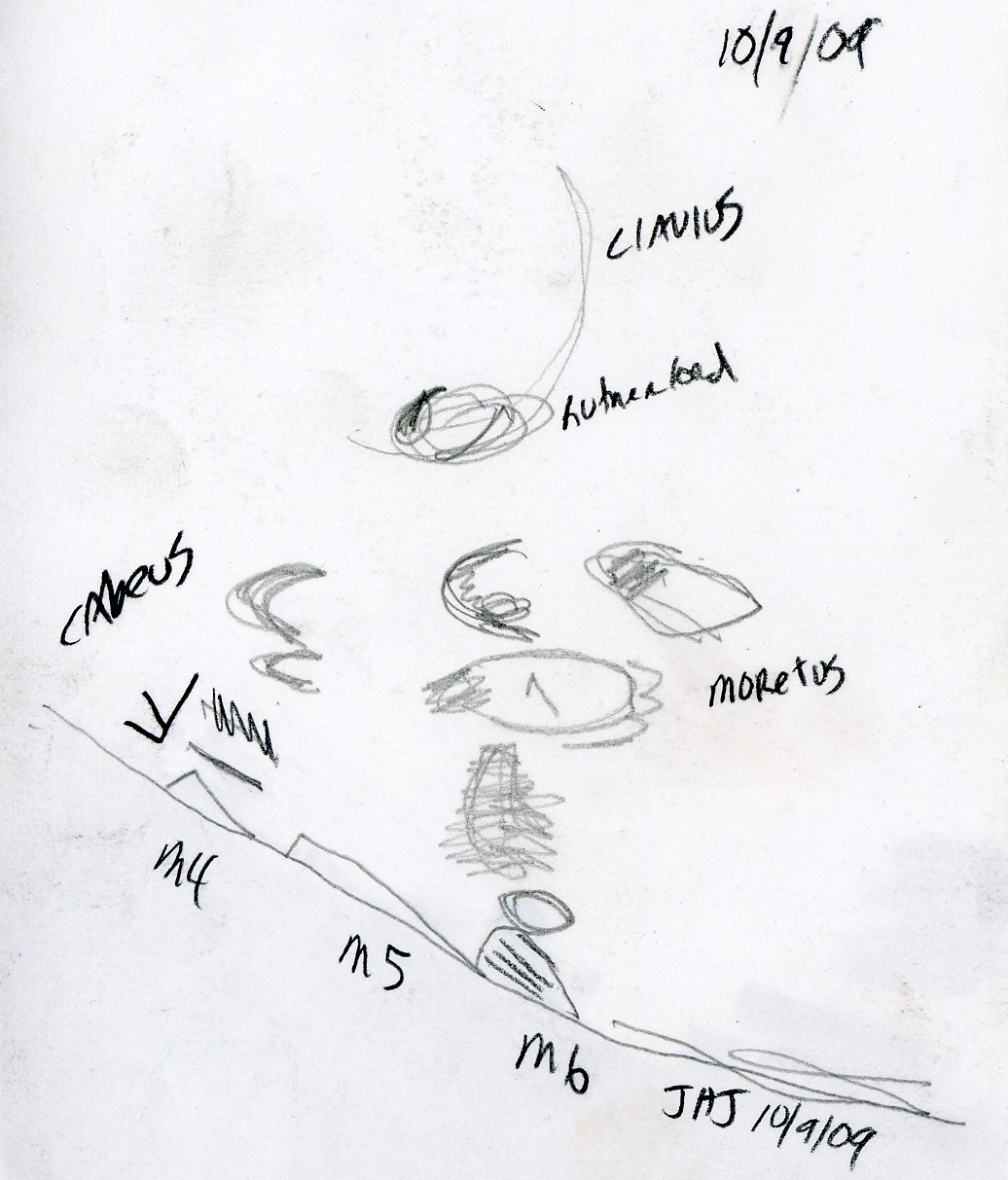
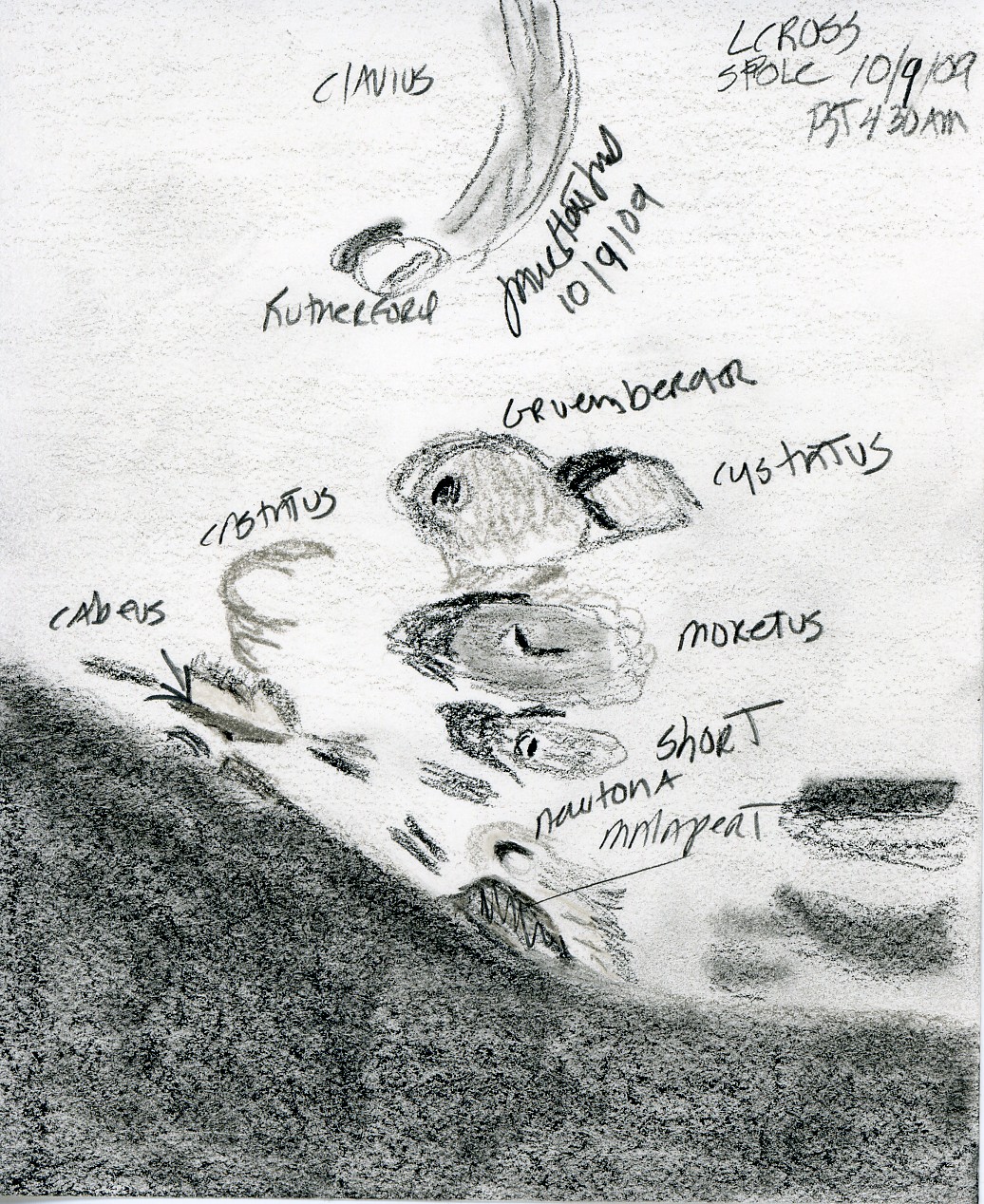
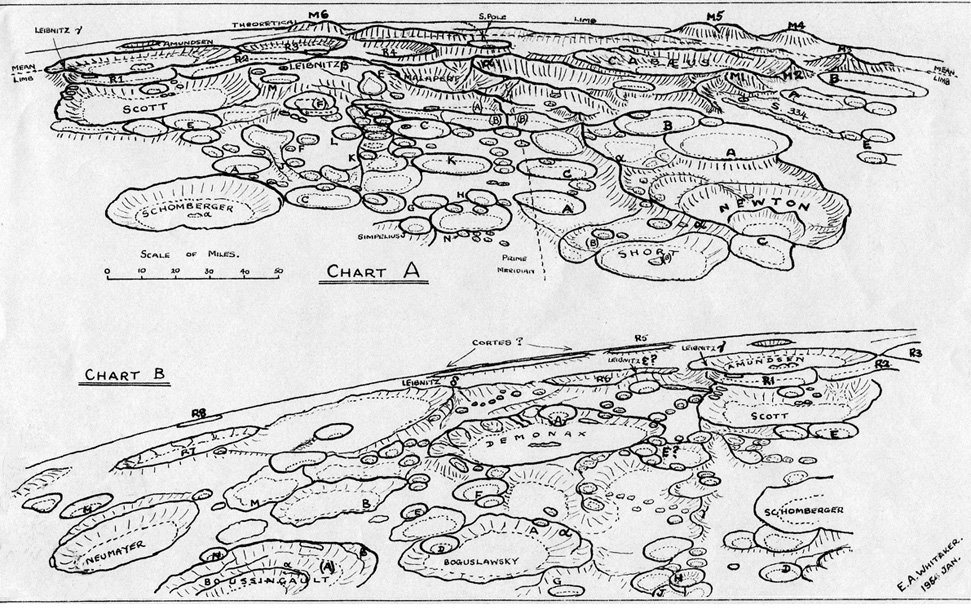
Rough sketch of LCROSS impact areafinished sketch of Cabeus and environsE. A. Whitaker 1954 sketch
Mojo and I started to setup his 14.5-inch f/4.8 Litebox reflector at 3:30 a.m. on LCROSS impact morning. There were marine layer clouds at that hour, but by the time we were set up it was clear overhead. Friends deeper in the LA basin were fogged out completely!
I thought the seeing was not too bad — I was expecting a lot worse. I was able to use pretty high magnification — a 6mm Televue Radian which magnified the view 276 times. I increased the power to 446X using a 4mm Televue Radian, but that was a little too much magnification for the seeing conditions. My first “signpost” to Cabeus was the beautiful walled plain Clavius, with its semi-circle of craterlets on the floor. Two big craters called Rutherford and Porter, named for famous American astronomers, are on the wall of Clavius. There was no shadow relief, making the whole crater nearly invisible.
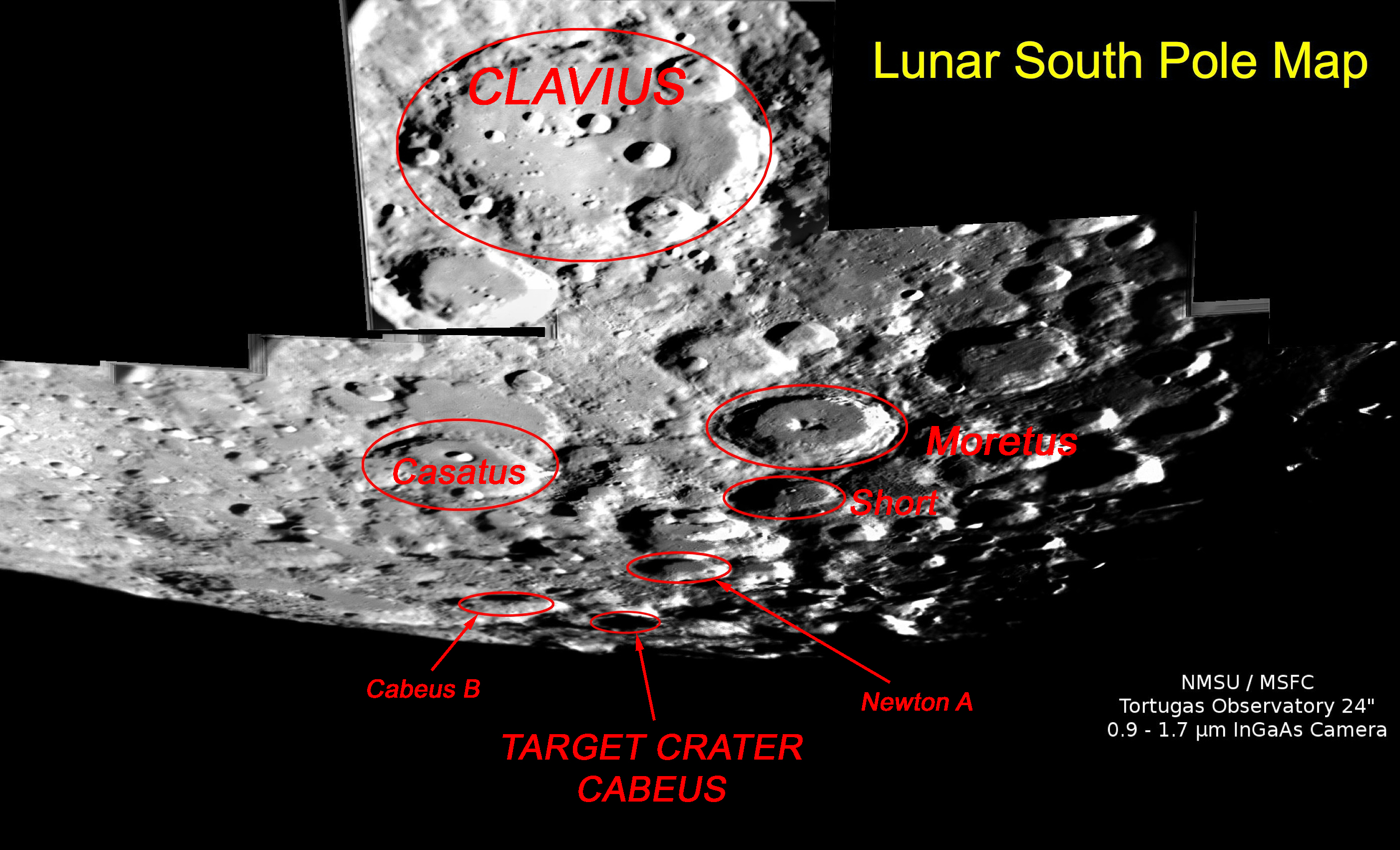
Then I crater hopped to Moretus, Short, Newton and finally Cabeus. Little bumps on the limb made the crater ID easy, plus I’ve been studying those images for days. Those bumps are mountain peaks on the huge South Pole-Aitken basin, obscured from our view, except for a few peaks on the south limb.
A slick white smear on the sunlit Cabeus crater wall bisected the elongated crater. You can see it on the – APOD lunar chart just above the red ellipse identifying Cabeus. It was really fun to watch the approach from the LCROSS camera on NASA TV, then scoot out the front door for views of the crater itself through our own telescope. I was looking at Cabeus at impact time and didn’t see (and didn’t expect to see) a plume. I recalled the night in 1999 when Mojo and I spent a night waiting and watching the South pole of the moon for the Lunar Prospector impact.
Some final thoughts a few days after LCROSS impact. The GAVRT radio telescope in the Mojave desert of California was abuzz with school kids around the world tracking LCROSS. The students locked onto the LCROSS signal and passed the information on to mission control. They will never forget this exciting mission and their important contribution to it! I was really impressed with the LCROSS mission E/PO and citizen science program which encouraged thousands of amateur astronomers like me to follow the mission, prepare an observing program and report observations.
Although sketches are not the same as video and images, I like thinking that I was sketching an area of the moon in the 400+ year old tradition of citizen scientists. The LCROSS mission follows in the tradition of trailblazing lunar missions. In fact, the mountain peak called M5 on Ewan Whitaker’s 1954 lunar map (on the limb south of Cabeus) is now named Mount Clementine!