Jane's blog banner

Tag: Albategnius

  • Chasing Galileo – 21-day old moon comparison

    galileomoon

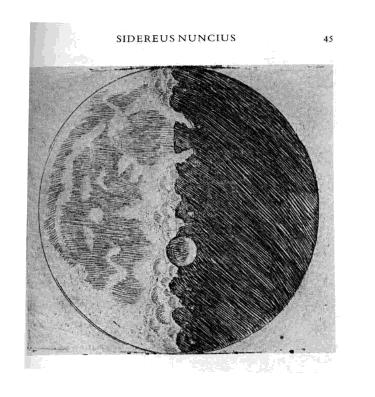
    My sketch of the moon same lunar day as Galileo's engraving
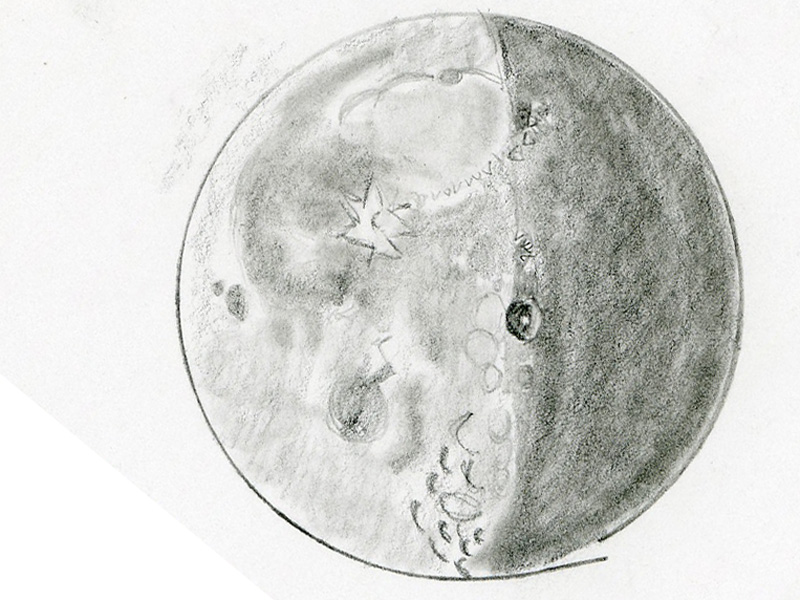
    My sketch of the moon same lunar day as Galileo’s sketch

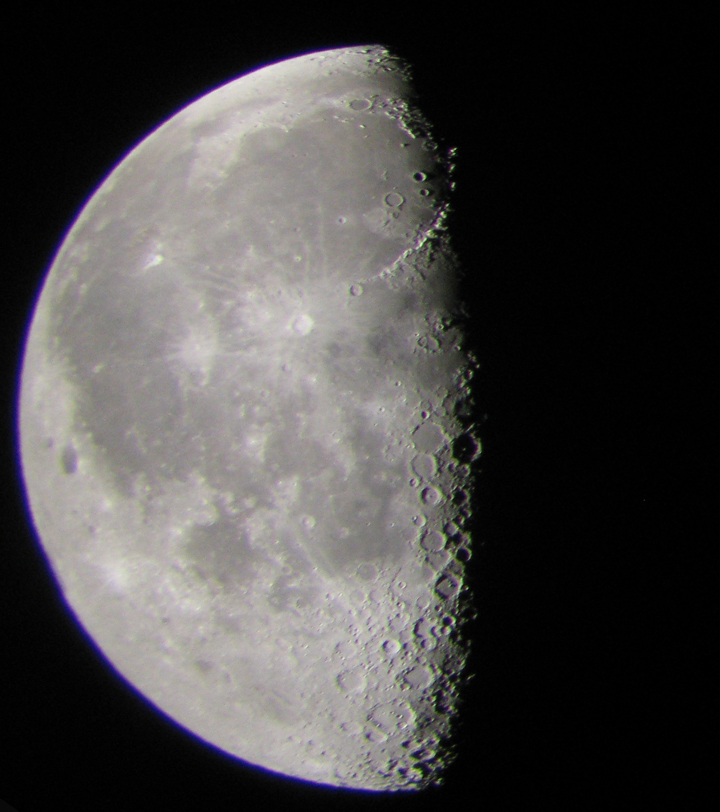
    Image take at eyepiece of 70mm TV Ranger while sketching on 7/14/09
    Image take at eyepiece of 70mm TV Ranger while sketching on 7/14/09

    Galileo’s drawing of the third quarter moon was made on December 18, 1609 according to widely accepted dates calculated by lunar scientist Ewen Whitaker. He used the solar colongitude and the latitude of the subsolar point on the moon to determine the position of the terminator. You can read more about it here on the Reliving Galileo’s Observations page (sorry, this link is gone as of Oct 2011). Refer to his Journal for the History of Astronomy, Vol. 9, p.155 Galileo’s Lunar Observations and the Dating of the Composition of Sidereus Nuncius article.

    You’ll have to scroll through the long article to find the colongitude and solar latitude of the original four engravings and seven small drawings. But you’ll find modern dates with a similar view of the moon. I was delighted to find that my sketch made on July 14, 2009 matched one of the 4 engraving dates!

    The predicted “modern” dates refer to the pattern of lighting and the position of the terminator relative to the surface features. Libration will make the craters and other features displaced somewhat with respect to Galileo’s drawings. Most folks do not actually see any resemblance between now and then, but it is a great project – sketching Galileo’s 400 year-old moon in a 21st century way.

    There is a quite a bit of agreement about the ”center” crater in Galileo’s sketch. It is most likely Albategnius. It was just on the terminator in my sketch too, and I accidentally made the crater a little larger than it really is. It’s just human nature I guess. Other features I can ID on both Galileo’s and my drawing are Mare Imbrium on both sides of the terminator, including some higher parts of Montes Caucasus lit on the unlit side of the terminator. I also can match the ghostly but well-lit trio of Ptolemaeus, Alphonsus and Arzachel just next to Albategnius on Galileo’s sketch, and I saw and sketched them too. Other sunlit Mare – Humorum (left) and Nubium (right) below Albagetnius also match up nicely.
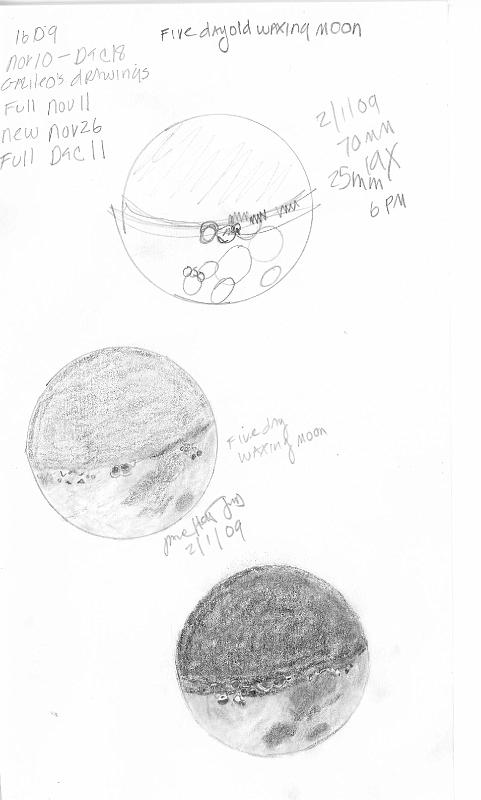
  • Chasing Galileo – sketches of the five-six day moon

    Five-day old waxing moon
    Six-day old waxing moon

    The six-day waxing gibbous moon is visible for many hours in the evening – perfect for lunar observing and sketching. The time of my sketch was closer to the sixth day than the five day old moon. I had a hard time identifying craters using either lunar days! Note how much fainter Mare Crisium is now than on the three-day moon. Many of the features barely visible three lunar days earlier in earthshine are now lit.

    On the terminator, beginning on the right and moving to the left, I see Aristoteles and Eudoxus and sketched them as dark splotches. Montes Caucasus, the Caucasus Mountains, show as a half-circle of sunlit peaks on the terminator, cradling the Sea of Serenity. Hmmm, should I use the Latin names or the English names? A bit of both, so the more familiar names are understandable, I think. Closer to the center of the terminator, I can see Plinius, a bright white crater within the Sea of Tranquility. The Apollo 11 landing site, though not visible is just on the left edge of the Sea of Tranquility, the left-most of the two large seas touching the terminator. The large sea closer to the lower edge is Mare Fecundidatis, the Sea of Fertility.

    Moving back up to the lunar terminator are a pair of lit craters. They are Hipparchus and the small crater Horrocks (connected at right) and Albategnius. These are the two craters where the sunrise is just touching the crater walls a little more than halfway from the middle of the terminator.

    Moving along the terminator, the final 2 features I can identify (at 19x) are Gemma Frisius and Maurolycus, the last two craters on the sunlit side of the terminator on the left. I suspect the sunlit crater walls just on the unlit side of the terminator belong to the craters Walter and Purbach (to the right).

    Hitchhikers’s Guide to the moon. Select Feb. 1 or 2, 2009 to match my sketches.

    My photo of the five-six day moon