Jane's blog banner

Tag: Bootes

  • Quadrans Muralis: a demoted constellation lives on as the radiant of the January Quadrantids

    Johann Bode's 1801 Uranographia, showing Quadrans Murales, Boötes and other constellations
    Boötes, Canes Venatici, Coma Berenices and Quadrans Muralis
    The Northeast sky Jan 4 at 1:00 a.m. PST. Look between Ursa Major and Minor, and the bright star Arcturus in Boötes for the location of Quadrans Muralis on the Boötes-Draco border
    Looking Northeast before sunrise, chart courtesy of Spaceweather.com
    Looking Northeast before sunrise, chart courtesy of Spaceweather.com

    Most meteor showers radiate from a recognizable constellation like Leo’s Leonids, Gemini’s Geminids and Orion’s Orionids. What’s up with the January Quadrantids? Where do you find their constellation? In Quadrans Muralis, a demoted constellation.

    The first 60+ Roman constellations didn’t cover the sky south of the equator, so over the years, astronomers took up the task and filled in the empty spaces with new constellations, including some in the northern sky.

    The International Astronomical Union divided up the sky into official constellations in 1930. 88 constellations remained, but over 30 constellations didn’t make the cut. Among those demoted was Quadrans Muralis, the location of January’s brilliant, but brief Quadrantid meteor shower. Apis, the bee, Felis, the cat, and Solarium the sundial were other constellations demoted into obsoleteness. One ancient constellation, Argo Navis, didn’t survive, either. It’s the only one of the 48 constellations listed by 2nd century astronomer Ptolemy no longer officially recognized as a constellation. Like other pieces of large real estate, it was subdivided into smaller segments in the 17th century, and those constellations — Carina the Keel, Vela the Sails, and Puppis the Poop Deck — survived demotion.

    There were good reasons to define and standardize the constellation list, even if it meant losing some historic or whimsical constellations. One reason, according to the IAU was “to aid in the naming of new variable stars, which brighten and fade rather than shine steadily. Such stars are named for the constellation in which they reside, so it is important to agree where one constellation ends and the next begins.”

    Quadrans Muralis was added to the constellations by Joseph J. de Lalande in 1795, to commemorate the quadrant he used to observe and measure stellar positions. The quadrant was an instrument very similar to today’s sextant. A few years later, in the early 1800’s a meteor shower was discovered to radiate from this constellation, and the meteor shower was named for the constellation.

    Created from stars found to the north of Boötes, the herdsmen; Quadrans Muralis can be found in a rich area of the northern sky filled with pretty constellations. The big and little dippers (the most recognizable parts of Ursa Major and Ursa Minor) are the most familiar sights but you’ll also find the Northern Crown, Corona Borealis, Boötes and his two hunting dogs Asterion and Chara in Canes Venatici, and Coma Berenices, the hair of Bernice. Take a tour of the area through binoculars on January 3rd before midnight while waiting for the radiant to rise.

    Update for 2012 for Southern California meteor observers: “The radiant rises at 1:00 am local time and the moon sets at 3:00 am. The predicted peak (2:30 am Eastern 11:30 PST (07:30 UT January 4, 2011).

    The Quadrantids (QUA) or January Bootids are active from January 1st through the 10th. A sharp maximum is predicted to occur near 0730 Universal Time on the 4th. This corresponds to 02:30 EST and 23:30 PST (January 3rd). This is good timing for viewers located in eastern North America as the radiant will rising above the northeastern horizon. It would even be better if the maximum were a bit later as the radiant would be located higher in the sky, producing more activity.

    Rates will depend on the exact time of maximum and whether the moon is still above the horizon. Assuming the 0730 UT timing is correct, the further one is located in North America, the better. Eastern observers may be able to see 60-75 Quadrantids per hour. If your skies are very clear and dark, allowing you to see faint meteors, your rates could top 100 per hour. Observers located in the western portions of North American will have lower rates but will also have the opportunity to see Quadrantid “earthgrazers”. Earthgrazers are meteors that skim the upper portion of the atmosphere therefore lasting much longer than normal and producing long trails in the sky. These meteors can only be seen when the radiant lies close to the horizon. As the radiant rises, the meteor paths
    will become shorter with shorter durations. Observers in the northern hemisphere outside of North America can expect to see a maximum of 25 Quadrantids per hour between moon set and dawn.

    At maximum the radiant is located at 15:21 (230) +49. This position lies in a barren region of extreme northern Bootes, ten degrees northeast of the fourth magnitude star Beta Bootis. At 42 km/sec. the Quadrantids produce meteors of medium velocity. During exceptional activity some Quadrantid fireballs may be witnessed. Courtesy Bob Lundsford posting on the MeteorObs Yahoo Group.

    Streaming video & a visibility map for tonight’s (January 3-4, 2012) Quadrantids meteor shower

    Quadrantids History

    IAU and the 88 Constellations

    My What’s Up video for January 2011 (not 2012): The January 3-4 Quadrantid Meteor Shower
    My What’s Up video for January 2012: Evolving planets, an asteroid to view (Eros), plus the Quadrantids

  • Spooky Halloween Observing, 2014 edition

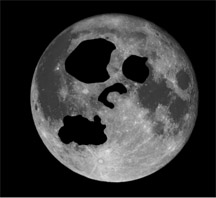
    The ghoul on the moon
    The ghoul on the moon
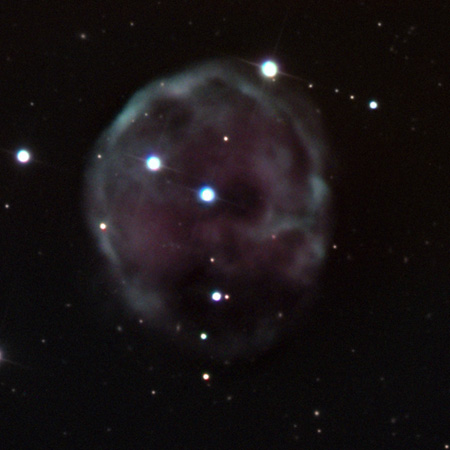
    NGC 246 the Skull Nebula
    NGC 246 the Skull Nebula
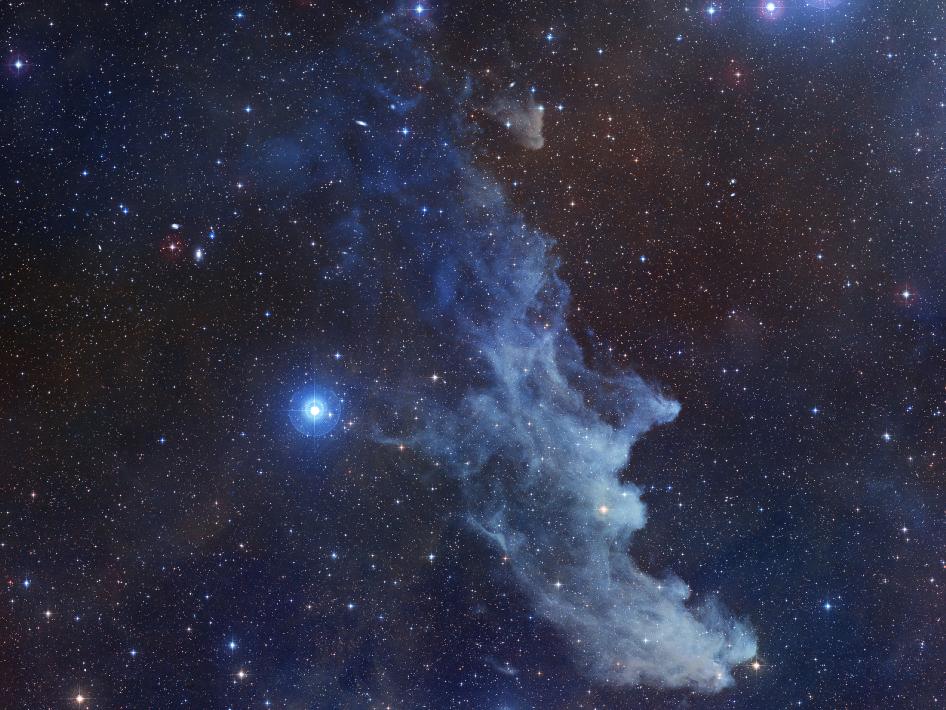
    IC 2118 Witch Head Nebula
    IC 2118 Witch Head Nebula

    It’s time to get out the Milky Way and Mars candy bars, the Moon Pies and the Starburst chews. It’s Halloween! The moon — just past first quarter — will greet your trick or treaters this year. A first quarter moon rises at noon and is high overhead at sunset. It sets around midnight. It’s the perfect Halloween moon, no trick for the astronomers to show and a real treat for their visitors to see.

    Halloween falls on the 8th day of the lunar month in October 2014, and the rugged Appenine mountains, and the oval walled plain Plato are both visible. With binoculars or telescopes, find the
    Straight Wall
    , a lunar fault line best visible on this night. Tycho and Copernicus are on the terminator the next day, and so is Clavius, the large walled plain south of Tycho. My astronomy group, the Old Town Sidewalk Astronomers shows the moon every first quarter moon Saturday night on our town square. Check your own local astronomers, museum, planetarium or college science department. I bet they do too!

    Here are my favorite spooky named objects. Some are tricks and all are treats! The galaxies and nebulae will require a dark sky, but the lunar features and double stars are city observing targets. Have fun observing and let me know your favorites and I’ll add them to the list next year!

    Mirach’s Ghost NGC 404 in Andromeda, magnitude 11,
    size 4.3′ x 3.9′ This galaxy is hard to see. Move Mirach (Beta Andromedae) out of the way for a ghostly view.

    The Phantom Streak NGC 6741 in Aquila, magnitude
    10.8, size 6″. A fast evolving planetary nebula.

    The Ghost of the Moon Nebula NGC 6781 in Aquila,
    magnitude 11.8, size 1.8′. A nice round ghostly planetary nebula.

    The Spider Galaxy NGC 5829 (Arp 42) in Bootes, magnitude
    13.8, 1.7′ x 1.5′. Pretty face-on spiral galaxy in BOOtes. Scary!

    The Skull Nebula NGC 246 in Cetus, magnitude 8,
    size 3.8′. William Herschel discovered this large planetary nebula. It’s easy to find, and a real treat! I looked at this planetary nebula through my telescope just last Saturday night, October 25th, 2014! It’s one of my favorites.

    The Witch Head Nebula. IC 2118 in Eridanis, magnitude 13, size 160′ by 80′. (About the same size as the Andromeda Galaxy which is 189′ by 61′). This very large and very faint reflection nebula is associated with the star Rigel but is almost 3 degrees west of the star. The blue color of the nebula is caused not only by blue color of Rigel, but also because the dust grains reflect blue light more efficiently than red. Earth’s daytime sky appears blue for the same reason.

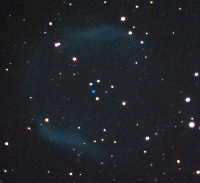
    The Ghost Ring Nebula IC 5148 in Grus, magnitude 13, size 2′. A pretty little planetary nebula in the neck of Grus the crane. If you can see Fomalhaut in Piscis Austrinus, look a little more south to find Grus. I tracked this one down and captured it in my eyepiece 2 weekends ago October 18, from my favorite dark sky site, Amboy Crater, in California’s Mojave Desert.

    The Little Ghost Nebula NGC 6369 in Ophiuchus, magnitude
    12.9, size 30″. A pretty planetary nebula, also discovered by William Herschel. Look for the mag 15.9 central star in this planetary nebula.

    The Red Spider Nebula NGC 6537 in Sagittarius, magnitude
    12.5, size 9″. A bipolar planetary nebula with a hot white dwarf star.

    Phobos and Deimos (Fear and Terror) – the moons of Mars. It’s possible to see these small moons as you can see from my sketch, but easier to see when Mars is closer to Earth than it is now. Mars opposition in 2016 will be the best time to try! There’s nothing to fear!

    Any lunar map will help you find your way to all of these lunar features, and they are all visible this year on Halloween. Here is my favorite lunar website Hitchhikers Guide to the Moon. You can get the general location of each Rukl lunar chart listed in the text below, then find the chart on the Rukl Map (most lunar observers favorite book of charts). This map shows where to find all the Lunar landing sites . Drop me a note if you would like a hard copy of this map, I have a whole box of them on my desk at work.

    Hell, Rukl’s Atlas of the Moon, chart 64. 33 km crater near Deslandres, which is an amazing and very large and complex crater. The small crater Hell (actually named for 18th century Hungarian astronomer Maximilian Hell – who observed the 1769 Transit of Venus) is also near (north of) Tycho, one of the most prominent craters on the moon. Its’ bright rays will be easily visible a week after Halloween 2014 during the full moon phase. You’ll need a telescope to see Hell.

    Lacus Doloris (Lake of Suffering), Rukl chart 23, 110 km mare. This Mare is just over the Montes Haemus from Mare Serenitatis (Sea of Serenity). If you’ve spotted the bright white (tiny) crater Linne, you’re close to the Lake of Suffering. This small lake is visible visible South of the bright crater Linne.

    Lacus Mortis (Lake of Death), Rukl chart 14, 150 km diameter flooded crater. You’ll find it North of the great crater Posidonius, and North of easy-to-spot Mare Crisium, well placed for Halloween viewing this year. Through your telescope, find some great rilles (long, narrow depressions in the lunar surface that resemble channels) on the Western side of Lacus Mortis.

    Lacus Timoris (Lake of Fear) and Palus Epidemiarum (Marsh of Epidemics), Rulk chart 63. In the Southwestern section of the moon. This section of the moon deserves a careful look through the telescopes. You’ll also find lunar domes and rilles in this region of the moon. Rima Hesiodus bisects the Eastern part of the Marsh of Epidemics. Lacus Timoris is an elongated region surrounded by mountains. Best seen near full moon, 6 days after Halloween 2014.

    Palus Putrendis (Marsh of Rot), Rukl chart 22, 180 km small plain on the
    prime meridian, near Hadley Rille and the Apollo 15 site. How can you not like the name Palus Putrendis? It’s easy to find between the crater Archimedes and Montes Apenninus. Well worth a look! Here’s a nice Lunar Map showing all the Apollo landing sites and more.

    Boo Epsilon (36) (Bootes), double star, mag 2.5
    and 4.9, yellow/orange and blue/green double

    Boo Mu (51) Bootes, triple star, mag 4.3 and 7 and
    7.6 triple, yellow primary, yellow/orange pair

    Boo Xi (37) Bootes, quadruple star, mag 4.7
    and 7.0, with a 9.6 and 12.6 companion, yellow and reddish/orange

    Happy Halloween from PK 164+31.1 (Jones 1)

    Jones 1, planetary nebula in Pegasus, dim but fun to find in a big 'scope
    Jones 1, planetary nebula, faint but well worth the hunt