Jane's blog banner

Tag: Morris Jones

  • Clarissa’s catblog

    Meow! I am Jane and Mojo’s cat, Clarissa. I’m a gorgeous (if I do say so myself) eight year-old Tortoiseshell Tabby cat. I asked Jane to take some pictures and video of me to share with all you cat lovers. I hope you like them!
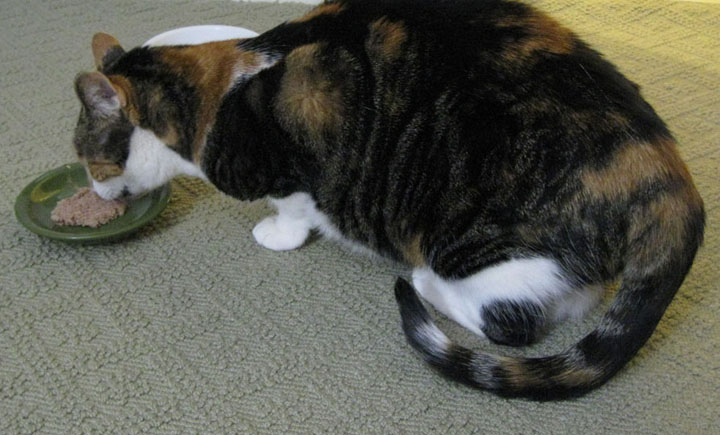
    My favorite!  Science Diet Savory Chicken 'specially made for mature kitties like me!
    I love my Science Diet Savory Chicken cat food
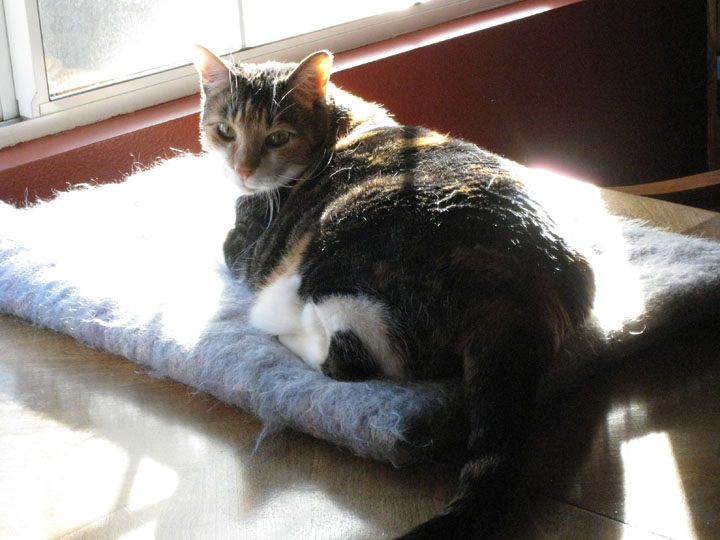
    The sun is so warm when I sit by the window
    The sun is so warm when I sit by the window
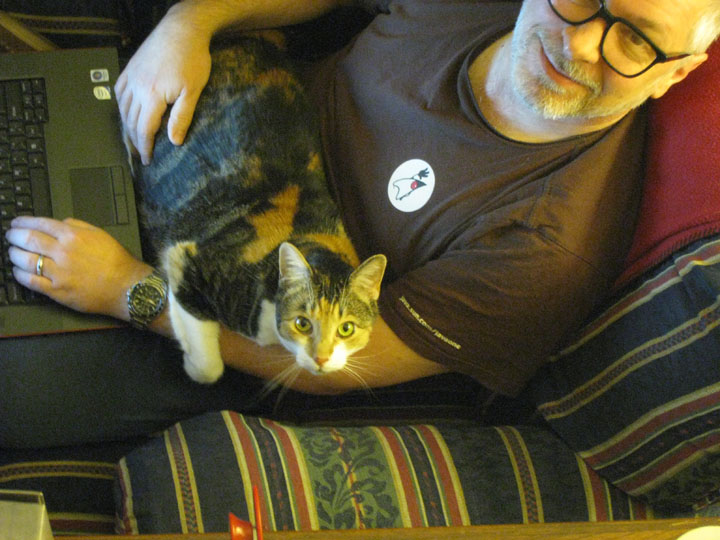
    In the evening I help Mojo with his laptop
    In the evening I help Mojo with his laptop
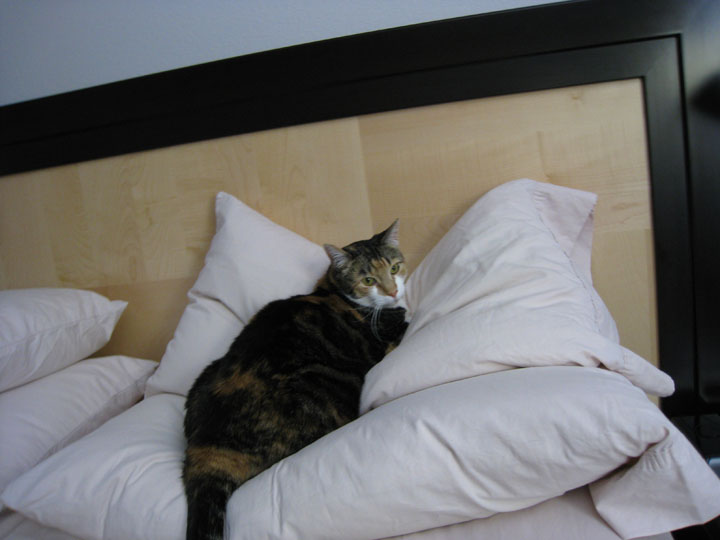
    Jane and I share the pillows. She gets the bottom corner (sometimes)
    Jane and I share the pillows. She gets the bottom corner (sometimes)
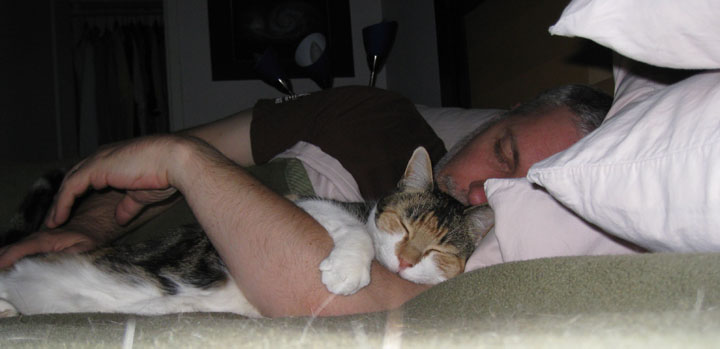
    Helping Mojo go to sleep. It's my job!
    Helping Mojo go to sleep.

    My favorite time of the day is when I wake up. The first thing I do is to see if Jane or Mojo are also awake. I meow at them to say “good morning, cat feeders”. Then I hop up on the bed and I walk all over their backs to remind them it is my breakfast time. That usually wakes one of them up.

    Pretty soon I get a delicious breakfast of Science Diet cat food especially made for “mature” cats like me. One dish is soft and juicy and made from minced birds. The other dish is crunchy and made of bird by-products, whatever those are. Right now I am having some hairball issues and so my food helps me with that problem. It is sooo embarrassing.

    I am an indoor cat, but I really like to look out the window. I have some “outdoor” friends who come round to visit me and we have so much fun together! We meow at each other, and make our tails really bushy so we look bigger than we really are. We fiercely swish our tails at each other. Then we make these wild roaring noises. I have no idea where I learned to do that. My wild cat ancestors must have passed that behavior down to me. How do I know, I’m just a cat. All I know is when I pounce on the sliding doors, my cat friends pounce back. It is sooo much fun!

    When not eating and chatting with my friends, I spend a lot of my day on this really nice mohair blanket. It’s in the library and there is a big window there to look out of. Sometimes, I see Jane going to work, when I look out the window. She waves at me, and makes silly gestures to get my attention. It is sooo embarrassing. I sit there watching, and hope none of my friends see me. Then I have the house to myself, and head straight for a sunbeam.

    In the morning, the sunbeams spread across my blanket which is on a table in the library. It is so comfy and warm on that blanket, that as soon as I stretch out, my little cat eyes get all heavy and I just can’t help it, but I take a nap right then and there.

    I don’t have a lot of cat toys, but I do like my feathers. They are not really toys, more like tools I use to scratch my face and, oh, I guess I do play with them a little bit. They come from real birds, too. I like the big sea gull or wild turkey feathers the best, so if you find one, you can give it to Jane or Mojo, and they’ll see that I get it.

    You can see me playing with my feather in this YouTube video. You can see a couple of my other feathers in the video too. One is from an owl. I wouldn’t want to be the one taking it off that owl, tho! They have really big claws, from what I see on TV. Note: the videos are all embedded at the end, so you don’t have to stop reading my blog unless you want to.

    When Jane and Mojo get home from work, it’s play time! I have a really fun game I’ve trained them to play. I walk up the stairs, and meow. I stop on every step and meow down at them. I have trained them both to stop what ever they are doing, and follow me up and down the stairs, over and over again. I let them pet me, too. Then on the way down. I flop from stair to stair, and I have trained them to give me belly rubs on the way down. Here is a video of me going down the stairs.

    After dinner we spend some quality time together. As soon as Mojo takes out his laptop to do a little work, that’s my clue to hop up on what is left of his lap. He really likes it when I do this. Then I usually head for the back of the chair or sofa and lick his head. When I do this for a long time, he gets a little rash on his head, but he lets me do it anyway. Here is video of our grooming process. It’s a little dark because we were watching TV at the same time.

    Well, after grooming, it’s bedtime. I head back upstairs and get comfortable on the pillows. I leave a little room on the pillow for Jane. Then as soon as Mojo is falling asleep, I meow at him and knead his arm for awhile, while I purr really loudly. Then I go back to my other pillow for a few hours.

    Well that pretty much sums up my day. If you have any questions, or want to know about anything else I am up to, just leave a note and I’ll try to answer it when I am not busy. But I gotta go now. It’s dinnertime!

    Here is where I stand on the inhumane practice of declawing cats. I am against it and hope you are too!

    And here are those cute videos of me:

  • A Runaway Star and the Flaming Star Nebula

    IC 405 and AE Aurigae
    IC 405 and AE Aurigae

    Stardate: Saturday November 14, 2009.
    Place: Chuckwalla Bench Observing Site
    Equipment: 12.5-inch Litebox Reflector, f/5.75 Pierrre Schwaar mirror
    Sky conditions: Better than expected (clear, steady, good transparancy, but cold)

    Mojo and I try to head out to our favorite dark sky observing spot every new moon Saturday night. Usually several of our Old Town Sidewalk Astronomer friends join us, and usually there are half a dozen telescopes. But this month we were the lone astronomers.

    Mojo has been infected by the Astrophotography virus for the past 2 years. Lucky me! I plunder his images and have included many in my monthly What’s Up podcasts. It’s not easy to find good wide field images of the constellations and low/zero power images of celestial objects, and his are really gorgeous. I love Mojo’s images of the galactic “smudges” because they show what deep sky objects really look like through a modest telescope. But he also wants to image the “eye candy” objects up close and personal, and luckily he welcomes an imaging suggestion from me every now and then.

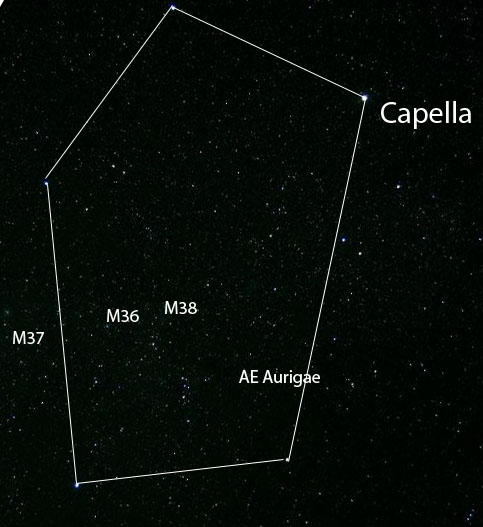
    The constellation Auriga as it appears in the November sky - center left is bright Capella
    Mojo’s Auriga – center left is bright Capella
    Rotated & annotated Auriga
    I rotated Mojo’s Auriga 120 degrees clockwise & annotated it because this is how I see it in my mind’s eye – like a house with a door

    So on this particular night, I wanted to observe one really interesting star and one really interesting deep sky object in several of the winter constellations. In Perseus, I observed Eta Persei, a spectacular gold and blue double star, and NGC 1491, a fan shaped emission nebula.

    The constellation Auriga is right next to Perseus, so I opened the good book, and by that I mean the Night Sky Observer’s Guide (NSOG) volume 1 (Autumn and Winter) to Chapter 5, Auriga the Charioteer. Under the “Interesting Stars” chapter, variable star AE Aurigae caught my attention, even thought it only garnered a rating of 3 out of 5 stars — meaning it was an “average” viewing object.

    AE Aurigae is one of the runaway stars whose proper motion can be traced back to the Orion Nebula. It is about 1500 light-years away and is an unusual O-type star with irregular light variations. It shines with the luminosity of 10,000 suns, but because of its distance is just on the edge of naked eye visability at varying magnitudes from 5.78 to 6.08. The NSOG goes on to say the star illuminates IC 405, the Flaming Star Nebula. Wow! That sounded like a very interesting object to view, despite the so-so rating. I called Mojo over to show him my project and mentioned how difficult the nearby nebula was to see visually. I could just barely see it, after trying with and without my O-lll, H-Beta and UHC filters. Only the UHC filter helped a little, and not very much. He thought it would be a challenging imaging project, and the constellation was in a great spot for astrophotography. I showed him where the object was, just next to a line of 4 stars that make up part of the front door of the “house of Auriga”, sort of where the doorbell should be. An hour of imaging later, we were both blown away the rippling waves, curling tendrils and the red color in the nebula.

    Back home the next day I did some more research on the two objects. The Spitzer Space Telescope observed the Flaming Star Nebula, an emission/reflection nebula in infrared wavelengths. Their observations show evidence of a bow shock created by the interaction between the runaway star and the nebular material. The runaway star, AE Aurigae is from the Orion association of O and B type stars. AE Aurigae and Mu Columbae were hurled out of the Orion nebula’s famous Trapezium area before the Trapezium stars were even born! Did one of the stars’ binaries go supernova and did the explosion send these stars hurtling through space in different directions? According to Jim Kaler’s Stars website the collision sent two stars out of the cluster, and the beautiful double star Iota Orionis — the brightest star in Orion’s belt — remained.

    AE Aurigae is moving north at 128k/s (80 miles per second) and is now 40 degrees north of Orion in Auriga. Mu Columbae is now 28 degrees to the south, in the constellation Columba, the Dove. That’s the constellation south of Canis Major and Lepus. Standing out under a dark sky and tracing the path from Orion to the runaway star’s location in Auriga was just mind boggling. Then I eyeballed the the path of Mu Columbae from the Orion nebula past bright Sirius down to the dog’s butt of Canis Major, and on down to Columba. Next month I’ll have to try and see the Columba runaway star.

    That was a great project for both of us! I really enjoyed observing a wild stellar object which had been studied and imaged by one of our great orbiting observatories. And Mojo enjoyed imaging an object that was practically invisible at the telescope eyepiece, but waiting for its closeup in front of his camera.

    Mojo blogs about Pinwheels, Horseheads and Flaming Stars – his projects on the same night.

  • Halloween Sidewalk Astronomy – Tradition!

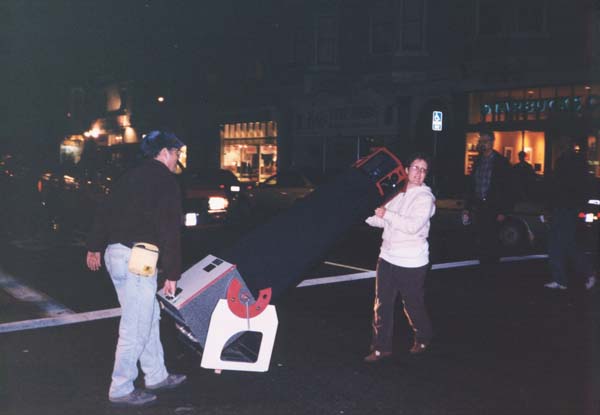
    Hauling a telescope across the streets of San Francisco about 10 years ago
    Hauling a telescope across the streets of San Francisco
    Jane-Orion plus Canis Major and Canis Minor
    Jane-Orion plus Canis Major and Canis Minor
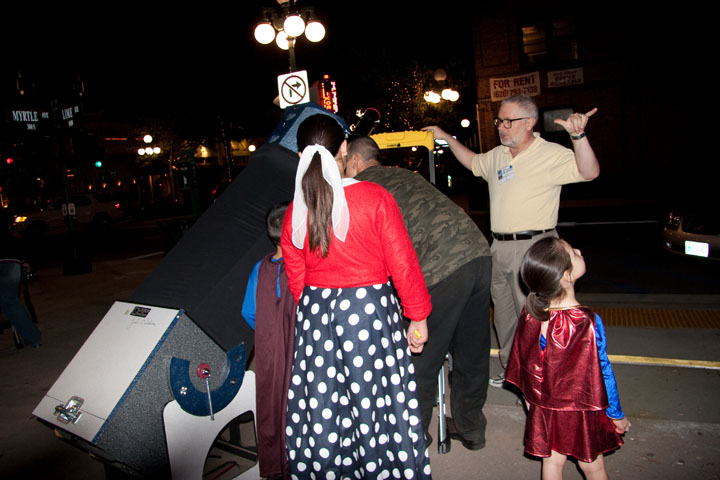
    Mojo demonstrating where to find Jupiter's moons
    Mojo demonstrating where to find Jupiter’s moons
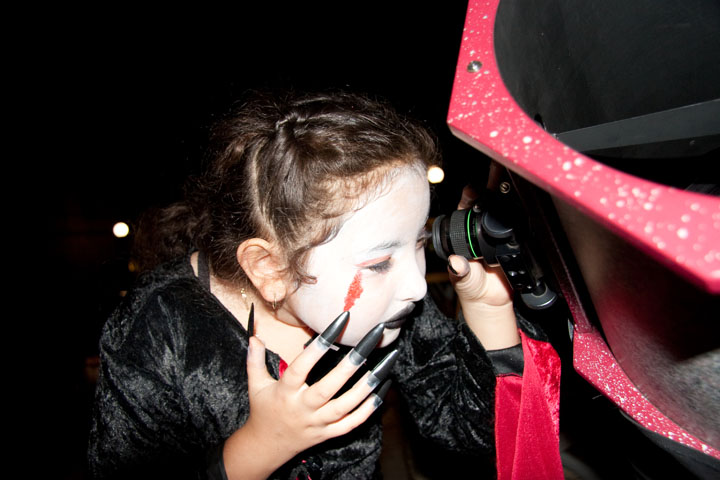
    Getting some eye candy
    Getting some eye candy

    Sidewalk Astronomers have been setting up telescopes on Halloween as long as there have been sidewalk astronomers!

    When we lived in the San Francisco Bay Area, we’d cross the Golden Gate Bridge from home and head to the Castro District of San Francisco on Halloween. It was crazy! Tens or maybe hundreds of thousands of revelers flock to the Castro on Halloween but I think we were the only ones with telescopes!

    That Halloween sidewalk astronomy tradition continues in San Francisco to this day. And now that we live in southern California we’re carrying on the tradition in our new home town.

    On Halloween, everyone with a telescope becomes a sidewalk astronomer. If there is a clear sky and a moon or planet to see, telescopes appear in front yards around the world. Astronomers love sharing the views, and a captive audience makes front yard astronomy a lot of fun for everyone.

    The magic of sidewalk astronomy took over Library Park in Monrovia,CA minutes after we arrived. On this Halloween night, our club had 5 telescopes set up. Soon, princesses, superheroes and zombies alike said wow at our eyepieces! People stayed and looked through the telescopes for a long time. Even groups of teens, on their way to some event stopped for a look at Jupiter and the moon. They said wow too!

    When I told one group of teenage girls that I didn’t have candy, but had bookmarks instead, one girl said “I love reading”. Every girl wanted their own bookmark. Later, a young boy, when he received a picture of Jupiter said “I am putting this picture on the wall in my room”.

    Sharing views of the moon and planets on Halloween is a great tradition. Pass it on!

    our club, the Old Town Sidewalk Astronomers

    Photo Album from our Sidewalk Astronomy Halloween weekend October 30-31, 2009

    A spooky list of telescope targets. Look if you dare!

  • Another perfect stargazing night

    Observing report, dark sky weekend, October, 2009, Chuckwalla Bench

    A perfect night begins with Earth's shadow climbing in the east
    A perfect night begins with Earth's shadow climbing in the east
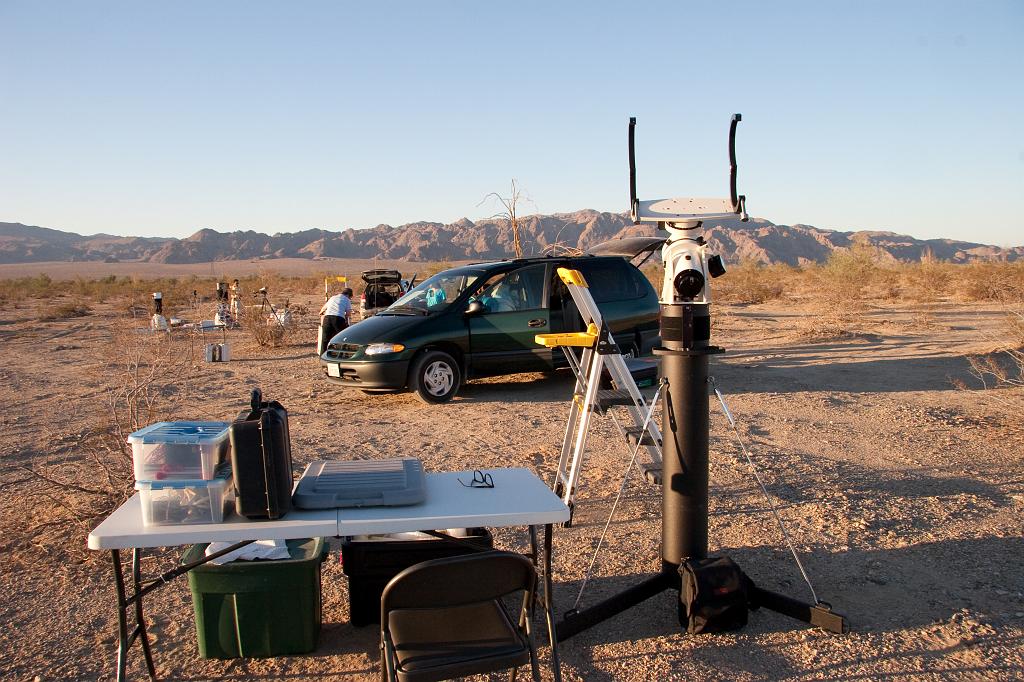
    One one side of the Green Van is the imaging zone
    One one side of the green van is the Imaging zone
    On the other side of the Green Van is the visual observing zone
    On the other side of the green van is the visual observing zone

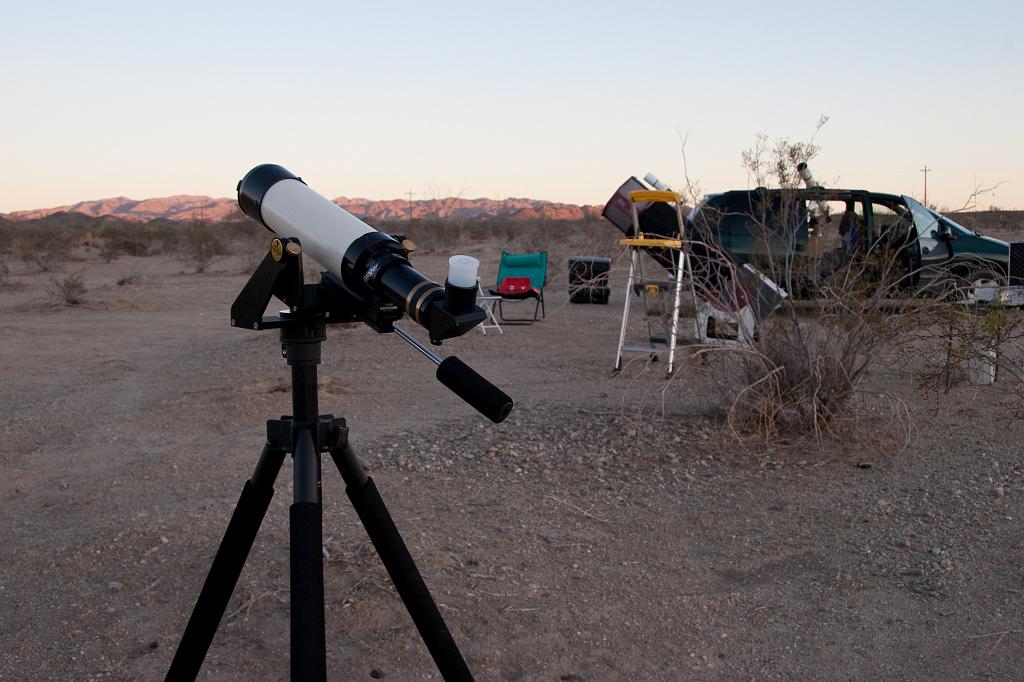
    When the clear sky chart reads perfect, we can’t wait to get out to our favorite dark sky observing site, Chuckwalla Bench. I wondered what would happen when Mojo started dabbling in the dark art of imaging. I’m the old fashioned alt-az dob girl, and now my hubby would be keeping warm at the star party with the heat from electonic power supplies and batteries. Poor me! I pouted (for only about a year or so) before I learned to love the dark arts, and we now happily observe and image with only our 1998 green Dodge Caravan separating “his” imaging zone and “her” visual observing zone.

    New moon Saturday night in October 2009 was another perfect observing night in the Colorado desert of Southern California. Temperatures were in the 90’s before the sunset, and cooled to about 65 by 2 a.m. when we took a pre-dawn snooze. Humidity remained in the teens.

    Last month we had a great time combining visual observing and imaging. On the “visual” side of the observing field Gary and I were struggling to confirm our main project for the night, the asteroid Juno. Mojo was imaging the same target, and a quick look at his Juno image confirmed the star fields we were looking at visually. It was a lot of fun!

    This month Gary and I were hunting down NGC 7640, a pretty elongated barred spiral galaxy just 4 degrees to the south of the popular Blue Snowball planetary nebula. This mag 12 galaxy should have been easy to find but its low surface brightness made it a challenge. It took my 17.5-incher to provide a great view, and then Gary was able to see it in his 12.5 incher too. In my scope the long and narrow galaxy’s core seemed bright, long and twisted, and the spiral arms were visible as wisps off both edges. We called Mojo over for a look and he thought it would make a nice imaging project, which it did!

    Next it was Mojo who suggested a target he had imaged would make a nice project for us push-to observers. NGC 7541 is called a “showpiece” galaxy group in the Night Sky Observers Guide in Pisces. Soon I had a gorgeous visual view of this pretty pair of galaxies in my telescope, and called Mojo over for a view.

    The other benefit of Mojo’s new hobby is that I can “suggest” targets for him to image. Then I can use them in my What’s Up podcast series. I used 4 of his lovely images in October’s Podcast about the Andromeda Galaxy. See if you can spot them. Two are views of the Andromeda galaxy. One shows the whole galaxy, and the other shows the galaxy as a smudge — exactly as it looks in a modest visual telescope. The other two are Milky Way images, one showing a washed out Milky Way (what most people actually see) with Jupiter and the other is his very pretty image of M52 and the Bubble Nebula, some of our own Milky Way’s jewels.

    So it is possible to combine imaging and visual observing, and I look forward to our next outing! I’m preparing my “Honey Do” list of imaging targets to “suggest” to Mojo already. 🙂

  • Chasing Galileo – Head of Orion cluster

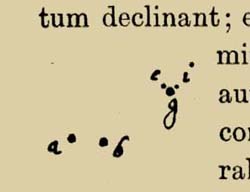
    Galileo's Head of Orion cluster
    Galileo’s Head of Orion cluster
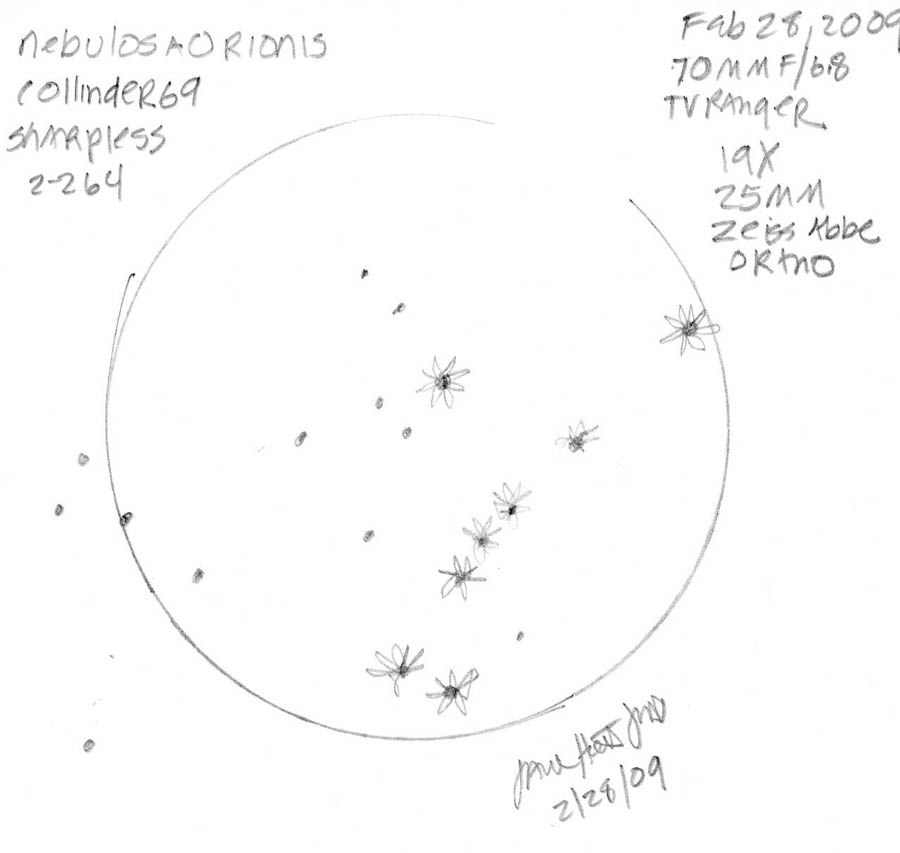
    Jane's Head of Orion cluster
    Jane’s Head of Orion cluster
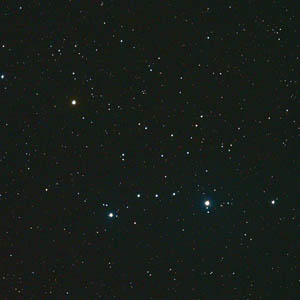
    Astrophoto of Orion Head cluster by Morris Jones
    Astrophoto of Orion Head cluster by Morris Jones
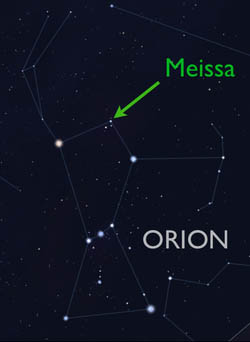
    Map of constellation Orion
    Map of the constellation Orion

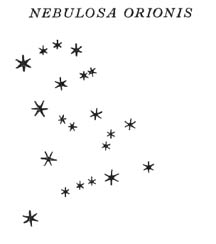
    Galileo looked at the fuzzy patch surrounding the head of Orion through a telescope, and resolved many starts not previously known. He called it Nebulosa Orionis.

    Look between the shoulder stars Betelgeuse and Bellatrix of the constellation Orion. The star you see with your unaided eye is Orion 39 or Lambda Orionis. Its Arabic name is Meissa. You can find this star on Galileo’s drawing by following the stars at the bottom of the drawing. The first star at left is 37 Phi1 Orionis. Three smaller stars follow. The next one is Meissa. It’s an amazing star! Surrounding the hot class O star (which also has a double) is a 150 light year ring of gas, which you can read about at Jim Kaler’s Stars website link above.

    We now refer to the open cluster which contains this star as Collinder 69 or Sharpless 2-264.

    A hand drawn original diagram of Galileo’s 21 stars can be found in Volume 3, page 964 of the National Edition.

  • Chasing Galileo: the Trapezium

    Galileo's Trapezium
    Galileo’s Trapezium
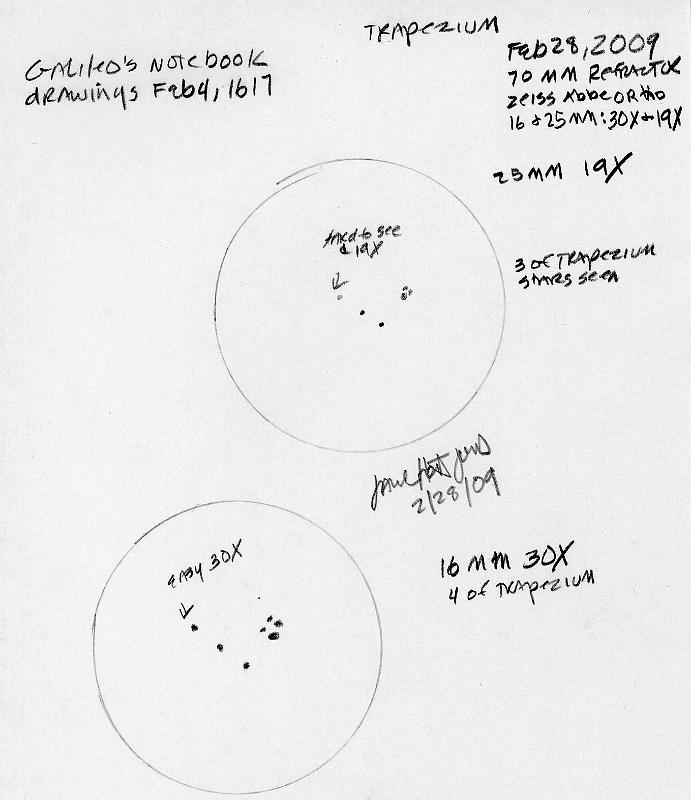
    Jane's Trapezium sketches
    My Trapezium sketches

    Galileo’s observed the Trapezium stars in the sword of Orion on February 4, 1617. He labeled the three stars “c”, “g”, and “i”. These stars are known now as the “D”, “C” and “A” components of Theta 1 Orionis, or 41 Orionis. He did not see the fainter “B” component.

    Galileo’s text states that the apparent spacing of stars “a” and “g”, as seen through his telescope, exactly matched the apparent spacing of two of the stars in Orion’s belt as seen with the unaided eye. This implies a power of 27 for his telescope.

    This observing report from Galileo’s notebook is translated from the Latin: “The arrangement of fixed stars pictured here was discovered by me near the point of Orion’s sword, from which they arise toward the north and lean a bit to the east; and g and b appear equal in magnitude, a smaller really by little, but two, c, i, rather faint, scarcely a fourth or fifth part of g itself. Three, a, b, g, form a very obtuse angle. The lines through b, a, and through i, c, are almost parallel, but will [eventually] meet [in a direction] towards c, a. Two, c, i, are equidistant from g, which they practically touch. The distance between a and b is adjudged three semidiameters of Jupiter, to which the distance b-g seems triple. These things were observed by me the fourth day of February 1617 at Bellosguardo.”

    I sketched the Trapezium using my 70mm Televue Ranger and two eyepieces — my 25mm Zeiss Abbe for a 19x and 16mm Zeiss Abbe for 30x magnified view. At 19x I had difficulty seeing the B or faintest component of the trapezium stars. But when I upped the magnification to 30x I could see all four stars easily.

    Here is an astrophoto of M42, the Orion nebula, showing the Trapezium stars. It was taken by my hubby Morris Jones.

    Here is Charles Messier’s sketch of M42 and the Trapezium stars

    Here is a huge list of links, references and additional information about Galileo’s observations.