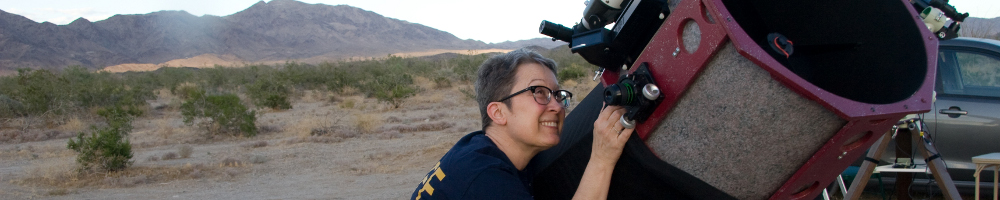
Mojo and I started to setup his 14.5-inch f/4.8 Litebox reflector at 3:30 a.m. on LCROSS impact morning. There were marine layer clouds at that hour, but by the time we were set up it was clear overhead. Friends deeper in the LA basin were fogged out completely!
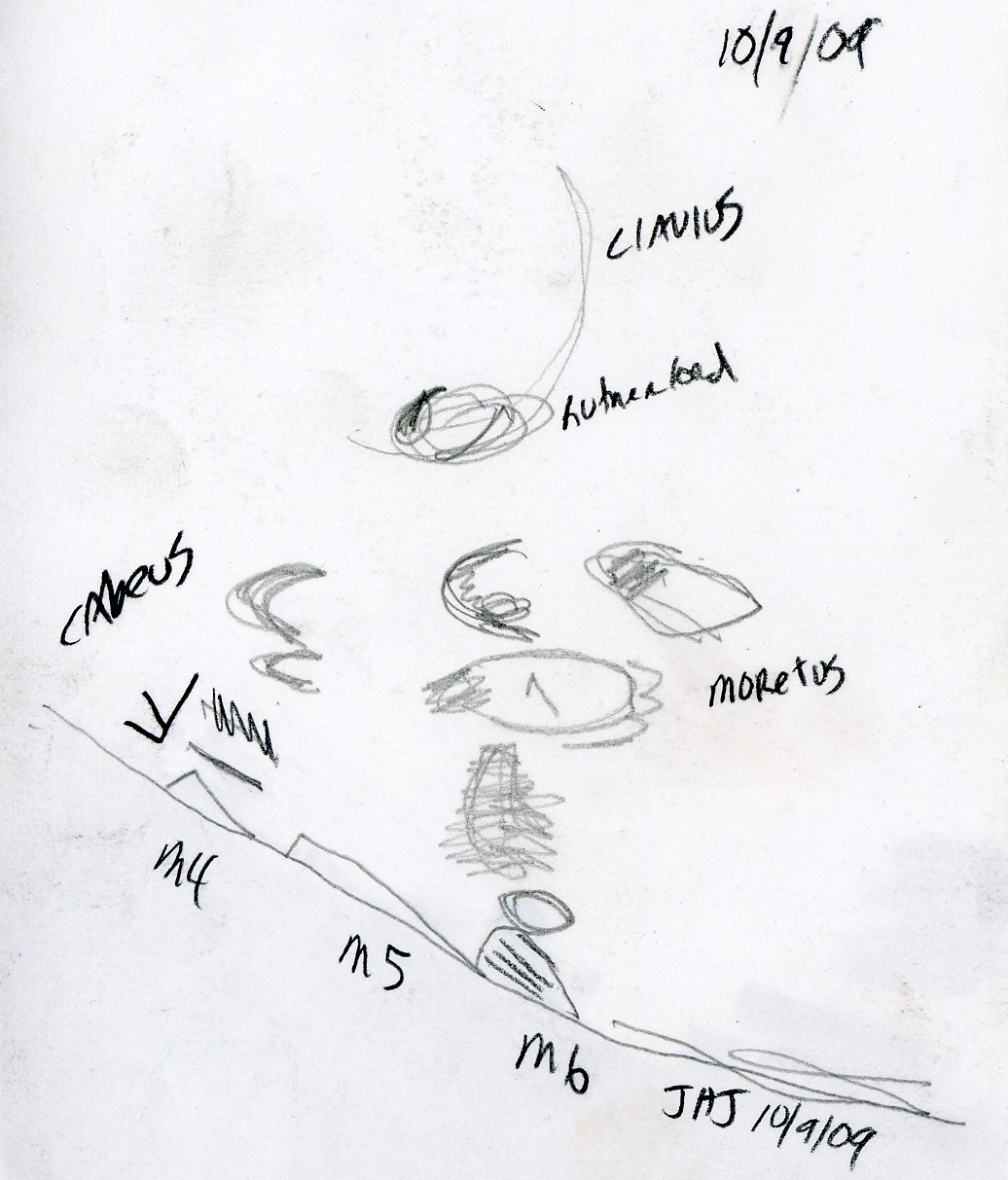
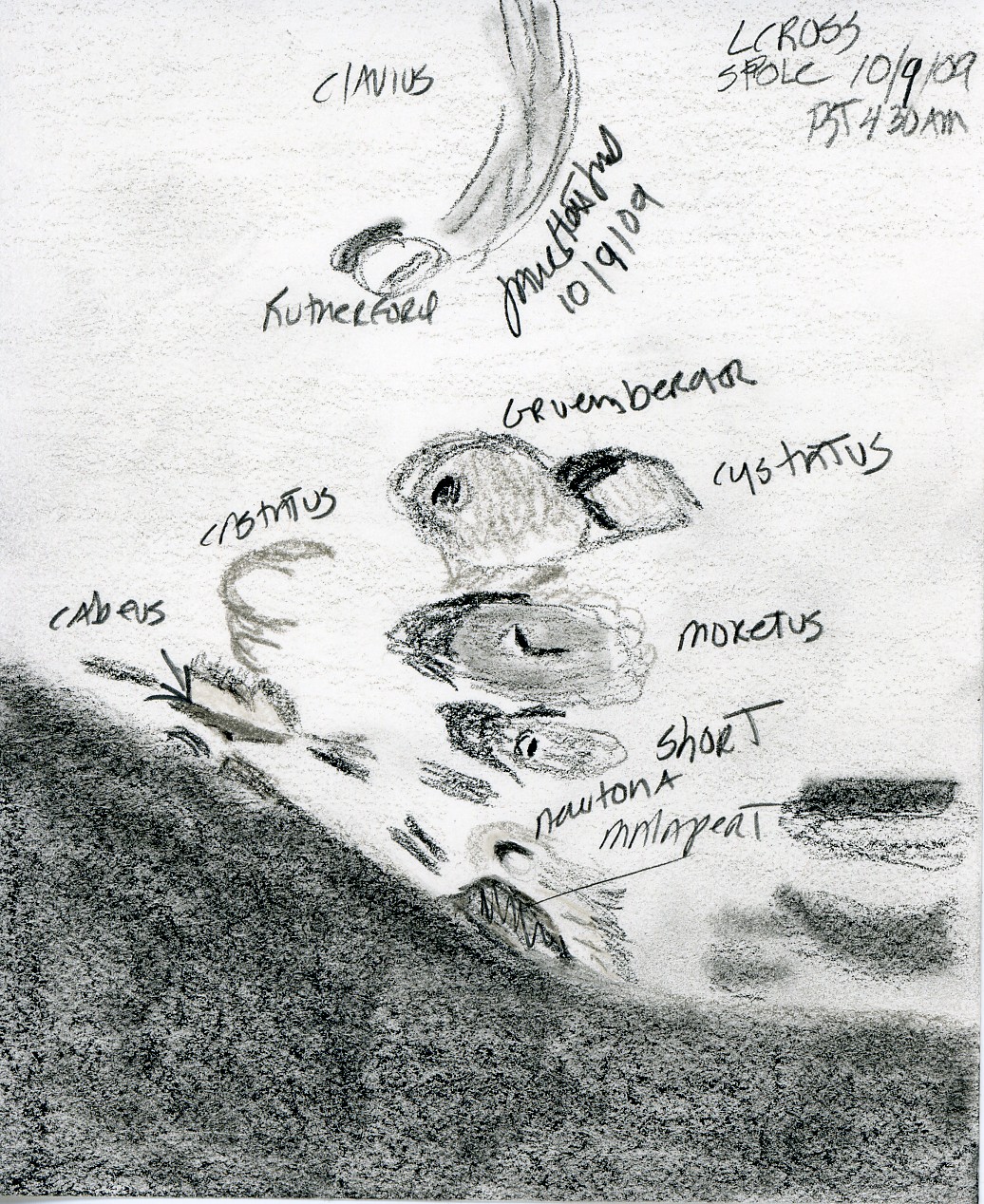
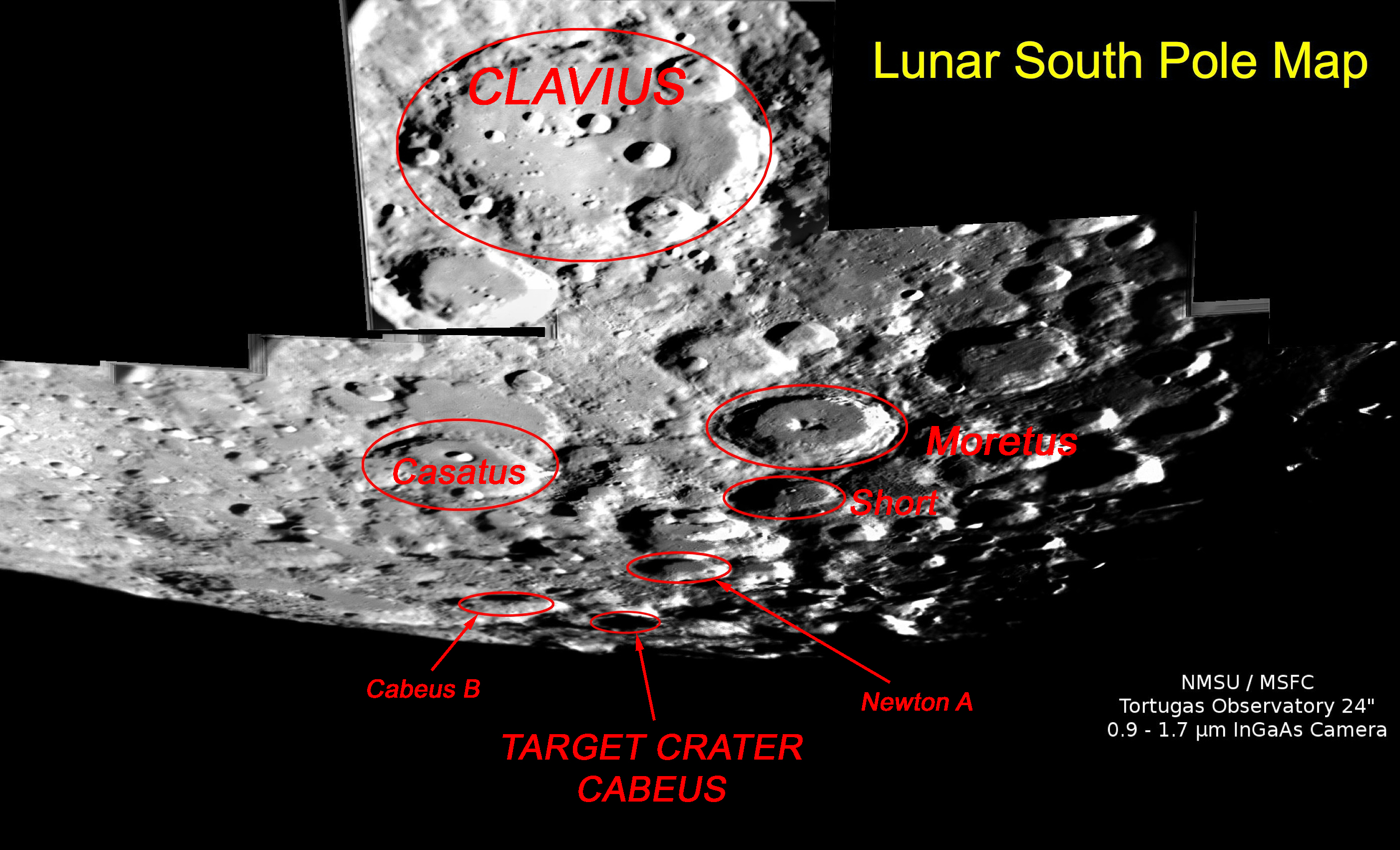
I thought the seeing was not too bad — I was expecting a lot worse. I was able to use pretty high magnification — a 6mm Televue Radian which magnified the view 276 times. I increased the power to 446X using a 4mm Televue Radian, but that was a little too much magnification for the seeing conditions. My first “signpost” to Cabeus was the beautiful walled plain Clavius, with its semi-circle of craterlets on the floor. Two big craters called Rutherford and Porter, named for famous American astronomers, are on the wall of Clavius. There was no shadow relief, making the whole crater nearly invisible.
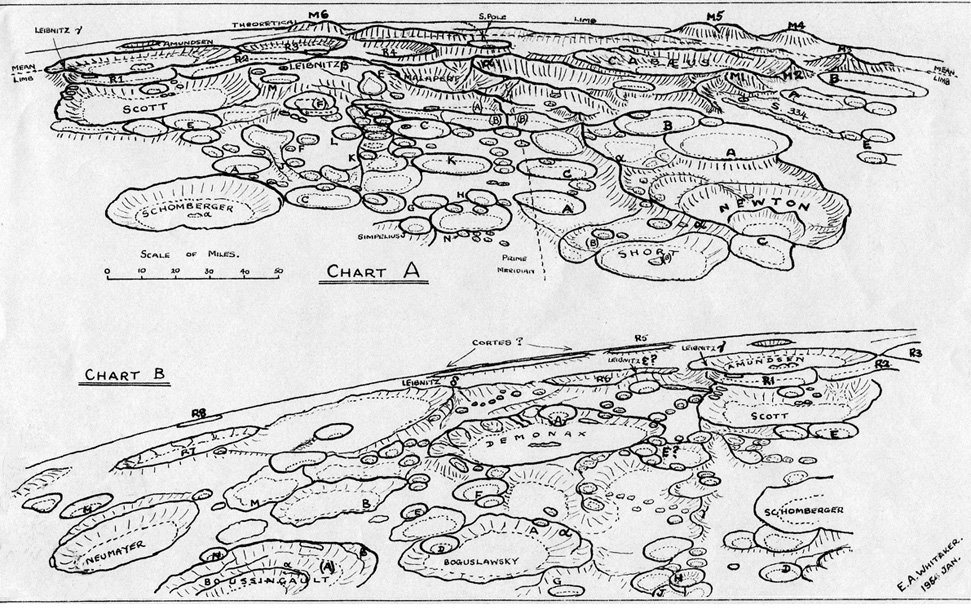
Then I crater hopped to Moretus, Short, Newton and finally Cabeus. Little bumps on the limb made the crater ID easy, plus I’ve been studying those images for days. Those bumps are mountain peaks on the huge South Pole-Aitken basin, obscured from our view, except for a few peaks on the south limb.
A slick white smear on the sunlit Cabeus crater wall bisected the elongated crater. You can see it on the – APOD lunar chart just above the red ellipse identifying Cabeus. It was really fun to watch the approach from the LCROSS camera on NASA TV, then scoot out the front door for views of the crater itself through our own telescope. I was looking at Cabeus at impact time and didn’t see (and didn’t expect to see) a plume. I recalled the night in 1999 when Mojo and I spent a night waiting and watching the South pole of the moon for the Lunar Prospector impact.
Some final thoughts a few days after LCROSS impact. The GAVRT radio telescope in the Mojave desert of California was abuzz with school kids around the world tracking LCROSS. The students locked onto the LCROSS signal and passed the information on to mission control. They will never forget this exciting mission and their important contribution to it! I was really impressed with the LCROSS mission E/PO and citizen science program which encouraged thousands of amateur astronomers like me to follow the mission, prepare an observing program and report observations.
Although sketches are not the same as video and images, I like thinking that I was sketching an area of the moon in the 400+ year old tradition of citizen scientists. The LCROSS mission follows in the tradition of trailblazing lunar missions. In fact, the mountain peak called M5 on Ewan Whitaker’s 1954 lunar map (on the limb south of Cabeus) is now named Mount Clementine!