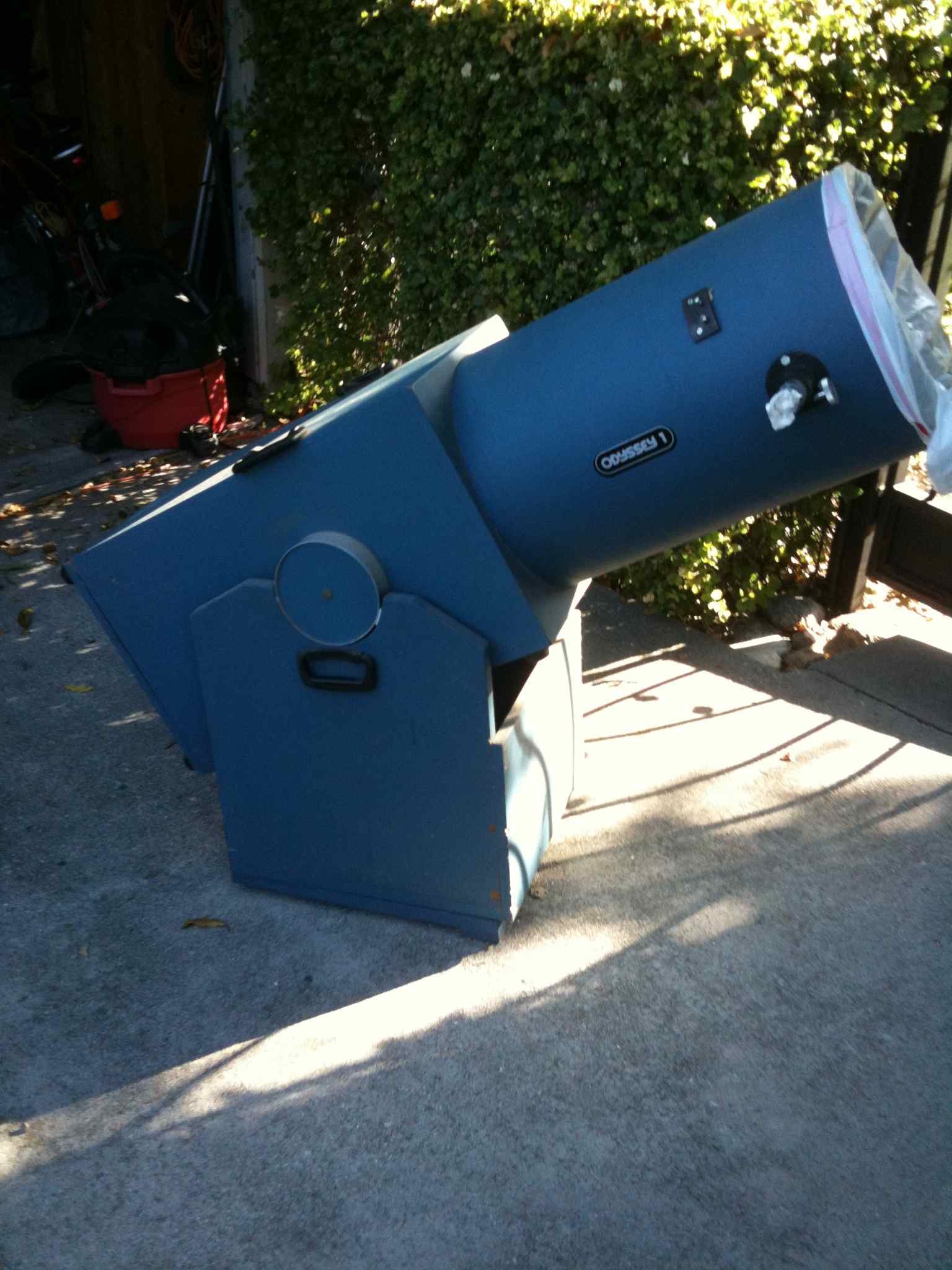
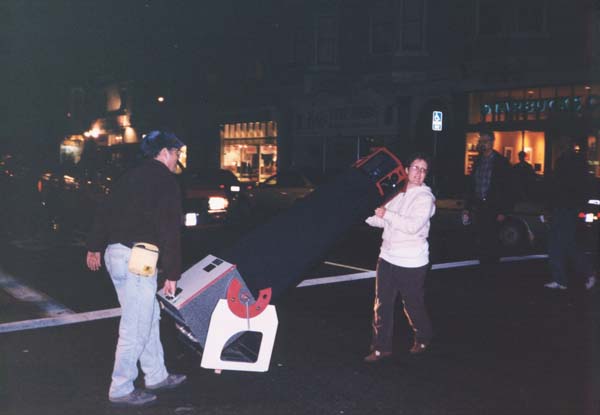
Before – 13.1-inch f/4.5 Coulter Odyssey 1After – – note the original blue ground board
Update: A colleague at work had a telescope he wanted to give away. I advertised it and found someone who wanted it. Here’s a before and after image. The telescope has been reincarnated as you can see from the second picture, which was taken December 31, 2011 at our Old town Monrovia sidewalk astronomy event.
Original post: Jane says “this is a classic blue-tube Coulter 13.1 inch f/4.5 reflector.” It has a nice short 5-foot tube, so you won’t even need a ladder. You’ll need some storage room for this telescope, and I’m not gonna lie to you, this is one heavy telescope. You can learn a little bit about this classic Coulter scope here. When Steve sent me this pictures this morning, it took me on this trip down memory lane.
See the red tubed 17.5-incher on this page? My sleek 17.5 inch Litebox reflector started out as a big red 300 pound 17.5-inch f/4.5 Coulter Odyssey II, owned by a Stanford professor, who had died. His wife called John Dobson to find out how how she could get it into the hands of a sidewalk astronomer. John and I drove down the peninsula to see it and give her some advice on a price. I brought my checkbook, just in case. John crawled into the storage shed, past the cobwebs, over the lawn furniture and under the christmas tree and exclaimed out to me “I think it is one of ours.”
I bought it on the spot for $400.00 and have used it now for almost 15 years.
The prof used to haul this behemoth to his ranch in a red El Dorado. I imagine that sight — that huge red telescope in the back of that red El Dorado — rolling down the freeway towards the Sierra foothills, every time I use the scope. I had to rent a panel truck to get it home to Marin County, and to take it to its first light star party on Mt. Tamalpais in Marin County many years ago. I remember my first look through that big, red ugly duckling of a telescope. The Swan Nebula. It was spectacular! That 17.5 inch mirror is now in my 17.5 inch Litebox truss tube reflector, and I take out to the desert or to the national parks every single month. The big red sonotube and hefty black particleboard mount have long since met their maker, literally. Bless Coulter Telescope’s Jim Bragington of Idylwild, CA for making mass-produced large telescopes back in the 1980’s.
Here’s what Steve has to say about the scope. I elaborated a little once I saw the pictures. It is truly “one of ours”, as John Dobson said so many years ago. It screams “take me out to the sidewalk.”
It’s a Dobson design Coulter “Odyssey I” reflecting telescope, 13.1″ f/4.5 mirror, with Celestron finder scope and three eyepieces, approx 25 years old. Dobsons are great for “deep sky” objects like nebula and galaxies. Body is plywood with concrete-form tube (heavy cardboard sonotube), total length approx 5′. Base is plywood/particle board, has Teflon elevation bearings, azimuth bearing probably Teflon but I’m not sure. Base and body are in fair to good shape, base has been repaired. Primary mirror glass in in very good condition, approx. 1 1/2″ center thickness, with coating in fair to good shape (minor and small imperfections, shown in photographs). Eyepieces are marked H, M and L, all in good shape.
Once the tents are pitched we put on a star party with assistance from the National Preserve staff, leaders of the National Park Conservation Association and the Mojave National Preserve Conservancy plus many of their friends and members. The public is invited too, and unsuspecting nearby campers were thrilled to chance upon a starshow. Best of all, once the star party is over, we get to explore the national preserve!
On this trip (April 2010) my observing project was to see a Chuckwalla, the big pot-bellied lizard living in this desert area. We searched for them last year with members of the Southwest Herpetologists Society but didn’t see any.
Sunday after the star party, when tents & telescopes were stowed back in our cars we headed off to Amboy Crater in search of wildflowers, and hopefully, our first Chuckwalla.
Amboy Crater — well worth a trip for Geology, spring wildflowers, and lizard hunting — was formed by ash and cinders, and last erupted 10,000 years ago. The lava field terrain (43 square miles of it, actually) surrounding the crater is prime Chuckwalla territory. It’s easy to reach Amboy Crater from Barstow or Twentynine Palms, and you even get to drive on old Route 66. It is well worth a journey!
Chuckwallas can reach 16 inches in length, weigh up to 2 pounds and are specially adapted for desert living. They are strictly vegetarians and store water from plants in special glands to survive the harsh desert heat. The surrounding landscape is very salty and the Chuckwalla absorbs enough salt to kill most living things. But they have salt-removing glands in their nostrils, and as salt builds up on these glands, the lizard sneezes, and this expels the crystallized salt!
We were walking towards the crater and most everyone was way ahead of me. I was lagging behind, checking every lava outcrop for my first Chuckwalla sighting.
I stopped at one especially large outcrop, and scanned the sunny ledges. There, sunning herself, was Mrs. Chuckwalla! She was flattened against the rock to prevent airborne predators from seeing her shadow. Her round midsection was prominent, leading one herpetologist to suggest she was pregnant. I called to my hiking party who all quickly returned to see her. Soon, this poor shy girl was the subject of paparazzi!
Then Mr. Chuckwalla came out to see what the fuss was about. Male Chuckwallas have more of the red color (and black heads) and females are more tan/yellowish brown. They are majestic large lizards, and adapt their coloring to the rocks they inhabit. They’re not really fast, and need some sunshine to warm up in the morning. So, when danger approaches, they scoot into rocky crevices, puff up by gulping air, and wedge themselves into the cracks in the rock. This makes them difficult for predators to reach.
We also observed dozens of spring wildflowers on this hike and our earlier hike to Teutonia Peak, which I didn’t even write about here. Have a look at these images of our wonderful adventure, and put a Mojave spring wildflower/Chuckwalla play-date on your calendar. This is also a prime Desert Tortoise sighting location, but it was a bit windy on this weekend, and the tortoises were in their burrows.
Mojo’s amazing panoramas and additional images from both hikes are worth a look and will encourage you to put this park on your to-visit list. You will not be disappointed!
Hauling a telescope across the streets of San FranciscoJane-Orion plus Canis Major and Canis MinorMojo demonstrating where to find Jupiter’s moonsGetting some eye candy
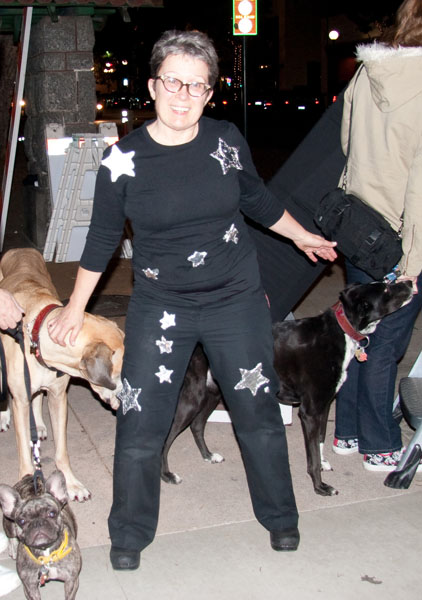
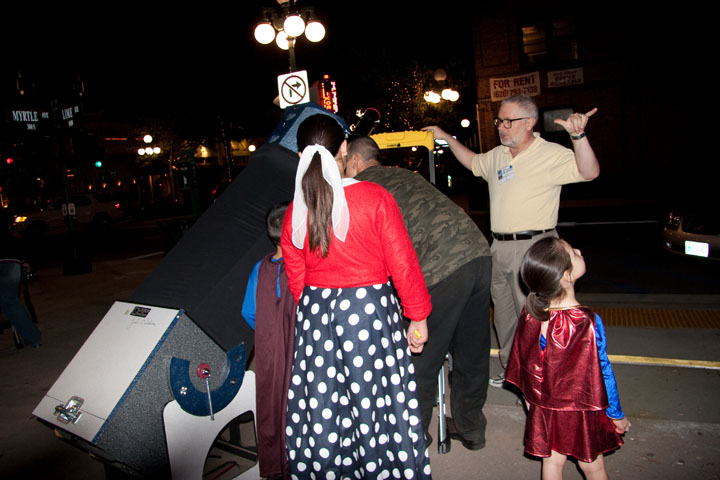
Sidewalk Astronomers have been setting up telescopes on Halloween as long as there have been sidewalk astronomers!
When we lived in the San Francisco Bay Area, we’d cross the Golden Gate Bridge from home and head to the Castro District of San Francisco on Halloween. It was crazy! Tens or maybe hundreds of thousands of revelers flock to the Castro on Halloween but I think we were the only ones with telescopes!
That Halloween sidewalk astronomy tradition continues in San Francisco to this day. And now that we live in southern California we’re carrying on the tradition in our new home town.
On Halloween, everyone with a telescope becomes a sidewalk astronomer. If there is a clear sky and a moon or planet to see, telescopes appear in front yards around the world. Astronomers love sharing the views, and a captive audience makes front yard astronomy a lot of fun for everyone.
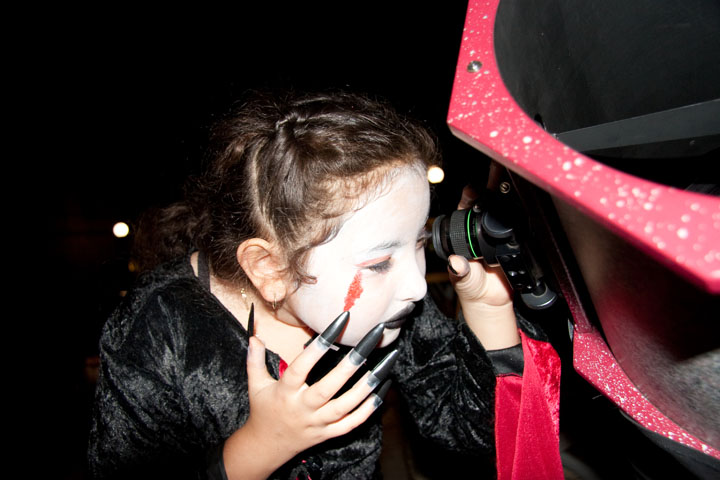
The magic of sidewalk astronomy took over Library Park in Monrovia,CA minutes after we arrived. On this Halloween night, our club had 5 telescopes set up. Soon, princesses, superheroes and zombies alike said wow at our eyepieces! People stayed and looked through the telescopes for a long time. Even groups of teens, on their way to some event stopped for a look at Jupiter and the moon. They said wow too!
When I told one group of teenage girls that I didn’t have candy, but had bookmarks instead, one girl said “I love reading”. Every girl wanted their own bookmark. Later, a young boy, when he received a picture of Jupiter said “I am putting this picture on the wall in my room”.
Sharing views of the moon and planets on Halloween is a great tradition. Pass it on!
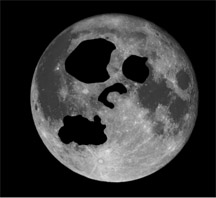
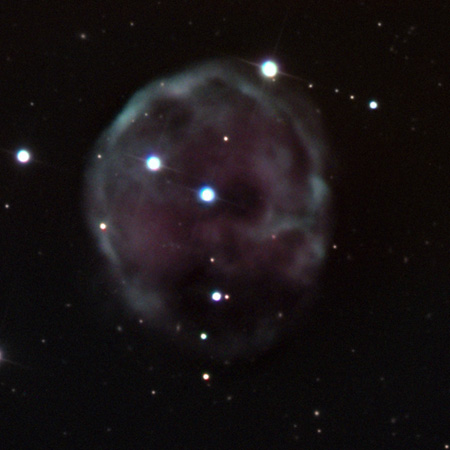
The ghoul on the moonNGC 246 the Skull NebulaIC 2118 Witch Head Nebula
It’s time to get out the Milky Way and Mars candy bars, the Moon Pies and the Starburst chews. It’s Halloween! The moon — just past first quarter — will greet your trick or treaters this year. A first quarter moon rises at noon and is high overhead at sunset. It sets around midnight. It’s the perfect Halloween moon, no trick for the astronomers to show and a real treat for their visitors to see.
Halloween falls on the 8th day of the lunar month in October 2014, and the rugged Appenine mountains, and the oval walled plain Plato are both visible. With binoculars or telescopes, find the
Straight Wall, a lunar fault line best visible on this night. Tycho and Copernicus are on the terminator the next day, and so is Clavius, the large walled plain south of Tycho. My astronomy group, the Old Town Sidewalk Astronomers shows the moon every first quarter moon Saturday night on our town square. Check your own local astronomers, museum, planetarium or college science department. I bet they do too!
Here are my favorite spooky named objects. Some are tricks and all are treats! The galaxies and nebulae will require a dark sky, but the lunar features and double stars are city observing targets. Have fun observing and let me know your favorites and I’ll add them to the list next year!
Mirach’s Ghost NGC 404 in Andromeda, magnitude 11,
size 4.3′ x 3.9′ This galaxy is hard to see. Move Mirach (Beta Andromedae) out of the way for a ghostly view.
The Phantom Streak NGC 6741 in Aquila, magnitude
10.8, size 6″. A fast evolving planetary nebula.
The Ghost of the Moon Nebula NGC 6781 in Aquila,
magnitude 11.8, size 1.8′. A nice round ghostly planetary nebula.
The Spider Galaxy NGC 5829 (Arp 42) in Bootes, magnitude
13.8, 1.7′ x 1.5′. Pretty face-on spiral galaxy in BOOtes. Scary!
The Skull Nebula NGC 246 in Cetus, magnitude 8,
size 3.8′. William Herschel discovered this large planetary nebula. It’s easy to find, and a real treat! I looked at this planetary nebula through my telescope just last Saturday night, October 25th, 2014! It’s one of my favorites.
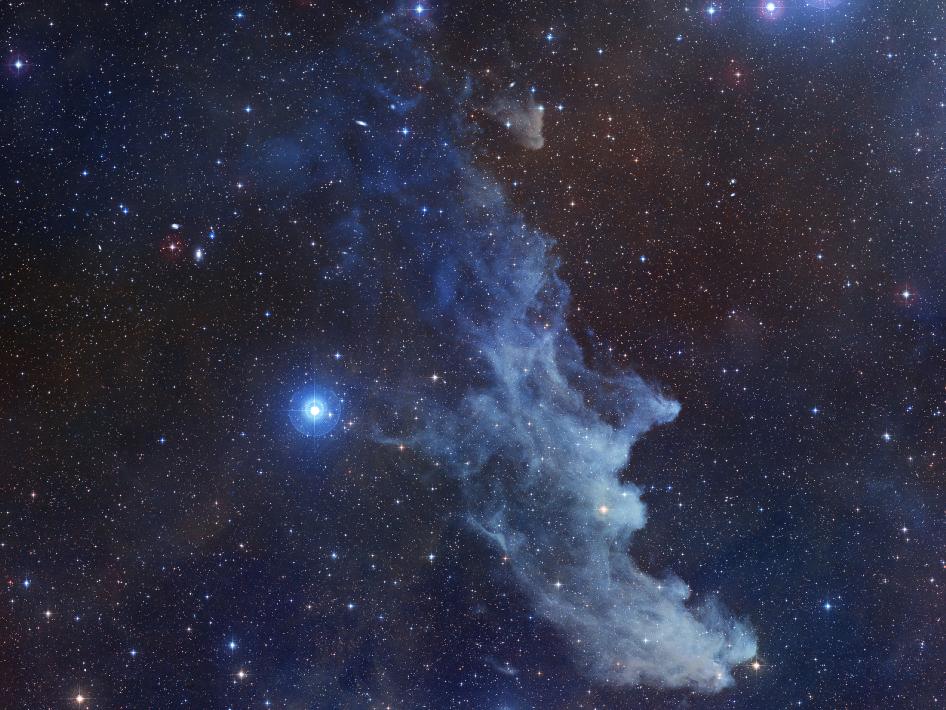
The Witch Head Nebula. IC 2118 in Eridanis, magnitude 13, size 160′ by 80′. (About the same size as the Andromeda Galaxy which is 189′ by 61′). This very large and very faint reflection nebula is associated with the star Rigel but is almost 3 degrees west of the star. The blue color of the nebula is caused not only by blue color of Rigel, but also because the dust grains reflect blue light more efficiently than red. Earth’s daytime sky appears blue for the same reason.
The Ghost Ring Nebula IC 5148 in Grus, magnitude 13, size 2′. A pretty little planetary nebula in the neck of Grus the crane. If you can see Fomalhaut in Piscis Austrinus, look a little more south to find Grus. I tracked this one down and captured it in my eyepiece 2 weekends ago October 18, from my favorite dark sky site, Amboy Crater, in California’s Mojave Desert.
The Little Ghost Nebula NGC 6369 in Ophiuchus, magnitude
12.9, size 30″. A pretty planetary nebula, also discovered by William Herschel. Look for the mag 15.9 central star in this planetary nebula.
The Red Spider Nebula NGC 6537 in Sagittarius, magnitude
12.5, size 9″. A bipolar planetary nebula with a hot white dwarf star.
Phobos and Deimos (Fear and Terror) – the moons of Mars. It’s possible to see these small moons as you can see from my sketch, but easier to see when Mars is closer to Earth than it is now. Mars opposition in 2016 will be the best time to try! There’s nothing to fear!
Any lunar map will help you find your way to all of these lunar features, and they are all visible this year on Halloween. Here is my favorite lunar website Hitchhikers Guide to the Moon. You can get the general location of each Rukl lunar chart listed in the text below, then find the chart on the Rukl Map (most lunar observers favorite book of charts). This map shows where to find all the Lunar landing sites . Drop me a note if you would like a hard copy of this map, I have a whole box of them on my desk at work.
Hell, Rukl’s Atlas of the Moon, chart 64. 33 km crater near Deslandres, which is an amazing and very large and complex crater. The small crater Hell (actually named for 18th century Hungarian astronomer Maximilian Hell – who observed the 1769 Transit of Venus) is also near (north of) Tycho, one of the most prominent craters on the moon. Its’ bright rays will be easily visible a week after Halloween 2014 during the full moon phase. You’ll need a telescope to see Hell.
Lacus Doloris (Lake of Suffering), Rukl chart 23, 110 km mare. This Mare is just over the Montes Haemus from Mare Serenitatis (Sea of Serenity). If you’ve spotted the bright white (tiny) crater Linne, you’re close to the Lake of Suffering. This small lake is visible visible South of the bright crater Linne.
Lacus Mortis (Lake of Death), Rukl chart 14, 150 km diameter flooded crater. You’ll find it North of the great crater Posidonius, and North of easy-to-spot Mare Crisium, well placed for Halloween viewing this year. Through your telescope, find some great rilles (long, narrow depressions in the lunar surface that resemble channels) on the Western side of Lacus Mortis.
Lacus Timoris (Lake of Fear) and Palus Epidemiarum (Marsh of Epidemics), Rulk chart 63. In the Southwestern section of the moon. This section of the moon deserves a careful look through the telescopes. You’ll also find lunar domes and rilles in this region of the moon. Rima Hesiodus bisects the Eastern part of the Marsh of Epidemics. Lacus Timoris is an elongated region surrounded by mountains. Best seen near full moon, 6 days after Halloween 2014.
Palus Putrendis (Marsh of Rot), Rukl chart 22, 180 km small plain on the
prime meridian, near Hadley Rille and the Apollo 15 site. How can you not like the name Palus Putrendis? It’s easy to find between the crater Archimedes and Montes Apenninus. Well worth a look! Here’s a nice Lunar Map showing all the Apollo landing sites and more.
Boo Epsilon (36) (Bootes), double star, mag 2.5
and 4.9, yellow/orange and blue/green double
Boo Mu (51) Bootes, triple star, mag 4.3 and 7 and
7.6 triple, yellow primary, yellow/orange pair
Boo Xi (37) Bootes, quadruple star, mag 4.7
and 7.0, with a 9.6 and 12.6 companion, yellow and reddish/orange
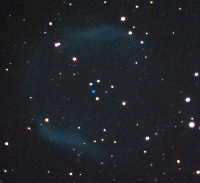
Happy Halloween from PK 164+31.1 (Jones 1)
Jones 1, planetary nebula, faint but well worth the hunt
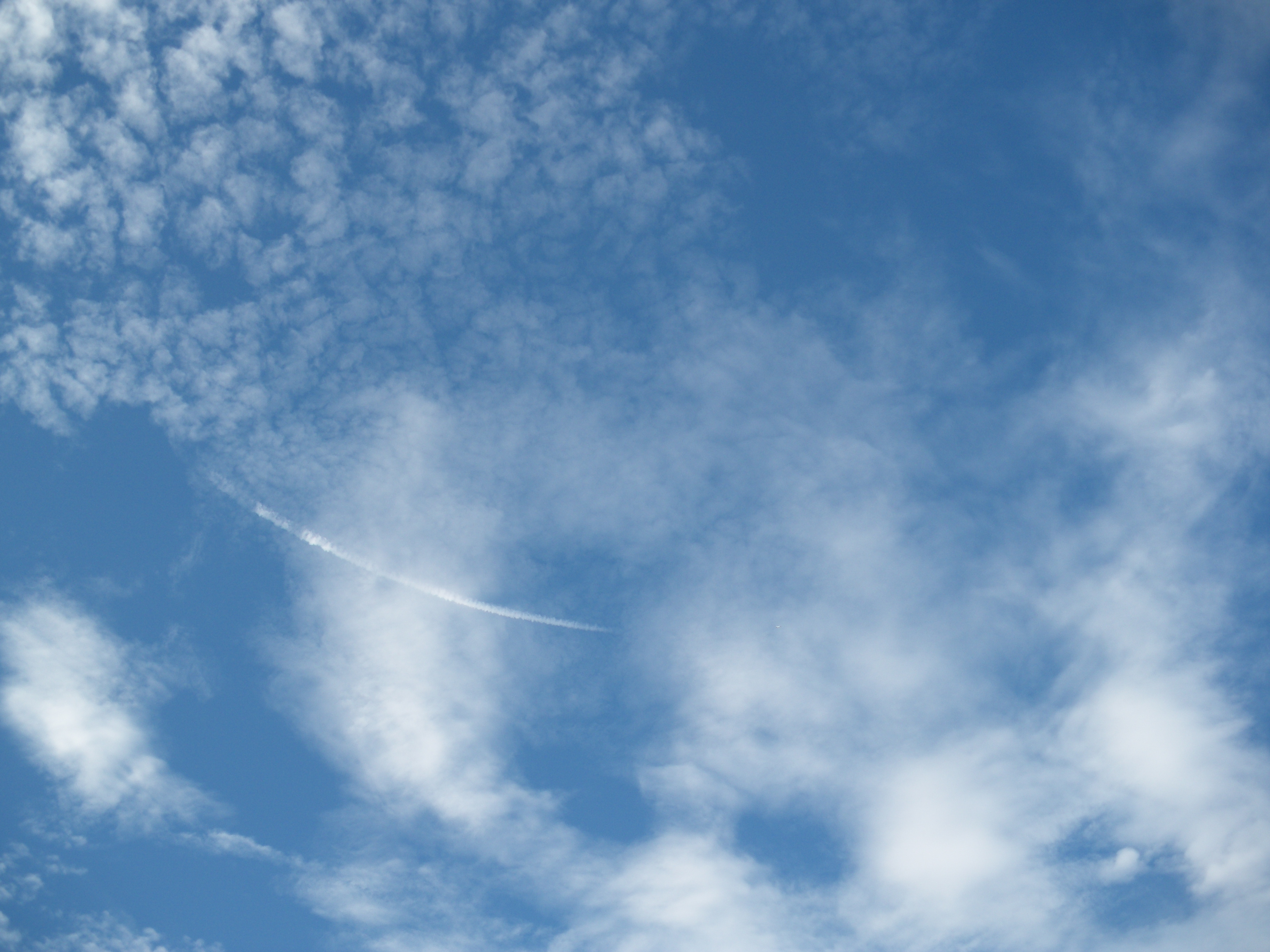
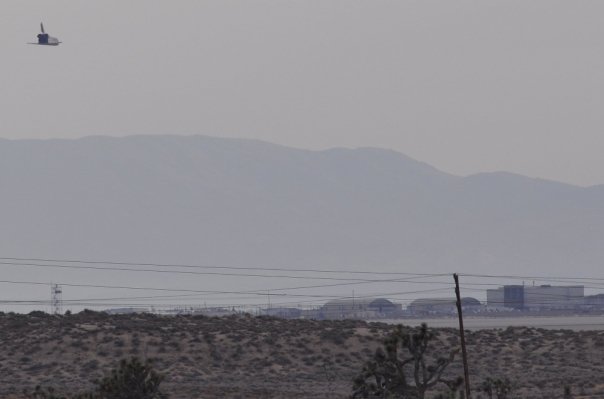
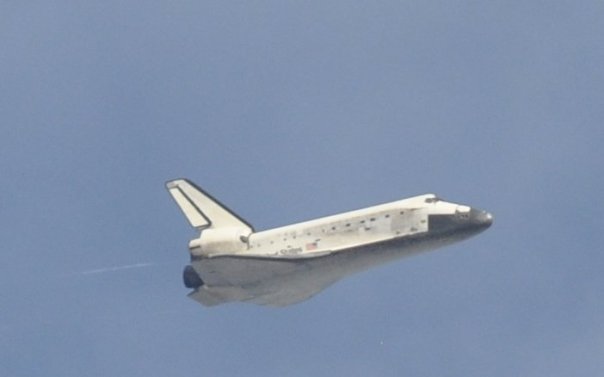
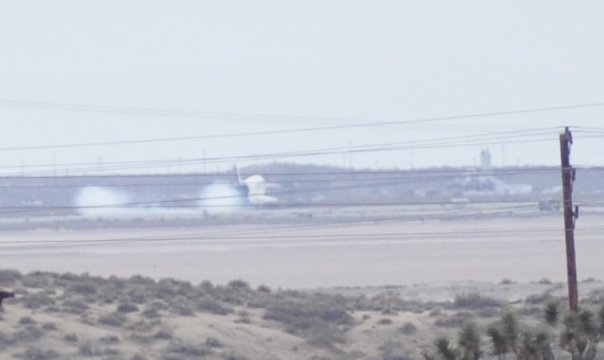
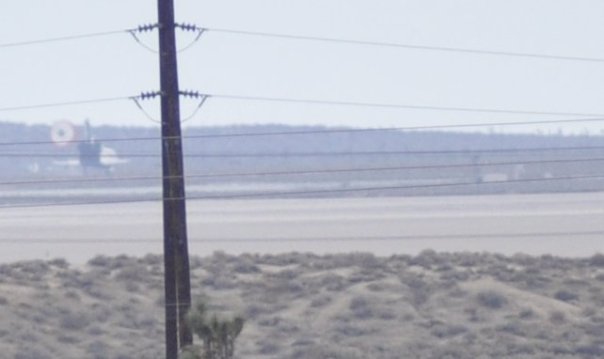
Look for the shuttle to the right of the contrail in my photo (click on the image for full res version)Shuttle and ground in one image. This photo and the rest of these photos courtesy of Gary SpiersSpace shuttle DiscoveryTouchdown – twin dustplumes from gear touching downParachute deploys
NASADryden tweeted at 9:58 a.m. “We’ve been called up to support a potential shuttle landing today, see web for details http://www.nasa.gov/centers”
1:35 p.m. “Shuttle will land at Edwards today, deorbit burn scheduled for 4:47 PDT, landing at 5:53 PDT”
With landing scheduled at 5:53 p.m. PDT September 11, 2009 fellow astronomer Gary Spiers and I sped from Pasadena to Edwards Air Force Base to see one of if not possibly the last California landing of a space shuttle. We left Pasadena at 3:15 p.m. for the 2 plus hour drive.
Navigator Gary scoped out the viewing choices while I drove. We passed Palmdale and headed for Rogers Dry Lake. Soon we saw groups of cars off California State Highway 58, and we headed further down the highway for a higher vantage point at the Northeast side of the lake bed. We turned off at the historic 20 Mule Team Road.
I was receiving the Twitter updates from NASA Dryden on my cell phone. We arrived about a half hour before touchdown and setup camera gear in the 102 degree late-afternoon heat.
We picked a perfect viewing spot. The shuttle would pass directly overhead on its loop from the West to runway 22 at Edwards Air Force Base. You can see the ground track, including the close range track of orbit 219 here.
Here are the exciting tweets from NASADryden, which I passed along to the folks nearby:
“15 minutes until touchdown, less than 1,000 miles away 5:38 PM Sep 11th
Discovery is less than 700 miles away
Right on ground track, 11 minutes until touchdown. Everything looking good
Less than 277 to go, traveling at 7 times the speed of sound
Approaching the CA coastline
7.5 minutes till touchdown
Discovery is 78 miles from Edwards
Just heard the sonic boom here at Dryden! Discovery will be here soon!
3 minutes till touchdown
All eyes at Dryden are on the runway!
Shuttle Discovery has landed at Edwards AFB, welcome back!
Wheels stopped on Discovery with the National Anthem playing in the background. I love this country and NASA! ”
Gary and I were snapping photos and recording video as honking, applause, whistles and cheers erupted from people inside, and alongside over 125 cars parked on the overpass, offramp shoulder, on and off 20 Mule Team Road.
Soon the big rig drivers and other space enthusiasts were pulling off the shoulder and driving back to their daily life. Next to us Brad and Judy from Visalia lamented the dead battery in their camera as they planned to drive three hours back home. We exchanged email addresses and I’ll be sending them this report, photos and video of our first, and maybe last real-time up-close view of a shuttle landing.
These photos courtesy of Gary Spiers whose images were shot using a Nikon D90 body with a Nikon 300mm F2.8 lens. My video and a few pre-landing snapshots were shot using a Pentax Optio M60 compact camera. Taken from 20 Mule Train Road on the Northeast side of the Rogers Dry Lake at the intersection of California Highway 58 and 20 Mule Team Road on September 11, 2009. We were over 5 miles away from the landing strip, but you can just barely see the dustplumes and parachute deployment at 1 min 42 seconds into my video.
I’m Jane Houston Jones. During the work week, I’m a Senior Outreach Specialist at the Jet Propulsion Laboratory in California where I coordinate informal education for the Cassini Mission to Saturn. It’s an exciting job, writing about Saturn, answering questions from the public, and working with museums and planetariums. I’m also the Twitter “voice” of the Cassini spacecraft, tweeting 140-character micro blogs “from” the spacecraft to over 9,000 enthusiastic Twitter followers. And I coordinate a 450-member international outreach network called the Saturn Observation Campaign .
Once a month I develop a podcast called “What’s Up” which features a different monthly stargazing sight like the sun, moon or a planet, tied to a NASA mission. May 2009 is all about the sun!
Outreach may be my day job, but since I am a sidewalk astronomer too, astronomical outreach is also my hobby! I belong to the Old Town Sidewalk Astronomers club. We like to show the sun, moon and planets to the community while conducting sidewalk astronomy events.
Sidewalk astronomy is an informal way of bringing the universe to your community. On a sunny day I might take one of my telescopes down to a busy sidewalk in my town, park the car, unload and aim a solar safe telescope at the sun. I make sure that I have a ladder or step stool so the younger visitors can reach the eyepiece. I also have a sign on the telescope explaining to people never to look “directly” at the sun, or without a trained astronomer using a solar safe telescope. Before heading out, I take a look at several solar websites like SOHO and print out that day’s solar activity images. This way I can point out any interesting features to my guests, or if I have a helper, he or she can show the people in line what to expect at the telescope eyepiece.
I have telescopes equipped with two kinds of filters and I bring both of them out on the sidewalk. One has a white light filter that shows how the sun looks to the unaided eye. The viewer sees the photosphere, or the apparent surface of the sun, which has a temperature of 6,000 Celsius. You can say this is the sun you can “see” or what you see through a projection onto a piece of paper.
The other is an h-Alpha filter, which shows just one wavelength of light –the red light of hydrogen (wavelength of 656.3 nanometers). With this we see the next highest layer of the sun – the chromosphere (temperature between 6,000 and 20,000 C.) We need a filter to see this layer because the brighter photosphere layer below washes out the fainter chromosphere, just like a bright streetlight would wash out the light of a flashlight. What you see through an h-Alpha filter are ribbony dark colored filaments against the disk and prominences on the edge, many times longer than the diameter of the Earth!
Often, my Old Town Sidewalk Astronomers members are asked by a scout troop or an elementary school to bring a solar telescope to camp or school or a local museum and we are more than happy to oblige. We ask the coordinator to check a few things about the location and time of the proposed event to see if there are trees or buildings in the way of the sun at the time they want to hold their event. I also ask the requester to choose a rain delay date in case we are clouded or rained out. And I always have a reserve “indoor” hands-on-activity in case of rain.
If you don’t have a solar telescope, you might ask your local astronomy club to help out. If you have a telescope already, you can make solar filters or purchase them. I’ve made solar filters for almost all of my telescopes using the plans below and have purchased filters for the other telescopes. Both white light and h-alpha filters are available anywhere telescopes are sold. Solar projection using a pinhole projection is another safe way to view the sun. No matter what method or equipment you use, your viewers, just like mine, will be thrilled to have looked at their own star!