Jane's blog banner

Category: Astro adventures and star tails

  • Watching asteroids fly by

    It was 23°F inside the observatory while we were observing the asteroid
    It was 23°F inside the observatory while we were observing the asteroid
    Asteroid 2005 YU55 sketched November 8, 2011
    Asteroid 2005 YU55 sketched November 8, 2011

    Asteroid 2005 YU55 wasn’t my first visual observation of an asteroid passing near Earth, but preparing to view it brought back some great memories of our first one, asteroid 2002 NY40, nearly ten years ago.

    Here’s a little writeup about both observations. First up, Tuesday night’s observing of Asteroid 2005 YU55. It’s 400 meters (1,300 feet) in diameter. On November 8, 2011 it passed 0.85 lunar distances (324,600 kilometers or 201,700 miles) from the Earth. It has been studied by radar using NASA’s Deep Space Network’s Mars Antenna in California’s Mojave Desert. The Herschel Space Observatory took some measurements in the far-infrared. The Swift Telescope observed it, too. Oh, also legions of amateur astronomers imaged, sketched and observed this “once in-a lifetime” event, including me!

    Tuesday afternoon, I drove 100 miles to a friend’s private observatory near Mt. Pinos. I knew as soon as I looked at the sky that I’d never find the asteroid in my telescope. The near full moon wiped out all the fainter stars I’d need for star-hopping to the asteroid. It was 30°F upon arrival, snow on the ground, and it got colder as soon as the sun set – to a low of 23°F.

    After an hour, Steve, the owner of the observatory found asteroid 2005 YU55. He was stunned at the movement as it zipped across the eyepiece view. Three of us took turns stepping up a ladder to reach the wide field eyepiece atop his 14-inch reflector. The 1 degree field of view in the eyepiece we used is equal the apparent diameter of two side-by-side full moons. We took turns watching the faint asteroid move for about a minute or two, then letting the next person have a look. It took the asteroid about 9 minutes to traverse the eyepiece field. My sketch shows the asteroid’s motion in about 2 minutes, and this star chart gives you an idea what the we saw in the sky and in the eyepiece.

    You can see the constellation Pegasus high overhead on the star chart. That’s where we were aiming. As we tried to follow the faint asteroid in the eyepiece, we each made a triangle out of slightly (magnitude 9 and 10) brighter stars which the 11th magnitude asteroid would pass by. That way we had fixed objects to anchor our view of the motion.

    This was no glittering diamonds on black velvet view. The nearly full moon was right next to where we were looking, and it brightened the sky and the ground. Only the brightest stars were visible. “It was a fast-moving ghost against other fixed ghosts in the moonlit background sky”, described Steve. I saw a grey poppy seed moving against a grey felt sky. It made us gasp in amazement that we were looking at it with our own eyes, especially since it was so small and so faint! After an hour or so of viewing, we packed up and headed back home, 100 miles away.

    Now, here’s a little trip down memory lane for me – my first asteroid flyby on August 17, 2002.

    On August 17 and 18, 2002, Asteroid 2002 NY40 zipped past Earth 1.3 lunar distances – 530,000 kilometers or 330,000 miles away. From 9:30 to 10:30 p.m. on August 17th our deck in suburban San Rafael, CA was filled with telescopes. We invited astro friends over for a spur-of-the-moment asteroid party, gambling that our inland location would be fog-free, unlike many of the usual astro spots.

    After a quick dinner, a dozen of us stepped out on the deck. Mojo was the first to spot the swift 9th magnitude asteroid 2002 NY40 in his 14.5-inch f/4.8 LITEBOX reflector. Our friend Jim also found it in his 8-inch LX-10. Our friend Stacy was happy to spot the moon in her new 10-inch dob without a finder. For a good hour we kept the asteroid in Mojo’s scope. All our pals got to see the asteroid whiz through the field of view several times through two telescopes.

    Both observations were amazing. You can always go back and look at videos and images, but you only get one chance to see celestial events like these with your own eyes. And I plan to try and observe every once-in-a-lifetime event that I can. 🙂

    Nasa JPL Press Release about the November 8th close flyby of 2005 YU55

    Nasa Science News about the close flyby of 2002 NY40
  • Solar System, Milky Way, Local Group, Extragalactic observing

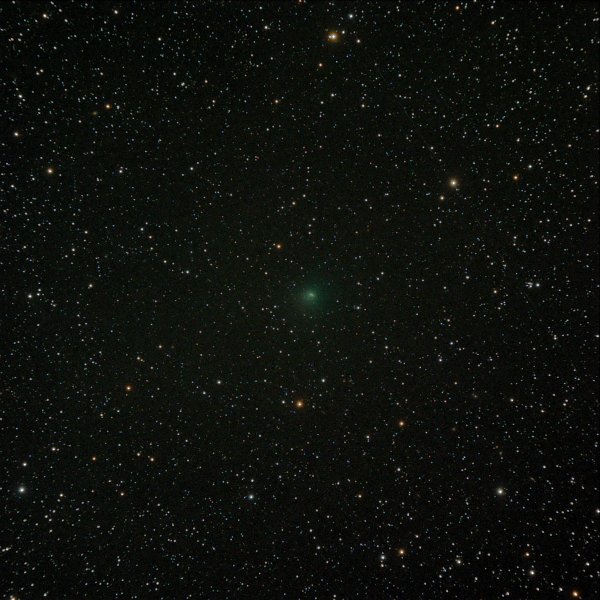
    Comet/2010 G2 (HILL)
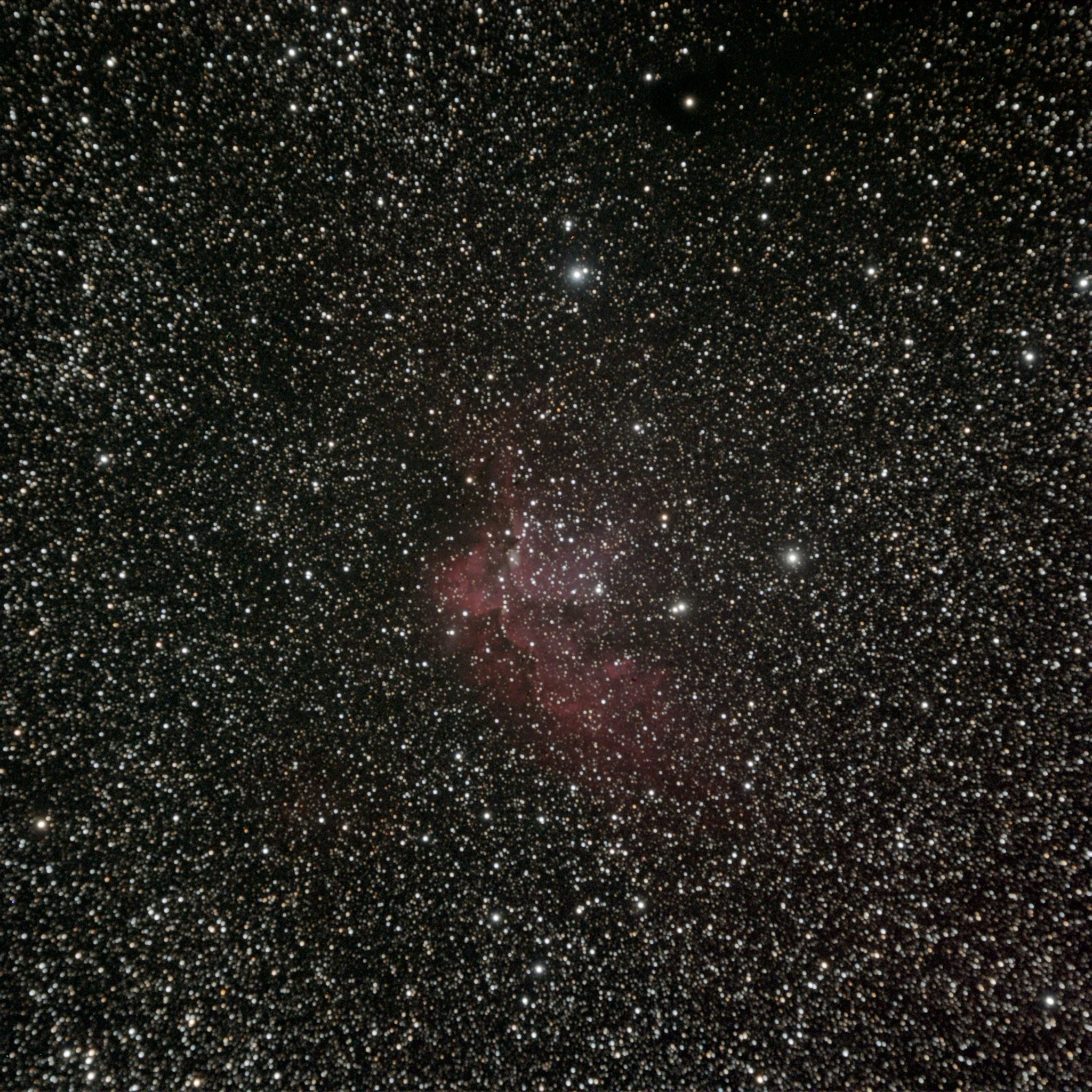
    NGC7380 emission nebula and cluster
    NGC7380 emission nebula and cluster
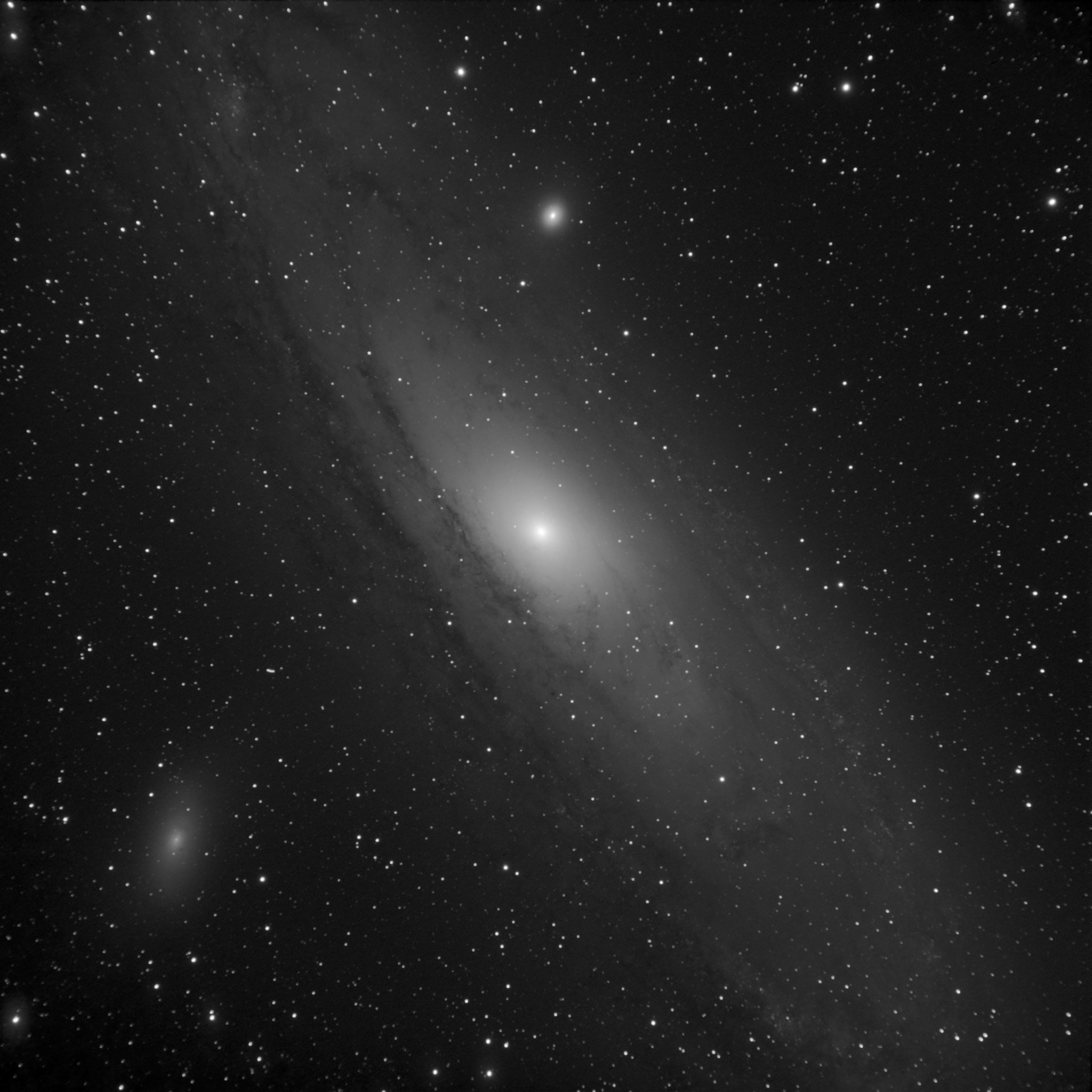
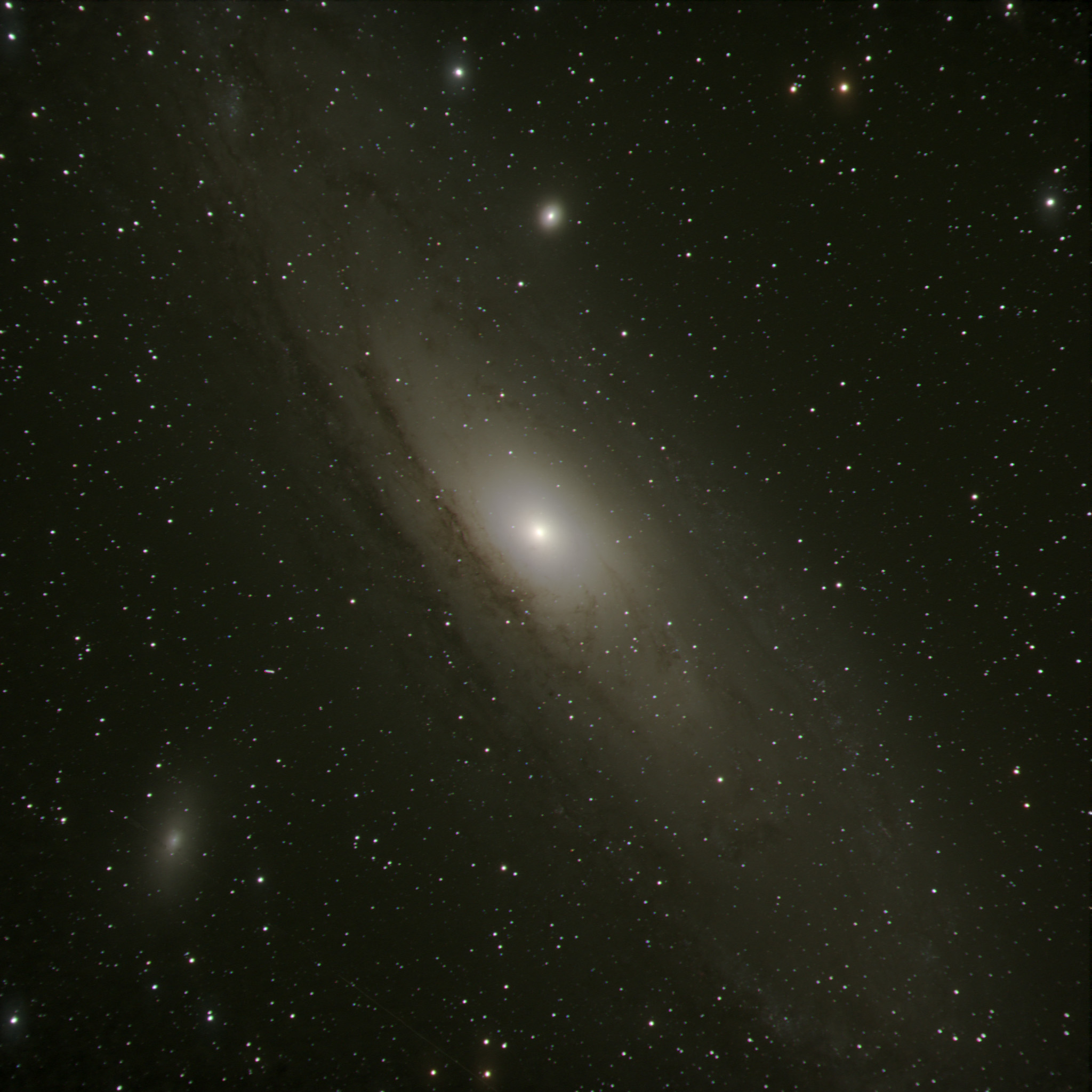
    The Great Galaxy in Andromeda, M31, with M32 and M110 nearby
    The Great Galaxy in Andromeda, M31, with M32 and M110 nearby
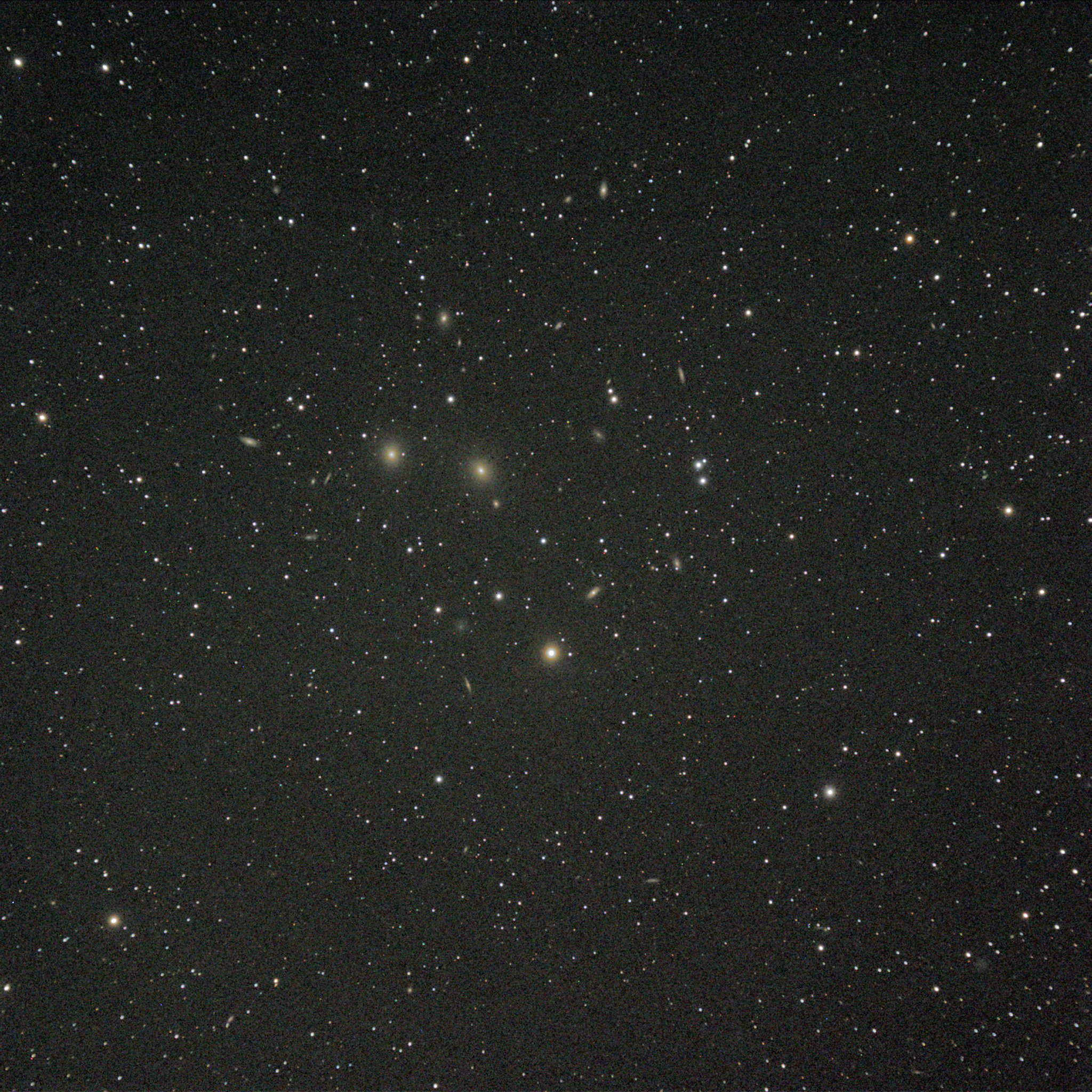
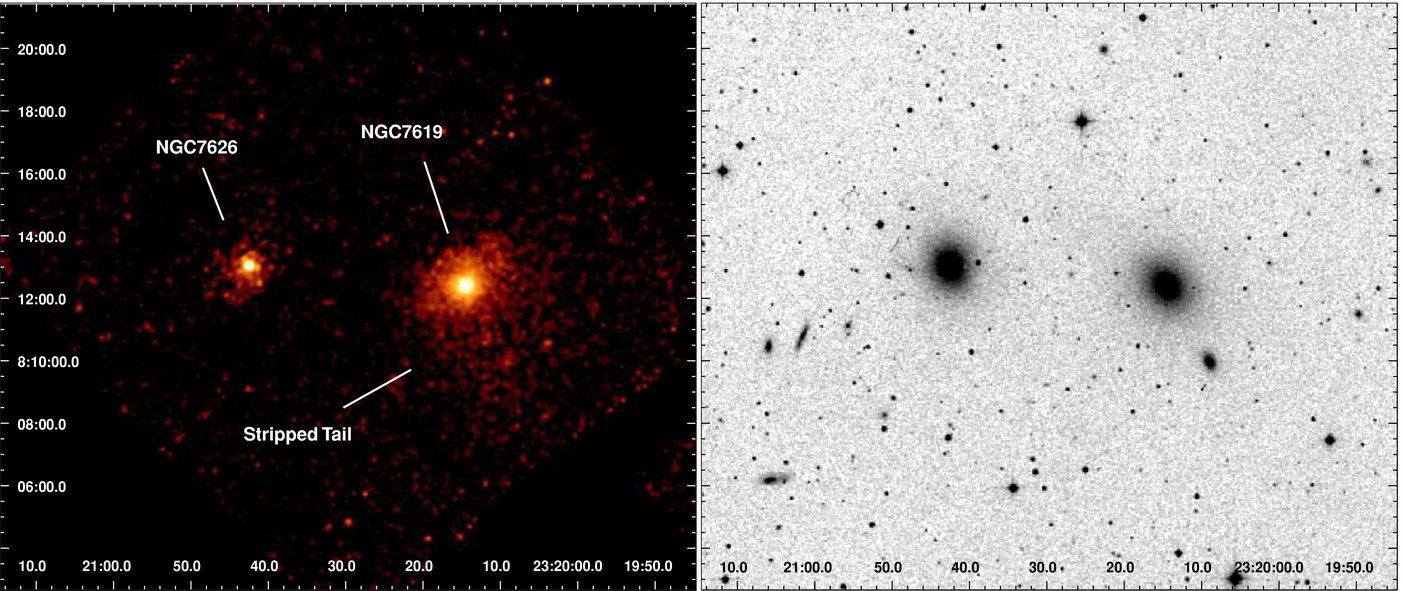
    The Pegasus 1 galaxy cluster
    The Pegasus 1 galaxy cluster

    I love to take my telescope out to observe the sky, and I find that the objects studied or discovered by scientists (from the past or the present) make for an even more rich observing (and learning) experience. Here are just a few observations from a fantastic night at Amboy Crater October 22, 2011. Amboy Crater is well worth a visit for daytime hikes as well as for spectacular stargazing at night.

    IAU circular No. 9134, issued on 2010, April 11, announced the discovery by R. E. Hill of a new comet on Apr. 10, 2010, in the course of the Catalina Sky Survey. After posting on the Minor Planet Center’s NEOCP webpage, many observers checked out this 19.5 magnitude object, designated C/2010 G2 (HILL). (HILL) is well known and well respected Rik Hill of the Lunar and Planetary Lab at University of Arizona, Tuscon. He literally wrote the book about observing sunspots for the A.L.P.O. Sunspotter program. I used this book to sketch sunspots and complete the ALPO Sunspotter program last solar maximum in 2002, and I encourage you to complete this amazing program now, as solar maximum is coming up! I observed Rik’s comet on October 22, 2011, when it was magnitude 10.78 and 1.5 AU distant from Earth. It was small, the coma diameter was 6.2′ – and it was very hard to find! Here’s Mojo’s lovely image from that night. In the eyepiece the green color was absent, in fact it was nearly a no-see-um! Here’s a finder chart. Now, off to explore the Milky Way.

    NGC7380 is an open cluster sometimes referred to as the Wizard Nebula located in the constellation Cepheus. It’s about 7,000 light-year away from Earth. The stars of NGC7380 have emerged from the star-forming region in the last 5 million years or so, making it a relatively young cluster. Here’s the image from NASA’s WISE Mission of NGC7380 in 2010. It’s a mosaic of images spanning an area on the sky of about 5 times the size of the full moon. Caroline Herschel discovered this cluster on August 7, 1787 when her brother William Herschel was away in London. She discovered many objects, include comets on the nights she was not recording William’s famous observations. Let’s check out a galaxy in our local group now.

    Everyone with a telescope observes the great Andromeda Galaxy, M31 as soon as convenience and sky conditions allow. It’s the largest galaxy of our galactic family, the Local Group, which consists of not only the Andromeda Galaxy, and our own Milky Way galaxy, but also the Triangulum Galaxy, M33, and about 30 other smaller galaxies. It’s visible with the unaided eye if you know where to look from a dark sky. It’s magnificent in binoculars, and unsurpassed in a telescopic view, no matter how big or small the telescope might be. Here’s the image from NASA’s Spitzer Space Telescope which studied our neighbor galaxy. Mojo reprocessed this image a week later. Now let’s move out beyond our local group and check out something extragalactic.

    Perseid 1 Galaxy Cluster is 250 million light years distant. It’s not in the local group! The brightest members are a pair of magnitude 11 elliptical galaxies — NGC7619 and NGC7626 — which you can see in Mojo’s first image from October 22. Here’s a fascinating (and local) report on NGC7619 by Mt. Wilson Observatory’s Milton Humason written in 1929. In the early twentieth century, the construction of big telescopes at Mount Wilson (the 60-inch and 100-inch) allowed astronomers to determine the motions of galaxies for the first time.

    Milton Humason used the 100-inch telescope on Mt. Wilson. He writes “During the past year two spectrograms of N. G. C. 7619 were obtained with Cassegrain spectrograph VI attached to the 100-inch telescope. This spectrograph has a 24-inch collimating lens, two prisms, and a 3-inch camera, and gives a dispersion of 183 Angstroms per millimeter at 4500. We present new observational results of NGC 7619, an elliptical galaxy with a prominent X-ray tail and a dominant member of the Pegasus group”.

    More recently, Chandra and XMM-Newton observations confirmed the presence of a long X-ray tail on NGC7619. I love seeing objects our space telescopes study and image! And I often spend many enjoyable hours learning the science behind my stargazing targets when I’m back at the armchair.

    Here is Mojo’s blog + photos from October 22 at Amboy Crater.

    Here is Mojo’s blog + photos from October 29 at Red Cloud Road.

  • Meteor observing tips – updated old blog for 2015

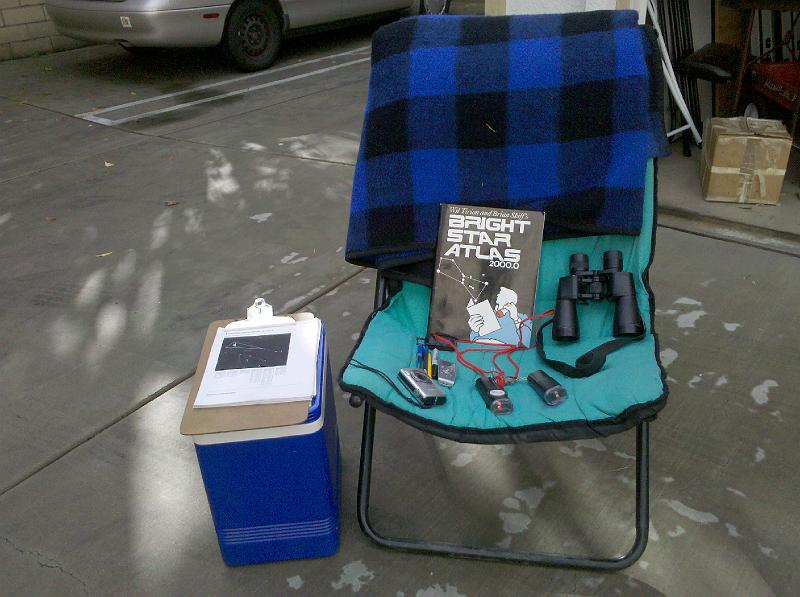
    My meteor shower first aid kit
    Waiting for moonset on Perseid night 2010, observing from Amboy Crater, CA
    Notice elevated rates from August 7th-15th, and a secondary peak on the 17th, and the 20th?

    Here’s what you can expect to see from a dark sky observing for several hours like the 2010 Perseids which peaked on a moonless night like this year.

    I enjoy observing meteor showers from the darkest sky I can drive to in one night. Here’s where I go, what I bring (and don’t bring), and how I observe.

    You will want a comfy chair that supports your neck. I bring a clipboard with blank sheets of paper and Finnish Triangle limiting magnitude star charts to determine my limiting magnitude throughout the night.

    I also pack binoculars, but not for observing meteors. I just like to have them with me to look at galaxies and star clusters when not counting meteors. I leave my telescope at home, too. I bring a digital clock that doesn’t emit any light, a red flashlight, pencils, an audio recorder, and a cooler full of snacks and water. I keep on hand layers of clothes, a blanket or sleeping bag, and hand-warmers for cool nights. For comfort, I carry a first aid kit including eye drops, chap stick, and sting-ease for bug bites. One more thing I keep handy – a piece of string, in case I want to trace a meteor to its radiant by holding it up to the streak of light.

    I don’t keep any light emitting devices within eyesight – no cell phone, no interior car lights, no telescope mounts or cameras that emit or blink light. You don’t have to be that drastic about darkness, but I often drive a long way to a dark sky and want to see faint meteors. Any car or phone light will ruin my dark adaptation. It can take up to an hour for your eyes to adjust again. If a car or a friend stops by, I will just take a break, or shut my eyes until the light is gone.

    Once I am ready to begin observing, I scan the area of the sky I plan to watch. Note! You don’t have to look in the direction of the radiant. The Perseids all appear to radiate from (fly out of) a point – the radiant – in the constellation Perseus, and so they will appear everywhere. That’s where the string or shoelace are helpful — to trace the meteor back to its point of origin. Then I memorize the magnitudes of familiar stars nearby so I can accurately note the meteor magnitudes on my observing paper – one sheet for every 15 minutes I plan to observe. The info all ends up on this visual observing form, prepared from all the raw data. Then I sit in my comfy chair, clipboard on my lap, and wait for that first meteor to streak across my viewing field.

    2015 Perseids – Live updates!

    My accounts of the 1998-2002 Leonid Storm Multi-Instrument Aircraft Campaign (MAC)

    My account of the 2007 Aurigid Outburst, Perseid MAC

    2011 Draconids MAC

  • Mission Juno Launch, August 5, 2011

    The day before launch – Atlas V in 551 configuration (5-meter payload fairing, 5 solid rocket strap-ons). Under the fairing is a Centaur second stage and Juno.
    Launch 12:25 p.m. EDT August 5, 2011
    Bound for Jupiter – a plume sundial. You can tell the time of launch by the shadow of the plume – the sun is nearly overhead

    Two weeks after I started work at NASA’s Jet Propulsion Laboratory in late 2003 I was given my first “real” assignment. I was asked to sit in on Mission Juno’s design meetings and write the E/PO (Education and Public Outreach) proposal outline for the mission, a page-and-a-half summary with a budget. It was exciting to delve into a new kind of out-of-this-world work and begin a dream-come-true job as the informal and public outreach person on the Cassini Mission, with occasional planetary mission proposal writing forays.

    Fast forward nearly 8 years and I find myself sitting in the shadows of Kennedy Space Center writing a blog about my own adventures at the launch of the mission which launched my own career at JPL. There will be many blogs, photo essays, and tweets from the 150 Tweetup attendees and many other launch guests. Mojo was one of the lucky 150 attendees at the tweetup and his blog is here.

    My job at the launch was threefold. My first role was at the NASA tweetup itself. I’ve been the @CassiniSaturn Twitter persona since June 2008, and so I was working the tweetup backing up my outer planetary mission buddy @NasaJuno on Twitter duty the hours leading up to, at and after launch. I was also on hand to talk about NASA’s Year of the Solar System and show my What’s Up podcast during the hour just before launch at the Tweetup.

    My second job was to organize a “star party” for the launch guests and create a flyer for all the attendees. The guests included the Juno mission’s invited Goldstone Apple Valley Radio Telescope Program students and educators, who came out to my star party. Each of the several thousand launch goodie bags had that star chart flyer featuring Saturn, the moon, Jupiter and Vesta, with a link to my What’s Up for August 2011 podcast and to NASA’s Year of the Solar System website outreach material. The podcast and website feature the Juno mission and planetary windy worlds like Saturn and Jupiter this month.

    My third role was to participate in the Planetary Science Mission Directorate’s “Scientists in Action” webcast, live-streamed to museum audiences remotely. Museum audiences all over the country, and probably the world, watched this and other Juno launch programming.

    In addition to the “work,” I was also a starry-eyed space girl at the NASA Tweetup, and was beyond excited to see my first launch. Just like the others, I was lapping up all the speaker comments and tweeting from @jhjones like crazy, when I wasn’t tweeting from @CassiniSaturn or @NASAJuno. I was stunned at the amazing bus tour stops, in spite of the sweltering heat. And I soaked up the electric camaraderie and atmosphere of everyone at the Tweetup program.

    Although it was a “you had to be there” kind of event, I hope these pictures and tales give you a taste of the magic that is NASA. I almost can’t believe I get to go to NASA planetary mission launches at Cape Canaveral/Kennedy Space Center for work! And share the excitement of Cassini, Juno, and next month, Grail with informal education outreach! I’m not on cloud nine, I’m above it!

    My Juno launch photo album

    The NASA Juno website

    Juno launch videos

  • A Dreamcatcher, And A Blanket Of Stars

    Red Willow dreamcatcher with Big Dipper and Milky Way
    Red Willow Dreamcatcher with Big Dipper and Milky Way
    The Fisher Stars, painting courtesy of Edwin Bighetti, Mathais Colomb First Nation
    The Fisher Stars, painting courtesy of Edwin Bighetti, Mathais Colomb First Nation
    Wesakaychak Pointing - courtesy of Edwin Bighetti, Mathais Colomb First Nation
    Wesakaychak Pointing – courtesy of Edwin Bighetti, Mathais Colomb First Nation

    In March 2010, I was invited to be the keynote speaker at the Manitoba First Nations Education Resource Centre’s annual Science and Career Fair. Two participating schools from the Nisichawayasihk Cree Nation in Nelson House, Manitoba invited me to visit their community. So in November 2010 I spent two days with the students, teachers at the K-8th grade Otetiskiwin Kiskinwamahtowekamik School, and the 9-12th grade Nisichawayasihk Neyo Ohtinwak Collegiate.

    After a day of school presentations in early November, I was invited to a community gathering of shared songs, the music of flute, hand and water drums, and stories from several storytellers. Joe Mercredi, a school cultural coordinator and a wonderful storyteller told several stories, after he played the flute – a six-hole flute made of mountain juniper by Navajo flute maker Jonah Thompson. Joe makes flutes, too, but he chose this one for this night because “it has a sweeter voice than his own,” he told me recently. Joe also helped me remember the stories he told that night two months ago. He told me that all stories are related to each other. How we remember them depends on what we need to learn at the time.

    His first story is a variation of the Dakota Woodpecker Flute story. A poor young boy with no male relatives lived with his mother. He was friends with the chief’s daughter. They were good friends and spent much time together. When of age, he asked the chief for her hand. The chief questioned his ability to support his daughter. He was mortified and left the camp. After some days he fell asleep under an old cedar tree and was woken up by a woodpecker up in the tree. This being in the time when animals could speak to men, a conversation ensued and the young man was gifted with the first flute. In the end the two become a couple and the young man found fame and fortune as a flute maker. This story can be found in one of the Joseph Bruchac series “Keepers of the Earth/Sky/Night/Life” books.

    Joe then held his Dreamcatcher, and told this story. Red Willow Woman was a woman who taught the children in her community until her death, and, when given the choice by the Great Mystery to be returned to her people, she chose to return as a red willow to demonstrate that every one has the ability to achieve greatness if one reaches beyond one’s limits. Red willow forms the frame of the Dreamcatcher.

    You can see the big dipper stars (or Fisher stars) on the right side of the woven web within the red willow frame. And you can see a chaotic jumble of stars on the left. The legend of how Fisher became the Big Dipper and how animals of long ago decided to share summer and winter, and how the fisher came to be in the northern sky is told by Murdo Scribe, and is known as Murdo’s Story.

    Long ago, in one part of the animal world and bird world it was always summer and in the other half of the world it was very cold with no warm weather. The northern animals and birds had to find summer. Fisher (a small wolverine) carried summer, and the summer animals chased him. They shot at him and an arrow hit Fisher and took him to the northern skies, with the summer. Fisher still lives in the northern sky, and summer is now shared with all animals and birds everywhere. Fisher can be found circling the North Star. Some people call him the big dipper.

    The Dreamcatcher is formed from two willow branches depicting strength and softness intertwined — the need for give-and-take in a respectful loving relationship. Joe decided to map the Big and Little Dippers in the Dreamcatcher. But just like in the Wisakechak story of the Milky Way, he mapped the big dipper, but the trickster, Wisakechak decided to mess up some of the stars. You can see an extra star in the big dipper.

    Legend tells that Wisakechak was meticulous in his placement of the stars, but Fox wanted Wisakechak to play with him, and got tired of waiting for him to finish so he grabbed the blanket of stars and scattered them all over the place. Those stars represent the Milky Way. If you look in the winter sky you will see Wisakechak (sometimes spelled Wesakaychak and many other ways, too) pointing to the Pleaides, which figure in many other legends. Wisakechak is represented by the constellation Orion.

    You can see the big dipper stars in the web of the Dreamcatcher. The handle star, Alkaid is near the top of the Dreamcatcher , and you can see the bowl stars at 3 o’clock. There is one “extra” star woven into the web near the bowl, put there by the trickster, Wisakechak. And you also see the other stars from the blanket of stars Fox threw into the sky on the left side of the Dreamcatcher below the center hole. You’ll also see the thirteen tie-points, where the sinew is tied to the willow hoop. These thirteen ties represent the 13 new moons of a year.

    After Joe finished his stories of Red Willow Woman, Wisakechak, the Fisher stars, and the Milky Way, he walked over to me and gave me his Dreamcatcher. As I look at my Dreamcatcher now, three months after my visit, I can still hear the drums, the flute and the stories of the stars I heard in Nelson House that snowy November night. Now, when I read Murdo’s Story I can see how all of these stories are related.

    Murdo Scribe was born in Norway House, Manitoba and was a World War II veteran with the Canadian Army. After the war he returned to a life of fishing, trapping and seasonal work. In 1975, he was appointed coordinator of the Traditional Individualized Education Program with the Native Education Branch of the Manitoba Department of Education. He wrote many stories based on his own experiences and those of the elders he had known.

    I thank Joe Mercredi, who is a master storyteller, maker of flutes, weaver of dreamcatchers for sharing these stories with me. I must also thank science educator Wilfred Buck, of the Manitoba First Nations Education Resource Centre, who I met two years ago at the NYAA (Ontario) Starfest when he gave a talk about Atchakosuk: The Spirit Lights Up Above . I have been slowly learning more about the spirit lights above. Two years ago, Wilfred ended his presentation with a quote from one elder, “We are blessed to live under a blanket of stars.”

    I will do the same.

  • Quadrans Muralis: a demoted constellation lives on as the radiant of the January Quadrantids

    Johann Bode's 1801 Uranographia, showing Quadrans Murales, Boötes and other constellations
    Boötes, Canes Venatici, Coma Berenices and Quadrans Muralis
    The Northeast sky Jan 4 at 1:00 a.m. PST. Look between Ursa Major and Minor, and the bright star Arcturus in Boötes for the location of Quadrans Muralis on the Boötes-Draco border
    Looking Northeast before sunrise, chart courtesy of Spaceweather.com
    Looking Northeast before sunrise, chart courtesy of Spaceweather.com

    Most meteor showers radiate from a recognizable constellation like Leo’s Leonids, Gemini’s Geminids and Orion’s Orionids. What’s up with the January Quadrantids? Where do you find their constellation? In Quadrans Muralis, a demoted constellation.

    The first 60+ Roman constellations didn’t cover the sky south of the equator, so over the years, astronomers took up the task and filled in the empty spaces with new constellations, including some in the northern sky.

    The International Astronomical Union divided up the sky into official constellations in 1930. 88 constellations remained, but over 30 constellations didn’t make the cut. Among those demoted was Quadrans Muralis, the location of January’s brilliant, but brief Quadrantid meteor shower. Apis, the bee, Felis, the cat, and Solarium the sundial were other constellations demoted into obsoleteness. One ancient constellation, Argo Navis, didn’t survive, either. It’s the only one of the 48 constellations listed by 2nd century astronomer Ptolemy no longer officially recognized as a constellation. Like other pieces of large real estate, it was subdivided into smaller segments in the 17th century, and those constellations — Carina the Keel, Vela the Sails, and Puppis the Poop Deck — survived demotion.

    There were good reasons to define and standardize the constellation list, even if it meant losing some historic or whimsical constellations. One reason, according to the IAU was “to aid in the naming of new variable stars, which brighten and fade rather than shine steadily. Such stars are named for the constellation in which they reside, so it is important to agree where one constellation ends and the next begins.”

    Quadrans Muralis was added to the constellations by Joseph J. de Lalande in 1795, to commemorate the quadrant he used to observe and measure stellar positions. The quadrant was an instrument very similar to today’s sextant. A few years later, in the early 1800’s a meteor shower was discovered to radiate from this constellation, and the meteor shower was named for the constellation.

    Created from stars found to the north of Boötes, the herdsmen; Quadrans Muralis can be found in a rich area of the northern sky filled with pretty constellations. The big and little dippers (the most recognizable parts of Ursa Major and Ursa Minor) are the most familiar sights but you’ll also find the Northern Crown, Corona Borealis, Boötes and his two hunting dogs Asterion and Chara in Canes Venatici, and Coma Berenices, the hair of Bernice. Take a tour of the area through binoculars on January 3rd before midnight while waiting for the radiant to rise.

    Update for 2012 for Southern California meteor observers: “The radiant rises at 1:00 am local time and the moon sets at 3:00 am. The predicted peak (2:30 am Eastern 11:30 PST (07:30 UT January 4, 2011).

    The Quadrantids (QUA) or January Bootids are active from January 1st through the 10th. A sharp maximum is predicted to occur near 0730 Universal Time on the 4th. This corresponds to 02:30 EST and 23:30 PST (January 3rd). This is good timing for viewers located in eastern North America as the radiant will rising above the northeastern horizon. It would even be better if the maximum were a bit later as the radiant would be located higher in the sky, producing more activity.

    Rates will depend on the exact time of maximum and whether the moon is still above the horizon. Assuming the 0730 UT timing is correct, the further one is located in North America, the better. Eastern observers may be able to see 60-75 Quadrantids per hour. If your skies are very clear and dark, allowing you to see faint meteors, your rates could top 100 per hour. Observers located in the western portions of North American will have lower rates but will also have the opportunity to see Quadrantid “earthgrazers”. Earthgrazers are meteors that skim the upper portion of the atmosphere therefore lasting much longer than normal and producing long trails in the sky. These meteors can only be seen when the radiant lies close to the horizon. As the radiant rises, the meteor paths
    will become shorter with shorter durations. Observers in the northern hemisphere outside of North America can expect to see a maximum of 25 Quadrantids per hour between moon set and dawn.

    At maximum the radiant is located at 15:21 (230) +49. This position lies in a barren region of extreme northern Bootes, ten degrees northeast of the fourth magnitude star Beta Bootis. At 42 km/sec. the Quadrantids produce meteors of medium velocity. During exceptional activity some Quadrantid fireballs may be witnessed. Courtesy Bob Lundsford posting on the MeteorObs Yahoo Group.

    Streaming video & a visibility map for tonight’s (January 3-4, 2012) Quadrantids meteor shower

    Quadrantids History

    IAU and the 88 Constellations

    My What’s Up video for January 2011 (not 2012): The January 3-4 Quadrantid Meteor Shower

    My What’s Up video for January 2012: Evolving planets, an asteroid to view (Eros), plus the Quadrantids

  • The Perseids from Amboy Crater

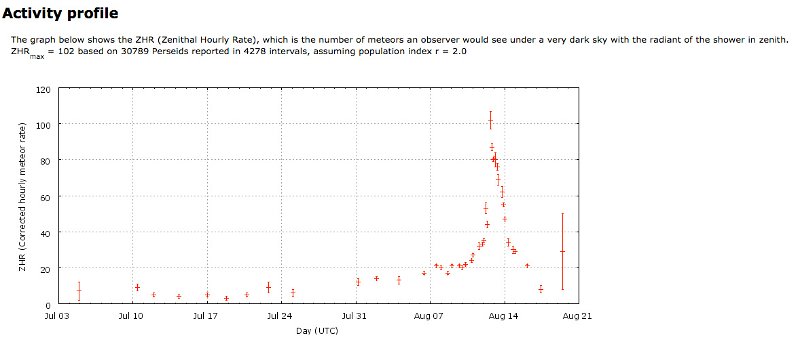
    Perseid Peak Aug 12-13 18h-7h UT
    My Perseid count Aug 13 06h-11h UT
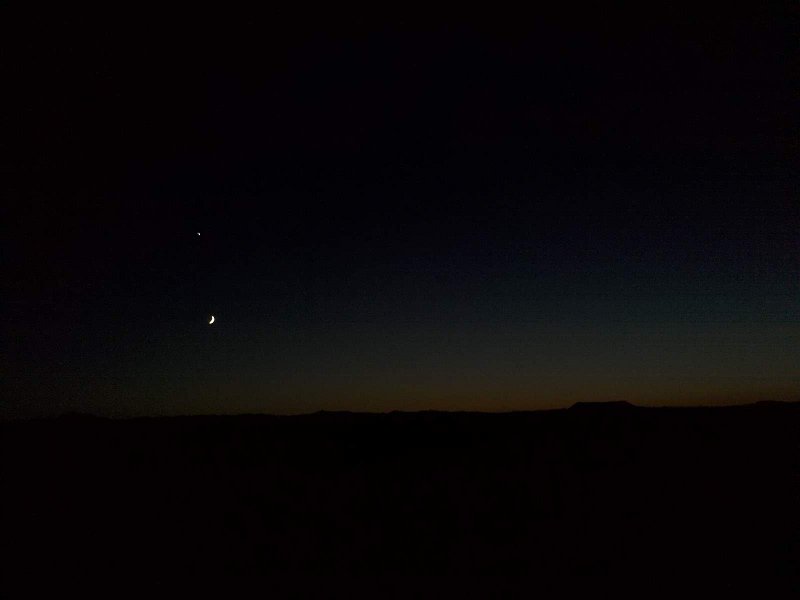
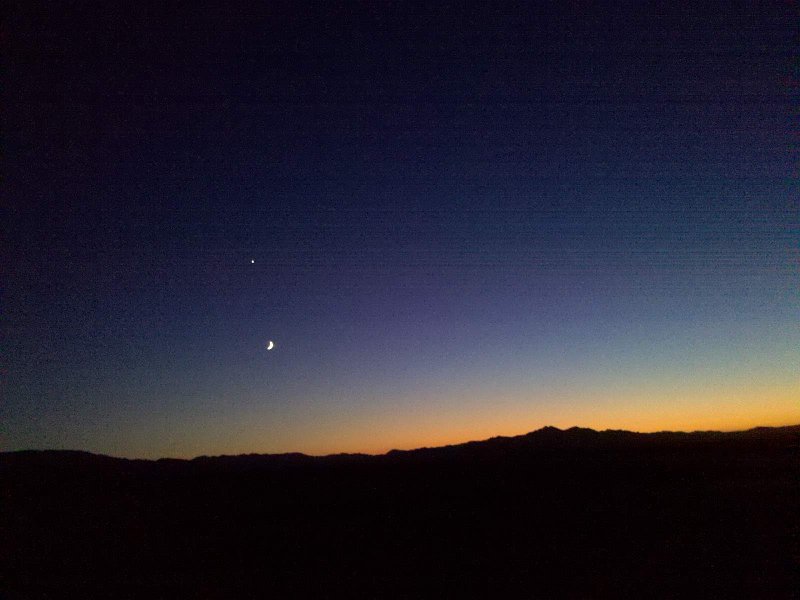
    Sunset at Amboy Crater, with moon and Venus
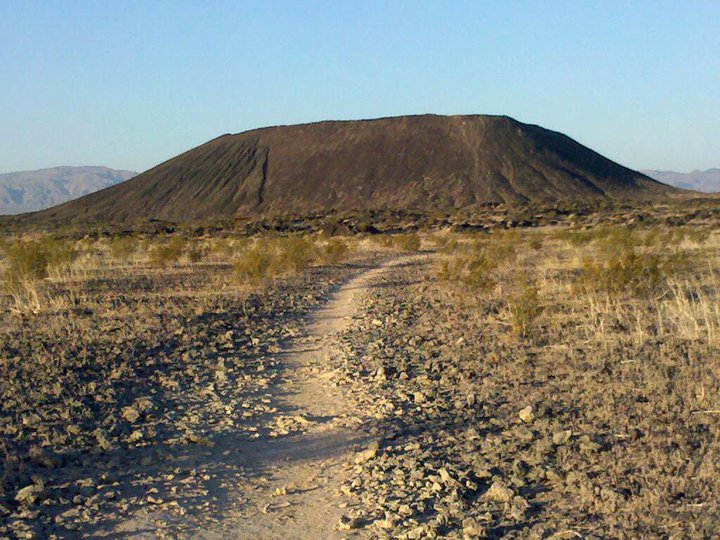
    Amboy Crater by day

    For the past year I’ve been traveling to dark skies to observe and count meteors during the major showers. Armed with a clipboard and a comfy chair, I stare at a section of the sky, hoping to see members of the well known showers, and contribute my data to that of other meteor observers around the world.

    This writeup is really about how I observed, recorded and submitted my 2010 Perseid meteor shower data to the International Meteor Organization. I hope I inspire you to try it, even if you don’t submit your paperwork the first time. (I didn’t, in fact it took me longer to fill out the paperwork the first time than it did to actually observe the meteors!).

    The first chart shows the peak of the Perseids – August 12-13 between 18h and 7h Universal Time. That means for people like me on the west coast of the US, the peak was nearly over before I started counting! It’s important for worldwide observers to keep counting, because many showers have secondary peaks or other characteristics.

    The second chart is my data. Before I arrived at the site, I recorded the latitude, longitude, elevation and name of my observing location. This is easy to do using your GPS devices these days. I wrote down my name, my IMO codename (JONJH) and the shower (Per for Perseids). I decided not to try and identify individual minor showers though there were many. I called all non-Perseids Sporadics.

    Before I began observing, and several times during the night I assessed the darkness of the sky using Limiting Magnitude star charts. This field is identified as LM on my observing form. The IMO says: “The darker and more transparent the sky and the more sensitive your eyes, the more meteors you can see. To use your observations for scientific analyses a quantitative characterization of these factors has to be established. The limiting magnitude (which is defined as being the magnitude of the faintest star near the zenith that the observer can detect using the slightly averted naked eye) defines both the condition of the sky’s clarity and the quality of the observer’s eyes.”

    I keep a set of these charts on a clipboard and assess the sky darkness every time I observe. My assessment was a very high limiting magnitude. I could see magnitude 6.5 stars with my unaided eyes.

    On a clipboard, I clipped a bunch of blank sheets of paper – one piece for each hour of the night. I wrote down each meteor I observed and noted the time using a nearby clock. I also wrote down the magnitude of each meteor – using a shorthand of 5 magnitudes of brightness. (F for faint-mag. 4, B for bright mag. 1, etc. J for Jupiter bright bolides) I had a selection of stars in the area already memorized for comparison against the Perseids. For spectacular meteors, I plotted them on star charts I had printed out for this purpose.

    In a nutshell: Mag 6.5 skies, clear, 80 degrees overnight. Amboy Crater, one of the darkest observing locations in the US, was a great location for meteor observing.

    Between 9 and 11 p.m. (04h-06h UT) I unofficially saw about a dozen mostly very bright meteors while setting up my chair, eating dinner, etc. I didn’t start seriously recording the meteors until 11 p.m. (06h UT)
    04h-05h UT – 2 Perseids, 1 sporadic
    05h-06h UT – 4 perseids, 3 sporadics **the first Perseid came in at 9:34 p.m.
    06h-07h UT – 15 Persieds, 12 sporadics
    07h-08h UT – I took a nap
    08h-09h UT – 27 Perseids, 8 sporadics
    09:19-03:19 – 43 Perseids, 3 sporadics didn’t take a break since the rates were so high…
    03:20-04:20 – 39 Perseids 1 sporadics (with a 7 minute break)

  • A warm-up act for the Perseids

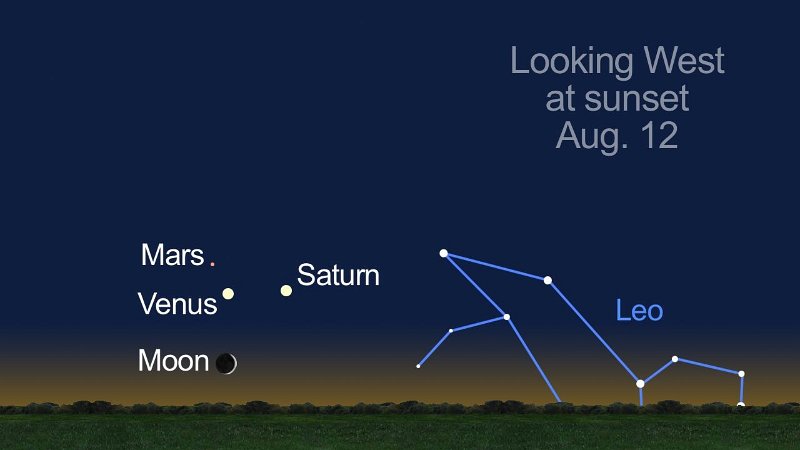
    See the moon and planets low in the west August 12
    See the moon and planets low in the west August 12, courtesy NASA/JPL-Caltech
    The view from Earth - the planetary lineup in orbital perspective
    The view from Earth – the planetary lineup in orbital perspective courtesy NASA’s Solar System Simulator, courtesy NASA/JPL-Caltech
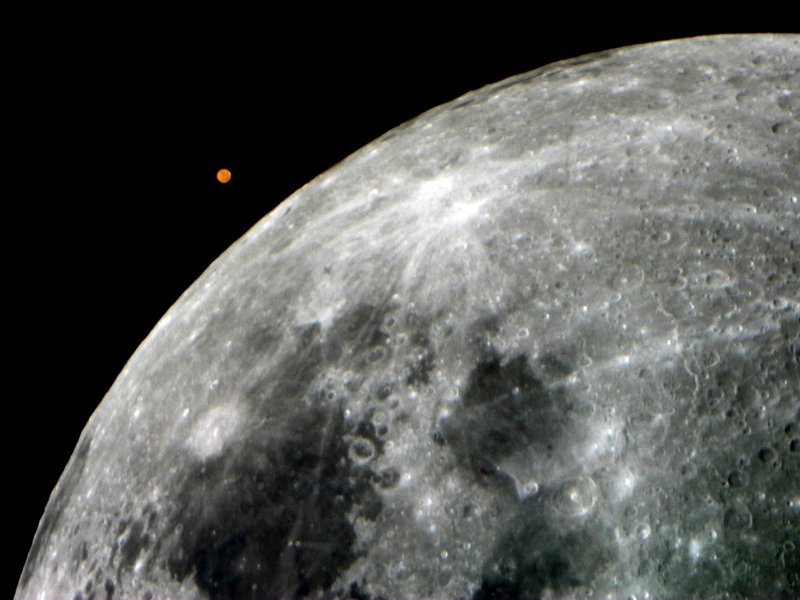
    Mars and moon imaged same day with same equipment (in 2005)
    Mars and moon imaged same day with same equipment (in 2005) courtesy Jim Keen
    A trio of planets, without the moon August 7, 2010
    A trio of planets, without the moon August 7, 2010, courtesy Morris Jones

    Are you eager to see the annual Perseids on Thursday night? You’ll have to wait until after 10:00 p.m. local time to see them, so why not pass the time until showtime by viewing the planets right from your doorstep? Step outside for the planetary warm-up act.

    All you have to do is look towards the west as soon as the sun sets. Bright Venus is the first to appear. It’s really bright, and you can’t miss it! Now, hold your clenched fist up to the sky covering Venus. To the right of Venus, about 1/2 of a clenched fist away is a second planet. That’s Saturn. And to the upper left of Venus is another planet… That’s Mars.

    But wait, there’s more! Look below Venus for the slender crescent moon. If you don’t see the moon, look again Friday night – it will be a larger crescent to the left of Venus a day later.

    Though the three planets appear together in our line-of-sight they are really far apart from each other and from us on Earth. Mars is about 300 million km (186 million miles) from Earth, while Venus is 112 million km/70 million miles distant. Saturn? It’s 1,535 million km/954 million miles from Earth right now. The moon? 363 thousand km, or only 225 thousand miles away. It’s fun to compare the size of the moon and Mars, especially if you received that annual email (which incorrectly) states that Mars will be as big as the moon this month. Do the math. It’s impossible!

    The Solar System Simulator is a great public resource for geeks. You can see any planet or spacecraft from any vantage point on any date you select. I picked August 12th to show the view of the planets and moon from Earth.

    I hope you can sense the three-dimensional orbits of nearby Venus, far-away Mars and distant Saturn. Have some fun with it! Every day the Cassini Mission website shows a view of Saturn from Earth, from Cassini, and right now Enceladus, as we close in on a flyby of that exciting moon later this week.

    In this image of the moon and Mars, Jim Keen made a “true-to-life” size comparison. He made a “blended” image of the Moon and Mars back in July 2005. He recalls, “I had set up my telescope in my backyard and stuck a camera on the back of it. I took separate images of the Moon and Mars – both of which were “up”, but in separate areas of the sky – and later combined the two images to get one, showing the actual size difference using the same equipment, same camera, same magnification, and taken within a few minutes of each other.”

    Jim’s image shows the apparent size of the moon and Mars really nicely! If he took the same image this month, Mars would appear super tiny! In the 2005 image Mars was about 50 million miles from Earth, and today it is 186 million miles away.

    The final image shows the trio of planets imaged Saturday night August 7th by my hubby, Morris (aka Mojo) Jones. Click on the image to see the two fainter planets above Venus. He posted several images in his blog post called Sky full of planets and lightning. It’s really worth a read! The lightning was amazing Saturday night!

    I hope this little planetary warm up act will whet your appetite for more sky watching this week. The Perseids will be a real spectacle, especially if you can get away from the city lights. I’ve pretty much decided to head out to the Mojave desert and see the star show from Amboy Crater. Clear Skies everyone, and happy solar system observing to you all!

    California Clear Sky Chart Black dots indicate the darkest observing areas. Amboy Crater, on the southern border of Mojave National Preserve is the closest “black dot” dark observing area and will require a drive of over 200 miles for Thursday’s Perseids.

    NASA’s Solar System Simulator Check out where the Voyagers are right now!

    My Mars in August website, updated each year since 2005.

  • Free Telescope to first caller (updated 1/1/2012)

    Updated 1/1/2012

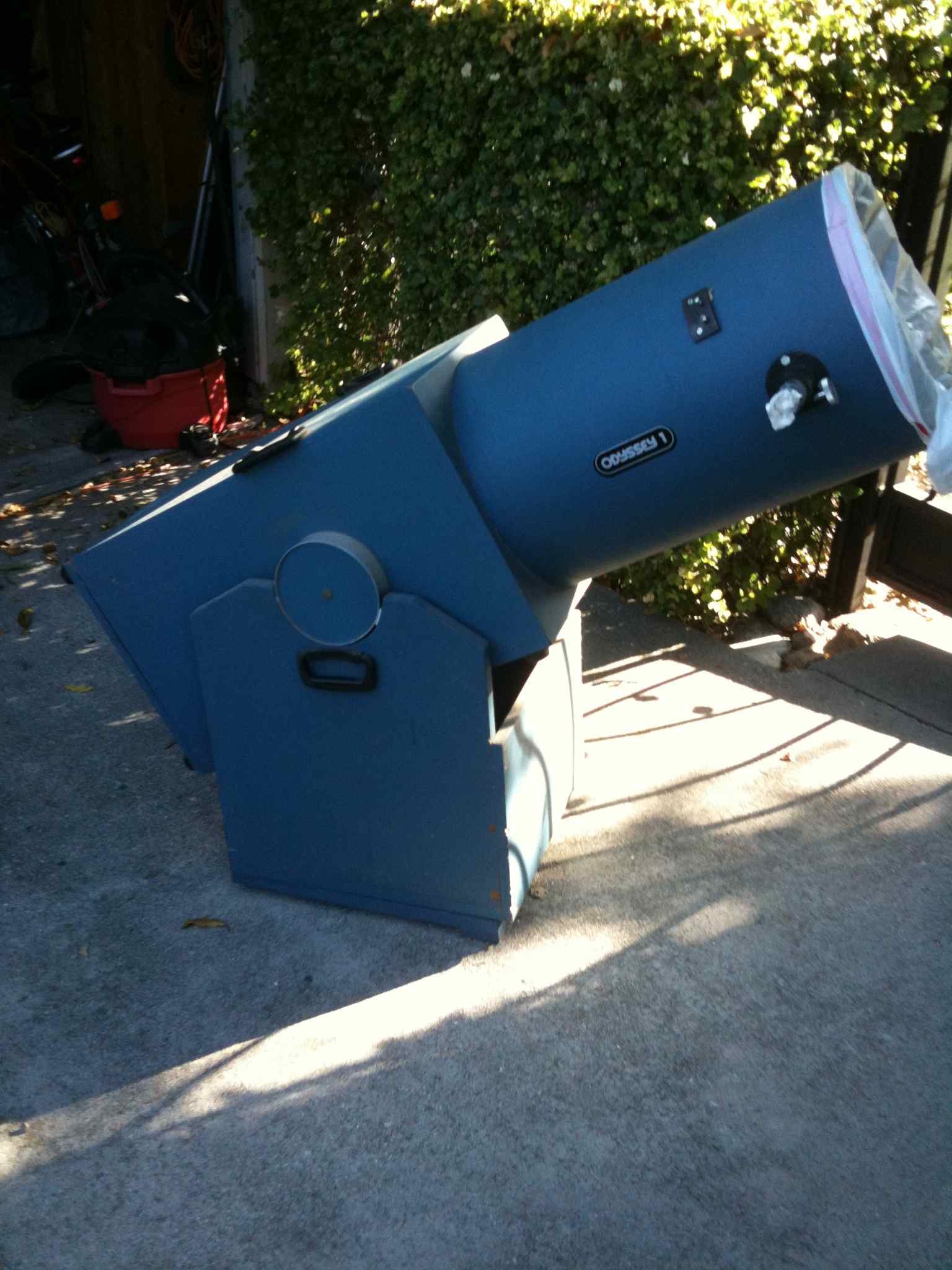
    Before – 13.1-inch f/4.5 Coulter Odyssey 1
    After – – note the original blue ground board

    Update: A colleague at work had a telescope he wanted to give away. I advertised it and found someone who wanted it. Here’s a before and after image. The telescope has been reincarnated as you can see from the second picture, which was taken December 31, 2011 at our Old town Monrovia sidewalk astronomy event.

    Original post: Jane says “this is a classic blue-tube Coulter 13.1 inch f/4.5 reflector.” It has a nice short 5-foot tube, so you won’t even need a ladder. You’ll need some storage room for this telescope, and I’m not gonna lie to you, this is one heavy telescope. You can learn a little bit about this classic Coulter scope here. When Steve sent me this pictures this morning, it took me on this trip down memory lane.

    See the red tubed 17.5-incher on this page? My sleek 17.5 inch Litebox reflector started out as a big red 300 pound 17.5-inch f/4.5 Coulter Odyssey II, owned by a Stanford professor, who had died. His wife called John Dobson to find out how how she could get it into the hands of a sidewalk astronomer. John and I drove down the peninsula to see it and give her some advice on a price. I brought my checkbook, just in case. John crawled into the storage shed, past the cobwebs, over the lawn furniture and under the christmas tree and exclaimed out to me “I think it is one of ours.”

    I bought it on the spot for $400.00 and have used it now for almost 15 years.

    The prof used to haul this behemoth to his ranch in a red El Dorado. I imagine that sight — that huge red telescope in the back of that red El Dorado — rolling down the freeway towards the Sierra foothills, every time I use the scope. I had to rent a panel truck to get it home to Marin County, and to take it to its first light star party on Mt. Tamalpais in Marin County many years ago. I remember my first look through that big, red ugly duckling of a telescope. The Swan Nebula. It was spectacular! That 17.5 inch mirror is now in my 17.5 inch Litebox truss tube reflector, and I take out to the desert or to the national parks every single month. The big red sonotube and hefty black particleboard mount have long since met their maker, literally. Bless Coulter Telescope’s Jim Bragington of Idylwild, CA for making mass-produced large telescopes back in the 1980’s.

    Here’s what Steve has to say about the scope. I elaborated a little once I saw the pictures. It is truly “one of ours”, as John Dobson said so many years ago. It screams “take me out to the sidewalk.”

    It’s a Dobson design Coulter “Odyssey I” reflecting telescope, 13.1″ f/4.5 mirror, with Celestron finder scope and three eyepieces, approx 25 years old. Dobsons are great for “deep sky” objects like nebula and galaxies. Body is plywood with concrete-form tube (heavy cardboard sonotube), total length approx 5′. Base is plywood/particle board, has Teflon elevation bearings, azimuth bearing probably Teflon but I’m not sure. Base and body are in fair to good shape, base has been repaired. Primary mirror glass in in very good condition, approx. 1 1/2″ center thickness, with coating in fair to good shape (minor and small imperfections, shown in photographs). Eyepieces are marked H, M and L, all in good shape.

  • Moonrise over Chuckwalla Mountain

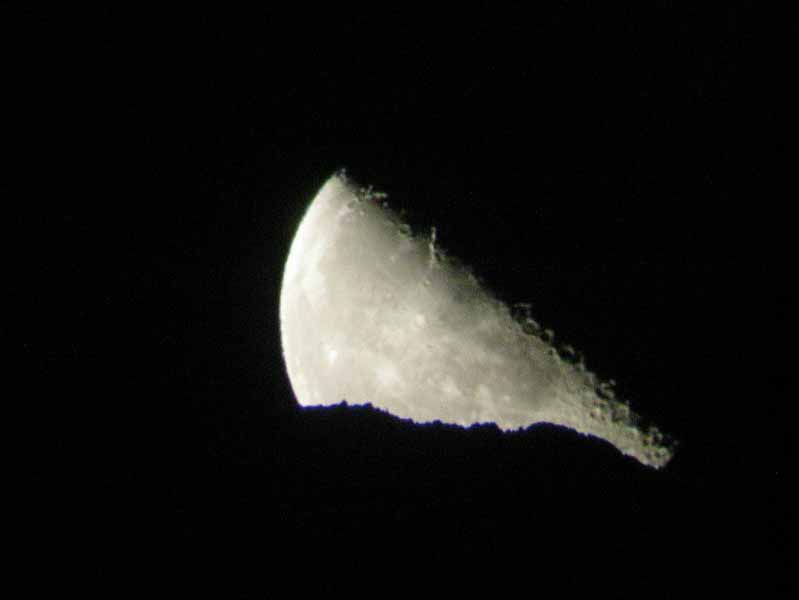
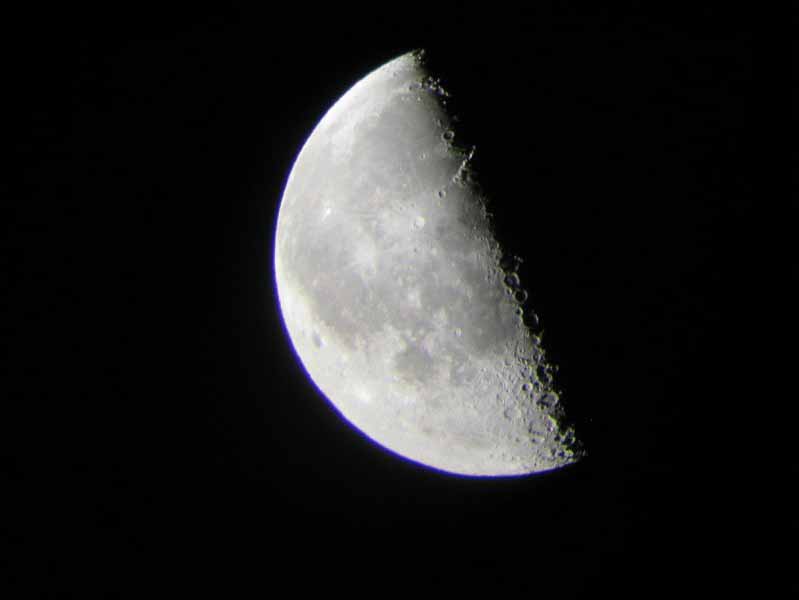
    Moonrise over Chuckwalla Mountains July 3, 2010 about 11:30 p.m.
    Third quarter moon, a half hour later
    My small 70mm Televue Ranger was used for the moon images

    Summer dark sky observing means short nights, and it’s usually too hot for comfort in the Colorado desert location we love. But Mojo and I decided to pack a cooler full of ice cubes, and take our chances. The predicted daytime high was 102 F, and it would be (we persuaded ourselves) a few degrees cooler at “our” spot. The low temperature for the night was forecast to be 75 degrees. We could live with that!

    It didn’t get dark enough to observe anything except planets until 9:00 p.m. and so we only had two and a half hours of dark sky before moonrise would make it too bright.

    One of the benefits of living and observing in Southern California is that at latitude 33N, we can see deep into the southern skies.

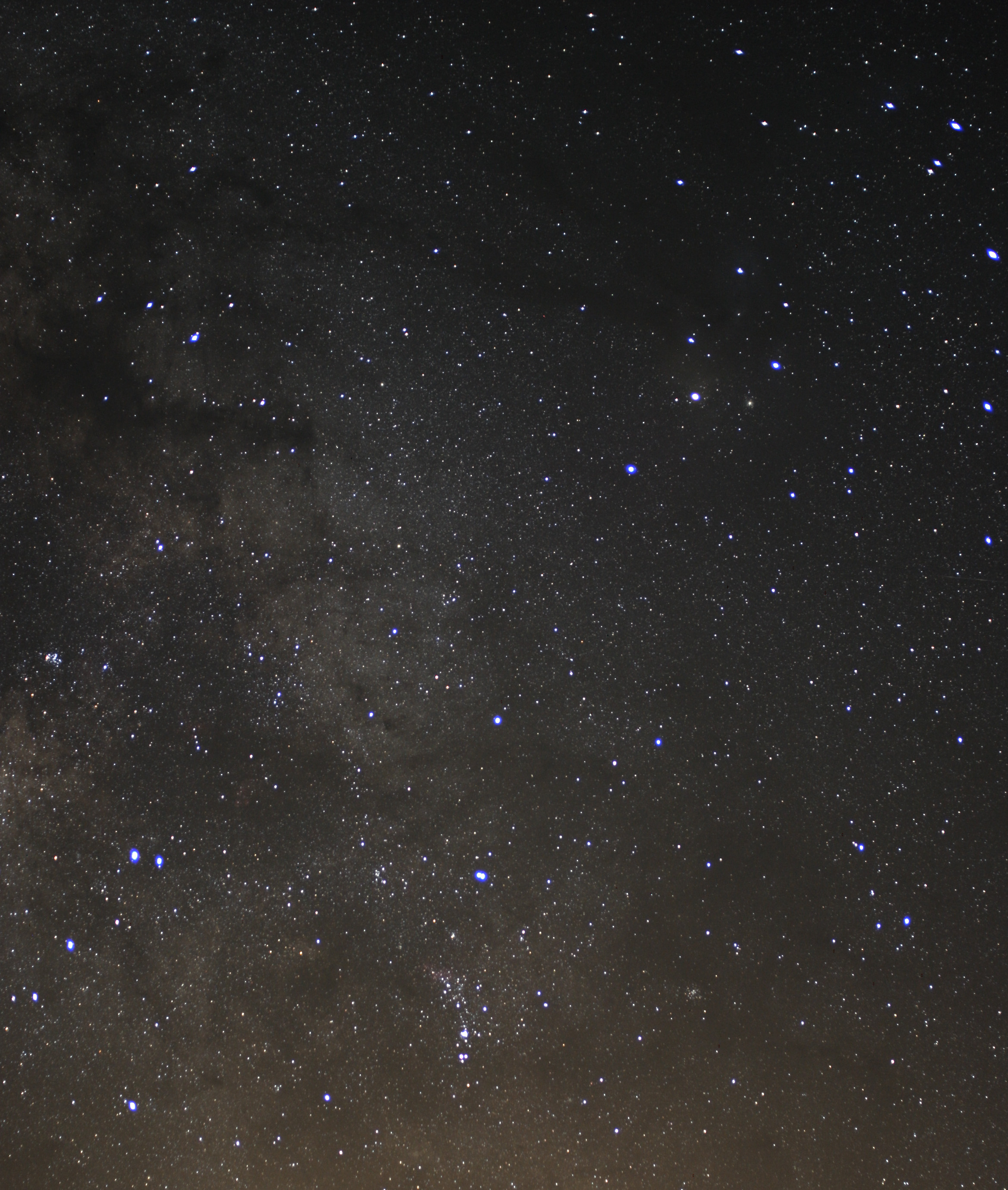
    Summer nights are just made for observing Scorpius. The Bug Nebula NGC 6302 is one of my favorites ever since I saw and sketched it high in the Australian skies in 1999. NGC 6231, the Table of Scorpius is another favorite. It’s an open cluster near Zeta Scorpii, the first star marking the Scorpion’s curvy tail.

    This is a delightful region (great with binos too) full of Milky Way wonders, including emission nebula IC4628. Mojo captured the area beautifully in his image of Scorpius last night. The star cluster center bottom is NGC 6231, and the reddish patch just above it is the emission nebula IC4628.

    This is the area I was aiming my big telescope at until about 11 p.m. when we could see the lunar light dome emerging. We finished up our projects and waited for that first “wedge” of moonlight to breech the mountain ridge to the east.

    I took some afocal images using my Canon Powershot SD870IS Digital camera held at the eyepiece of my small refractor. I’m pretty happy with the results.

    Since it was a short night, this is a short observing report. 🙂

    Mojo’s report from the same night

    The Chuckwalla Bench observing site. Scan the topography to see Chuckwalla Mountain to the east of our observing site (the green arrow).

    Another third quarter moon observation